
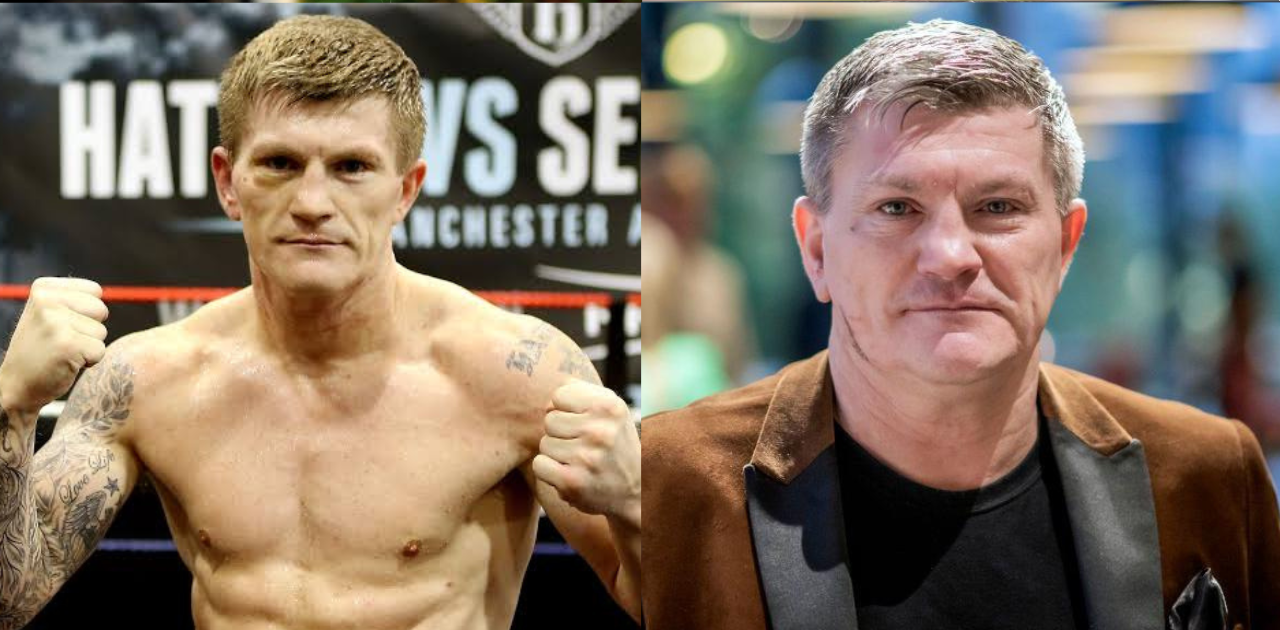

Ricky Hatton was one of the most recognisable and popular British boxers of his generation. Known around the world as “The Hitman”, he built an extraordinary reputation through his aggressive fighting style, relentless work rate and ability to connect with boxing fans. From his early days in Greater Manchester to becoming a two-weight world champion, his journey represented determination, ambition and an uncompromising commitment to professional boxing.
Born Richard John Hatton on 6 October 1978 in Stockport, England, he grew up with a strong connection to Manchester. His personality, working-class background and passion for sport helped him become much more than a successful athlete. Supporters admired his willingness to take on dangerous opponents, his entertaining performances and his loyalty to his hometown.
During his professional career, Ricky Hatton https://www.google.com/search?sca_esv=4086bbef3e31f818&sxsrf recorded 45 victories in 48 fights, including 32 wins by knockout. He became a world champion at light-welterweight and welterweight, defeating major names such as Kostya Tszyu and Luis Collazo. His memorable contests against Floyd Mayweather Jr. and Manny Pacquiao also placed him among the biggest attractions in international boxing.
However, his story was not limited to championships and victories. His life included difficult personal experiences, mental health struggles, a return to the sport, and work as a trainer and promoter. He died in September 2025 at the age of 46, leaving behind an important legacy in British boxing.
Understanding his life means looking beyond his professional record to appreciate the personality, achievements and challenges that shaped his remarkable journey.

Who Was Ricky Hatton?
https://celebrityfocus.co.uk/ was a British professional boxer who competed between 1997 and 2012. He became famous for his pressure-fighting approach, powerful body punches and exceptional stamina. His nickname, “The Hitman”, reflected the aggressive style that made him such a difficult opponent.
Although he was born in Stockport, Hatton became closely associated with Manchester and its sporting culture. He supported Manchester City throughout his life and regularly expressed his affection for the club. His connection with the city helped establish a special relationship with local supporters, many of whom followed his career from the beginning.
Unlike some fighters who relied heavily on technical distance boxing, Hatton preferred to close the gap, work inside and overwhelm opponents with combinations. His ability to maintain pressure made his fights exciting, particularly when facing technically gifted boxers who preferred controlling the distance.
He became one of Britain’s most commercially successful boxing personalities during the 2000s. Thousands of supporters travelled internationally to watch him compete, particularly for his major fights in Las Vegas.
His achievements were recognised beyond boxing. He received an MBE in the 2007 New Year Honours for services to sport and was inducted into the International Boxing Hall of Fame in 2024.
Early Life, Childhood and Family Background
Richard John Hatton was born on 6 October 1978 in Stockport, Greater Manchester, England. He grew up in a working-class family and developed an interest in boxing during his childhood. His father, Ray Hatton, played an important role in his development and later became involved in managing his professional career.
As a teenager, Hatton also worked within his family’s carpet-fitting business. This experience reflected the ordinary working-class environment in which he developed before becoming an international sporting personality.
His interest in boxing gradually became more serious as he started training and competing as an amateur. The sport offered him an opportunity to develop discipline, physical strength and competitive confidence.
During his amateur career, he demonstrated considerable potential. He won the 1997 ABA light-welterweight championship and earned a bronze medal at the 1996 World Junior Championships in Havana, Cuba.
These achievements helped prepare him for the professional environment. Amateur boxing taught him how to manage opponents, maintain concentration and perform under pressure, all of which became important characteristics of his professional style.
His background also influenced his public personality. Even after becoming a world champion, he maintained a reputation for being approachable and connected to ordinary supporters. That connection became one of the defining features of his popularity.
Ricky Hatton’s Professional Boxing Career
Ricky Hatton began his professional boxing career in 1997, entering a competitive British boxing scene filled with talented fighters. His early performances demonstrated that he possessed the physical qualities and determination required to compete at a high level.
He developed a reputation for attacking opponents with combinations to the head and body. His ability to work at close range allowed him to control the pace of many contests.
In the early stages of his career, he competed against increasingly experienced opponents while building his professional record. These fights provided valuable experience and helped him develop the confidence required for championship-level competition.
One important milestone arrived in 2001 when he defeated Tony Pep to win the WBU light-welterweight title. The victory established him as a major attraction in British boxing and gave him the opportunity to compete against stronger international opposition.
Over the following years, he successfully defended his championship and defeated several experienced fighters. His victories over Freddie Pendleton, Eamonn Magee and Vince Phillips helped strengthen his reputation.
However, the defining moment of his early professional development came when he secured a world championship opportunity against Kostya Tszyu.
That contest would transform his career and establish him as one of the leading fighters in his division.
The Historic Victory Against Kostya Tszyu
<PRIVATE_PERSON>
One of the greatest moments in British boxing history came on 4 June 2005, when Hatton faced Kostya Tszyu at the MEN Arena in Manchester, now known as the AO Arena.
Tszyu was an established world champion with an impressive reputation. He was considered one of the best fighters in the light-welterweight division and had defeated numerous high-quality opponents throughout his career.
For Hatton, the contest represented an enormous opportunity. He was challenging an experienced champion in front of a passionate home crowd, with the IBF and recognised championship status at stake.
From the opening rounds, Hatton applied intense pressure. He attacked the body, worked inside and attempted to prevent Tszyu from establishing his preferred rhythm.
The fight became physically demanding, with both competitors exchanging powerful punches. Hatton’s pressure and body work gradually made the contest increasingly difficult for the defending champion.
After the eleventh round, Tszyu did not return for the twelfth. Hatton was declared the winner by retirement and became a world champion.
The victory was particularly important because Tszyu had entered the contest as an established elite fighter. Defeating him demonstrated that Hatton could compete with the best in international boxing.
It also created an emotional sporting moment for Manchester supporters, who celebrated the arrival of a new British boxing champion.
Winning World Titles at Two Different Weights
After defeating Tszyu, Hatton continued building his championship reputation. His next major achievement came later in 2005 when he faced Carlos Maussa for the WBA light-welterweight title.
Hatton won the contest by ninth-round knockout, adding another major championship to his achievements.
This victory strengthened his position as one of the leading fighters in the division. It also demonstrated that his success against Tszyu had not been an isolated achievement.
In 2006, he moved up to welterweight and challenged Luis Collazo for the WBA championship.
The contest was difficult because Collazo possessed considerable experience, speed and technical ability. Hatton struggled at different points, but his determination and effective work helped him secure a unanimous decision victory.
The result made him a two-weight world champion.
This achievement was particularly significant because moving between weight divisions can introduce major challenges. Fighters must adapt their physical conditioning, strength and tactical approach when competing against naturally bigger opponents.
Hatton’s success at both light-welterweight and welterweight demonstrated his versatility and competitive ambition.
He later added further notable victories against Juan Urango and José Luis Castillo, strengthening his reputation as one of the most exciting fighters of the era.
Ricky Hatton vs Floyd Mayweather Jr.
<PRIVATE_PERSON>
The December 2007 contest against Floyd Mayweather Jr. was one of the biggest fights of Hatton’s career.
Mayweather was widely regarded as one of the finest defensive boxers of his generation. His speed, accuracy, movement and ability to control distance made him an extremely difficult opponent.
The fight took place at the MGM Grand in Las Vegas, with enormous international attention.
Hatton’s supporters travelled from Britain in remarkable numbers. Manchester City later recalled that more than 30,000 British fans travelled to Las Vegas for the contest.
The atmosphere reflected the popularity he had achieved. British boxing supporters wanted to see their champion challenge one of the world’s best pound-for-pound fighters.
During the early rounds, Hatton attempted to use his usual pressure tactics. However, Mayweather’s defensive skills and counterpunching created serious difficulties.
Mayweather controlled important periods of the contest and eventually stopped Hatton in the tenth round.
It was the first defeat of Hatton’s professional career.
Although the result was disappointing for British supporters, the contest represented an important moment in his career. He had challenged an elite opponent on one of boxing’s biggest stages.
The defeat also highlighted the difference between aggressive pressure boxing and the defensive intelligence of an exceptional counterpuncher.
Ricky Hatton vs Manny Pacquiao
Another defining contest came on 2 May 2009, when Hatton faced Manny Pacquiao in Las Vegas.
Pacquiao was rapidly establishing himself as one of boxing’s most dangerous pound-for-pound competitors. His speed, movement, combinations and explosive punching power created problems for almost every opponent.
The fight was promoted as a major international boxing event, attracting enormous attention from supporters across the world.
Unfortunately for Hatton, the contest proved extremely difficult.
Pacquiao dropped him twice during the first round before delivering a devastating knockout in the second.
The result was a major setback and became one of the most difficult moments of his professional career.
The defeat also raised questions about whether he would return to championship-level boxing. Following the contest, he struggled to rediscover the motivation required for another demanding training camp.
In 2011, he announced his retirement, explaining that he had lost the drive that previously made him enjoy the preparation and discipline of professional fighting.
His defeat against Pacquiao did not erase his achievements. Instead, it became part of a career that included victories against several outstanding world champions.
Ricky Hatton’s Boxing Record and Career Statistics
One of the clearest ways to understand his achievements is through his professional record. His statistics demonstrate the consistency and attacking style that made him such a popular competitor.
| Career detail | Information |
|---|---|
| Full name | Richard John Hatton |
| Ring name | Ricky Hatton |
| Nickname | The Hitman |
| Date of birth | 6 October 1978 |
| Birthplace | Stockport, England |
| Nationality | British |
| Boxing stance | Orthodox |
| Professional debut | 1997 |
| Final professional fight | 2012 |
| Total professional fights | 48 |
| Wins | 45 |
| Knockout victories | 32 |
| Losses | 3 |
| World championship divisions | Light-welterweight and welterweight |
| Major opponents | Kostya Tszyu, Floyd Mayweather Jr., Manny Pacquiao |
| Honour | MBE, 2007 |
| Hall of Fame | International Boxing Hall of Fame, 2024 |
His record of 45 victories and three defeats illustrates how successful he was across a 15-year professional career.
The 32 knockout victories also demonstrate his attacking ability. He was particularly effective when opponents allowed him to work at close range and deliver repeated combinations to the body.
However, professional boxing statistics cannot explain everything about a fighter. Hatton’s popularity also came from his entertainment value, determination and willingness to compete against elite opponents.
Why Was Ricky Hatton Called The Hitman?
The nickname “The Hitman” became closely associated with Hatton throughout his professional career.
It reflected his aggressive approach, powerful combinations and ability to put opponents under sustained pressure.
His fighting style was built around closing distance rather than spending long periods boxing from the outside. He often used movement and physical pressure to reach his opponents before attacking the body.
Body punching was one of his most recognisable strengths. Repeated shots to the ribs and midsection could gradually reduce an opponent’s energy, making it harder for them to maintain their defensive position.
His style also required outstanding conditioning. Constant forward movement and close-range exchanges demanded physical endurance and mental concentration.
The nickname became part of his sporting identity, appearing in promotional material and becoming familiar to boxing fans around the world.
He was also sometimes associated with the phrase “The People’s Champion”, reflecting the strong relationship he developed with his supporters.
His Fighting Style and Boxing Strengths
Hatton’s boxing style was based on pressure, physical strength and relentless attacking combinations.
He generally preferred fighting at close range, where he could use his body punches and short combinations effectively. Rather than waiting for opponents to make mistakes, he often forced exchanges through forward movement.
His conditioning was another important advantage. He could maintain a demanding pace over multiple rounds, putting opponents under constant pressure.
His left hook to the body became one of his most effective weapons. Body shots can be particularly damaging because they affect an opponent’s breathing, movement and ability to maintain their defensive position.
He also possessed good timing when entering exchanges. Although he was not always the most technically elegant boxer in the ring, he understood how to make his aggressive approach effective.
There were limitations to this style. Elite counterpunchers could exploit defensive openings when he moved forward. Mayweather demonstrated this particularly well by using movement and accurate counters to control the distance.
Nevertheless, his approach produced some outstanding performances and helped make his fights consistently entertaining.
Life After Retirement: Trainer and Boxing Promoter
After stepping away from professional competition, Hatton remained closely involved in boxing.
His experience as a world champion gave him valuable knowledge that he could pass on to younger fighters. He became involved in coaching, managing and promoting boxers through his work in the sport.
His gym in Hyde became an important part of his post-fighting career. It provided a training environment for developing competitors and allowed him to remain connected to the boxing community.
He also appeared at boxing events and continued following the sport internationally.
In 2022, he returned to the ring for an exhibition contest against former world champion Marco Antonio Barrera in Manchester. The event was not an official professional contest, but it demonstrated that his connection with boxing remained strong.
His involvement in the sport also included supporting younger athletes. One notable example was his work with boxer Chloe Watson, whom he helped guide to a European female flyweight championship victory in 2023.
This period demonstrated that his contribution to boxing extended beyond his personal achievements.
Personal Life, Children and Family
Away from boxing, Hatton maintained a strong connection with his family and friends.
He was the father of three children: Millie, Fearne and Campbell. His family remained an important part of his life, although he generally kept some aspects of his private relationships away from the public spotlight.
His father, Ray Hatton, was also closely associated with his boxing career and played an important role in supporting his professional journey.
Hatton’s personality was often described as humorous, friendly and down-to-earth. These qualities helped him connect with supporters who appreciated his openness and lack of pretension.
He also maintained friendships within the boxing world and the wider entertainment industry.
His connection with Manchester City was another important part of his identity. He frequently attended matches and celebrated the club’s achievements.
His relationship with Manchester was not simply a matter of geography. It was central to the way he understood himself and his public identity.
Mental Health Struggles and Personal Challenges
Although his boxing career brought enormous success, Hatton also experienced serious personal difficulties.
After retiring, he spoke openly about depression, alcohol problems and substance misuse. His willingness to discuss these experiences helped bring greater attention to mental health challenges faced by professional athletes.
The transition from professional sport to ordinary life can be difficult. Elite athletes often spend years following strict routines, training schedules and competitive objectives.
When those structures disappear, some individuals struggle to establish a new sense of identity and purpose.
Hatton’s experiences illustrated how sporting success does not automatically protect someone from emotional or psychological difficulties.
He later became involved with Campaign Against Living Miserably (CALM), a UK mental health charity that works to prevent suicide and support people experiencing emotional distress.
His public discussions about mental health were an important part of his later life and contributed to wider conversations about the pressures experienced by athletes.
His story also highlights why mental health support, friendship and access to professional help are important within professional sport.
Ricky Hatton’s Death and the 2026 Coroner’s Inquest
Ricky Hatton died on 14 September 2025 at the age of 46. His death shocked the boxing community and supporters around the world.
He was found unresponsive at his home in Hyde, Greater Manchester. Police initially stated that there were no suspicious circumstances surrounding the discovery.
His death received widespread international coverage, with tributes coming from former opponents, fellow athletes, boxing organisations and supporters.
In March 2026, an inquest into his death concluded that the medical cause was hanging. Senior coroner Alison Mutch recorded a verdict that he had caused his own death but stated that it was not possible to determine whether he had intended to take his life. The coroner found no evidence establishing a clear intention to die.
The inquest also heard that Hatton had been under the influence of alcohol and that examination after his death identified chronic traumatic encephalopathy, commonly known as CTE.
CTE is a brain disease associated with repeated head impacts and is an important subject of medical research involving contact sports such as boxing.
The findings added another difficult dimension to his story. They highlighted the potential long-term consequences of repeated head trauma and the importance of investigating brain health in professional athletes.
It is important not to reduce his life to the circumstances of his death. His achievements, family relationships, sporting influence and contribution to British boxing remain central to understanding his legacy.
What Was Ricky Hatton’s Greatest Boxing Achievement?
Choosing his greatest achievement depends on how his career is evaluated.
For many British boxing supporters, his 2005 victory over Kostya Tszyu stands above everything else. It transformed him into a world champion and established his international reputation.
Others may point to his victory over Luis Collazo, which made him a two-weight world champion.
His success against José Luis Castillo was also important because Castillo was an experienced former world champion. Hatton stopped him in the fourth round in Las Vegas in 2007.
However, his achievements should not be judged exclusively through individual victories.
His ability to attract huge crowds, create memorable sporting events and bring British supporters to international boxing venues was equally significant.
He became a major attraction during an era when the sport featured several exceptional fighters, including Mayweather, Pacquiao and Oscar De La Hoya.
His place in the International Boxing Hall of Fame, where he was inducted in 2024, provides further recognition of his achievements.
Awards, Honours and Lasting Recognition
Throughout his career, Hatton received recognition for his achievements both inside and outside the ring.
His 2005 victory over Tszyu helped establish him as one of the leading fighters in international boxing. That same year, he received major recognition from boxing publications, including The Ring’s Fighter of the Year award.
In 2007, he was appointed a Member of the Order of the British Empire (MBE) for services to sport.
The honour reflected his contribution to British boxing and his achievements as a world champion.
His induction into the International Boxing Hall of Fame in 2024 represented another major milestone.
The Hall of Fame recognises fighters whose careers have made a significant contribution to the history of boxing.
These honours provide a formal record of his achievements, but his popularity among ordinary boxing supporters remains one of the strongest parts of his legacy.
Ricky Hatton’s Legacy in British Boxing
The legacy of Hatton extends beyond championship belts and professional statistics.
He helped create some of the most memorable boxing occasions of the 2000s. His fights attracted huge audiences, and his supporters travelled internationally to watch him compete.
His connection with Manchester was especially important. He represented a type of sporting personality that supporters could identify with: ambitious, hardworking, entertaining and deeply connected to his hometown.
He also demonstrated that a British boxer could become a major international attraction without abandoning the personality that made him popular at home.
His victories against Tszyu, Maussa, Collazo and Castillo remain important parts of his sporting history.
His defeats against Mayweather and Pacquiao also belong to that story because they demonstrated his willingness to challenge the very best fighters of his generation.
Perhaps most importantly, his openness about personal difficulties helped encourage conversations about mental health and the pressures of professional sport.
For younger boxers, his career provides lessons about discipline, conditioning, ambition and the importance of adapting to different opponents.
His story is a reminder that sporting greatness is not simply about winning every fight. It is also about the moments, memories and influence a competitor leaves behind.
Frequently Asked Questions About Ricky Hatton
Who was Ricky Hatton?
Ricky Hatton was a British professional boxer from Stockport, England, who became a two-weight world champion. Known as The Hitman, he competed professionally between 1997 and 2012 and finished with 45 victories, including 32 knockouts, from 48 fights. He was one of the most popular British boxing personalities of his generation.
How old was Ricky Hatton when he died?
He was 46 years old when he died on 14 September 2025. He was born on 6 October 1978 in Stockport, England. His death prompted tributes from boxing organisations, former opponents, sporting figures and supporters around the world.
What was Ricky Hatton’s professional boxing record?
His professional record consisted of 45 wins and three losses from 48 fights. He won 32 contests by knockout. His defeats came against Floyd Mayweather Jr., Manny Pacquiao and Vyacheslav Senchenko.
How many world titles did Ricky Hatton win?
Hatton became a two-weight world champion, winning major championships at light-welterweight and welterweight. His important championship victories included Kostya Tszyu, Carlos Maussa and Luis Collazo. His achievements established him as one of Britain’s leading boxers during the 2000s.
Who defeated Ricky Hatton?
His three professional defeats came against Floyd Mayweather Jr., Manny Pacquiao and Vyacheslav Senchenko. Mayweather stopped him in the tenth round in December 2007, while Pacquiao knocked him out in the second round in May 2009. Senchenko defeated him in November 2012 in what became his final professional contest.
Why was Ricky Hatton called The Hitman?
The nickname reflected his aggressive fighting style, powerful combinations and ability to maintain constant pressure. He was particularly effective at close range, where he could attack opponents with short punches and damaging body shots. The nickname became an important part of his identity in professional boxing.
Was Ricky Hatton inducted into the Boxing Hall of Fame?
Yes. He was inducted into the International Boxing Hall of Fame in 2024. The recognition celebrated his achievements as a two-weight world champion and his contribution to the history of professional boxing.
Did Ricky Hatton have children?
Yes. He had three children named Millie, Fearne and Campbell. His family was an important part of his life, although he generally maintained a degree of privacy around his personal relationships.
What happened at the Ricky Hatton inquest in 2026?
The inquest concluded in March 2026. The coroner recorded hanging as the cause of death but said there was insufficient evidence to establish whether Hatton intended to take his own life. The hearing also revealed that he had CTE, a brain disease associated with repeated head trauma, and alcohol had been present at a significant level.
What was Ricky Hatton’s biggest boxing victory?
His 2005 victory over Kostya Tszyu is widely regarded as the defining achievement of his career. Hatton stopped the defending champion from continuing after the eleventh round in Manchester, becoming a world champion in front of an enormous home crowd.
Conclusion
Ricky Hatton remains an important figure in the history of British professional boxing. His journey from a working-class upbringing in Greater Manchester to becoming a two-weight world champion demonstrated what determination, discipline and ambition can achieve.
His victories over Kostya Tszyu, Carlos Maussa and Luis Collazo established his championship credentials, while his contests against Floyd Mayweather Jr. and Manny Pacquiao placed him among the biggest names in international boxing.
Beyond the ring, he became known for his connection with Manchester, his passionate support for Manchester City and his ability to attract loyal supporters wherever he competed.
His life also included difficult personal experiences, and his openness about mental health helped bring attention to issues that are sometimes overlooked in professional sport.
The story of Ricky Hatton is therefore much bigger than a boxing record. It is the story of a champion who entertained millions, represented his hometown with pride and left a lasting mark on British sporting culture.
His legacy will continue through the memories of his greatest fights, the younger fighters he influenced and the generations of supporters who will remember The Hitman as one of Britain’s most beloved boxing champions.
Editorial accuracy note: The inquest details reflect the March 2026 findings, rather than earlier preliminary reports. The main supporting sources are BBC Sport, Reuters, the International Boxing Hall of Fame, the World Boxing Council and Sky News. Sky News+4