
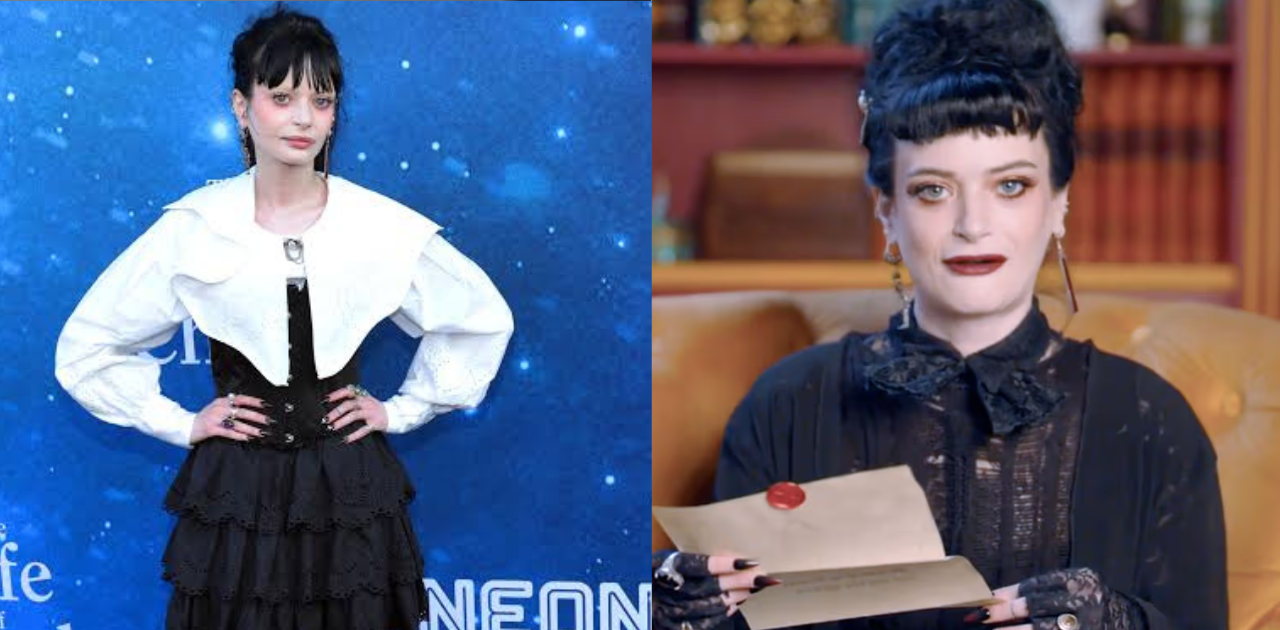

Ruth Codd has become a familiar face to television audiences through her performances in Netflix productions and her appearance on the BBC reality series The Celebrity Traitors. The Irish actress is admired for her sharp humour, distinctive personality, and honest approach to discussing disability. However, one of the most frequently searched subjects about her personal life concerns her legs and the medical experiences that changed her life.
The story behind the Ruth Codd leghttps://www.google.com/search?sca_esv=88edd551f3a1552a&sxsrf amputation journey is more complicated than a single injury or medical procedure. Her difficulties began when she was a teenager after injuring her foot while playing football. What initially appeared to be an ordinary sporting accident eventually developed into years of medical complications, chronic pain, repeated operations, and difficulties with mobility.
At the age of 23, Ruth made the decision to have her right leg amputated below the knee. The procedure changed her life, allowing her to move forward after years of struggling with pain and unsuccessful attempts to repair the injured limb.
However, her medical journey did not end there. In November 2025, she underwent a second amputation, this time involving her left leg. The decision followed further complications affecting the foot and joints after years of relying on crutches and adjusting her movement to accommodate the first amputation.
Her experiences have attracted attention because she discusses disability without pretending that every part of the journey is easy. She has spoken about frustration, recovery, independence, accessibility, and the importance of making personal decisions about quality of life.
Understanding the https://celebrityfocus.co.uk/ story also means understanding the person behind the headlines. She is not simply an actress known for having undergone amputations. She is a performer whose career includes The Midnight Club, The Fall of the House of Usher, and How to Train Your Dragon, and whose experiences have contributed to wider conversations about disability representation in entertainment.

Who Is Ruth Codd?
Ruth Codd reveals she has undergone a second leg amputation
Irish actress Ruth Codd has second leg amputation
7
Ruth Codd is an Irish actress from Wexford, Ireland. She became widely recognised after appearing as Anya in Netflix’s supernatural mystery series The Midnight Club, created by Mike Flanagan and Leah Fong. Her performance introduced her to an international audience and established her as an emerging talent in television.
Before entering the entertainment industry, Ruth worked in different creative professions, including barbering and makeup artistry. She also developed a substantial social media following through humorous TikTok videos and content discussing disability.
Her personality helped distinguish her from many emerging online creators. Instead of presenting herself through carefully polished motivational messages, she often used humour, sarcasm, and direct commentary to discuss everyday experiences.
The story of the Ruth Codd leg amputations has become an important part of her public profile, but her professional achievements extend beyond her personal medical history. She has demonstrated an ability to portray complicated characters and bring individuality to roles that might otherwise rely on familiar stereotypes about disability.
Her appearance on The Celebrity Traitors in 2025 introduced her to another audience. The BBC competition placed celebrities in a Scottish castle, where contestants had to identify the hidden Traitors while avoiding elimination themselves.
Ruth’s participation demonstrated another side of her personality. She was outspoken, observant, competitive, and willing to challenge other contestants. Her television appearances have helped establish her as more than a performer associated with horror productions.

What Happened to Ruth Codd’s Leg?
Ruth Codd’s original injury happened when she was 15 years old. She injured her foot while playing football, an accident that developed into a long-term medical problem rather than healing normally.
Initially, the injury might have appeared to be something that would eventually improve with treatment. However, Ruth experienced continuing complications, including chronic pain and mobility difficulties. Her recovery became a prolonged process involving repeated medical appointments, operations, and periods of relying on crutches.
She later explained that she spent approximately eight years dealing with the consequences of the injury before deciding to undergo her first amputation.
The situation affected far more than her physical movement. Being a teenager and young adult while repeatedly experiencing medical problems meant that everyday activities became difficult. Activities she had previously enjoyed, including horse riding, were affected by her changing mobility.
In interviews, Ruth has described the emotional frustration associated with having her life revolve around trying to repair an injured foot. Each treatment offered the possibility of improvement, but the underlying difficulties continued.
Her experience also demonstrates why serious injuries should not be judged only by how they initially happen. A relatively ordinary accident can sometimes lead to long-term complications that require significant medical intervention.
According to her interviews, Ruth eventually reached a point where continuing with unsuccessful treatments no longer seemed like the best way to improve her quality of life.
Why Did Ruth Codd Have Her Right Leg Amputated?
Ruth chose to have her right leg amputated below the knee when she was 23 because of the long-term consequences of her football injury.
The original injury had resulted in years of treatment, chronic pain, and limited mobility. Despite multiple operations, she continued experiencing problems that affected her everyday life.
She explained that the decision was not made suddenly. It followed years of attempting different treatments and hoping that her foot would eventually recover.
One of the most revealing aspects of her experience was her description of the relief she felt after receiving a prosthetic leg. Rather than viewing the operation exclusively as a loss, she described it as an opportunity to escape the pain that had dominated much of her young adulthood.
In an interview with Teen Vogue, she recalled her reaction to taking her first steps with the prosthesis:
“Oh, it’s not sore anymore.”
That simple observation captures an important part of her experience. She had become so accustomed to living with pain that experiencing movement without the same discomfort felt remarkable. Teen Vogue+1
The Ruth Codd leg amputation therefore represented a significant change in her approach to life. It was a medical decision intended to improve her physical well-being, independence, and opportunities for the future.
It is also important to understand that amputation is not a universal solution for people experiencing foot injuries or chronic pain. Every patient’s circumstances are different, and such decisions require individual medical assessment, careful discussion, and consideration of available treatment options.
For Ruth, however, the procedure became an important turning point after years of unsuccessful attempts to manage her condition.
Why Did Ruth Codd Have Her Second Leg Amputated?
Ruth Codd charms Late Late Show as she looks to future
One of the biggest developments in Ruth’s medical journey came in November 2025, when she revealed that she had undergone a second leg amputation.
Unlike her original injury, the problem affecting her left foot was connected to the physical demands of compensating for the first amputation. After losing her right leg below the knee, she relied heavily on crutches for several years.
Over time, the way she moved placed additional pressure on her remaining foot. She explained that she frequently relied on her toes while using crutches, and this contributed to significant damage to the joints in her left foot.
She had previously undergone an operation to remove all the toes on that foot in 2021. However, the underlying problems continued, and doctors eventually told her that the foot was unlikely to improve.
In November 2025, she decided to undergo an elective amputation of her left leg. The announcement attracted widespread media attention because it meant that she had now undergone amputations involving both legs. The Guardian+2
The second operation was another major adjustment. Although Ruth had already experienced rehabilitation after her first amputation, losing the other leg created different mobility challenges.
The two experiences were not identical. Her first operation addressed the original football injury and its complications, while the second followed years of additional physical strain and damage to her remaining foot.
The Ruth Codd leg story therefore demonstrates how changes in mobility can sometimes create further physical challenges elsewhere in the body. It also highlights why rehabilitation, appropriate mobility equipment, and ongoing medical support are important after major limb surgery.
Ruth Codd’s Two Leg Amputations Explained
Many people searching for information about Ruth want to understand exactly what happened to each leg. Although the two procedures are connected through her medical history, they involved different circumstances and happened several years apart.
Her right leg was amputated first, following the football injury she sustained as a teenager. Her left leg was amputated later, after complications associated with years of using crutches and damage to the joints in her remaining foot.
The following table provides a straightforward overview of her medical journey.
| Detail | Right leg | Left leg |
|---|---|---|
| Original problem | Football injury at age 15 | Joint damage and complications |
| Main contributing issue | Chronic pain and nerve damage | Long-term reliance on crutches |
| Previous treatment | Multiple operations over several years | Toe removal in 2021 |
| Amputation | Around age 23 | November 2025 |
| Amputation level | Below the knee | Reported second leg amputation |
| Main reason | Improve quality of life and reduce pain | Address irreversible foot damage |
The timeline is important because some online articles incorrectly suggest that both amputations happened at the same time. In reality, the first procedure took place years before the second.
Her experience also challenges the assumption that an individual who has already undergone an amputation will never experience additional problems affecting the other limb. Changes in walking patterns, pressure distribution, joint movement, and the use of mobility aids can create additional physical demands.
In Ruth’s case, her remaining foot experienced considerable damage during the years when she depended on crutches. Her second operation followed medical discussions about the limited prospects of further improvement.
How Ruth Codd’s Amputations Changed Her Everyday Life
Losing a leg can change many aspects of everyday life, from walking and standing to travelling, working, exercising, and completing ordinary household activities. For someone who has experienced amputations involving both legs, adapting to these changes can require significant rehabilitation and practical adjustments.
Ruth has been open about the difficulties associated with learning to live with a different level of mobility. Her experiences include adjusting to prosthetic equipment, using crutches, spending time in rehabilitation, and finding ways to remain independent.
After her first amputation, she described feeling relieved because the constant pain associated with her injured foot was no longer affecting her in the same way. This did not mean that recovery was effortless, but it gave her an opportunity to approach life differently.
The second operation introduced another period of adjustment. In November 2025, she discussed recovering after surgery and waiting for the affected limb to heal before being fitted with an appropriate prosthesis.
She also spoke humorously about her new wheelchair, which she named Fat Tony. The nickname reflected the sense of humour that has become a recognisable part of her public personality.
The Ruth Codd leg journey demonstrates that independence does not always mean moving without assistance. For some people, independence involves using the right equipment, having access to suitable environments, and receiving practical support when necessary.
Her experience also reminds audiences that disability is not a single, fixed condition. An individual’s mobility needs can change over time, particularly following additional surgery or changes in physical health.
Ruth Codd’s Recovery and Rehabilitation After Her Second Amputation
Recovery after an amputation involves more than allowing a surgical wound to heal. It can include pain management, rehabilitation, strengthening exercises, mobility training, prosthetic assessment, and learning new movement techniques.
Following her second amputation in November 2025, Ruth discussed the recovery process and the time needed before she could use a prosthesis. She also spoke about receiving support from rehabilitation professionals.
Her recovery became a subject of public interest when she appeared on Ireland’s The Late Late Show in January 2026. She discussed her experiences during the programme and demonstrated how she was adjusting to life after the second procedure.
An important part of her progress was her work with the National Rehabilitation Hospital in Ireland. Rehabilitation professionals helped her adapt to her changing mobility and work toward activities she wanted to resume.
By January 2026, she was able to walk across the television studio stage with assistance from her rehabilitation physiotherapist. She also discussed returning to horse riding, an activity that had been important to her before her original injury. Irish Examiner+1
This development was significant because it demonstrated that rehabilitation is not simply about learning to walk again. It is also about recovering access to activities that contribute to a person’s enjoyment, identity, and independence.
The Ruth Codd leg recovery story highlights the importance of realistic rehabilitation goals. Progress can involve small improvements, new equipment, better mobility techniques, and gradually returning to activities that once seemed difficult.
Her experience should not be interpreted as a guarantee that every amputee will achieve the same outcomes. Recovery varies depending on the person’s medical circumstances, surgical history, physical condition, and available rehabilitation support.
Does Ruth Codd Wear Prosthetic Legs?
Ruth has used a prosthetic leg following her first amputation. A prosthesis is an artificial limb designed to replace some or all of the function of a missing limb.
Below-knee prostheses generally include a socket that connects to the residual limb, along with components designed to provide stability and support during movement. Different prosthetic systems are developed according to an individual’s physical requirements and mobility goals.
After her first operation, Ruth described the experience of taking her first steps with a prosthesis as a major moment in her recovery. She particularly remembered how different it felt to move without the persistent pain she had previously experienced.
Following her second amputation, her mobility requirements changed. She discussed waiting for the surgical area to heal before being fitted with an appropriate prosthesis.
It is important not to assume that she uses a particular prosthetic model or configuration unless she has publicly confirmed it. Prosthetic equipment is highly individual, and the most suitable option depends on several clinical and practical factors.
The availability of prosthetic services, rehabilitation, and suitable mobility equipment can also influence how easily someone adapts after surgery.
For readers unfamiliar with prosthetic technology, the important point is that an artificial limb is not simply a replacement designed to look like a natural leg. It is a functional device that must be assessed, fitted, adjusted, and used according to the individual’s needs.
How Ruth Codd Became an Actress After Her Medical Struggles
Who plays Juno Usher in The Fall of the House of Usher? – Ruth Codd – The Fall of… – Capital
Ruth Codd, Bintang Film ‘How To Train Your Dragon’ Jalani Amputasi Kaki
6
Ruth’s professional journey is particularly interesting because she did not initially plan to become a television actress. Before entering the entertainment industry, she worked as a barber and makeup artist.
Her life changed during the COVID-19 pandemic, when lockdowns disrupted employment and everyday routines. She began creating TikTok videos that showcased her humour, personality, and experiences.
Her content attracted a large audience, partly because she discussed disability in a straightforward and entertaining way. Rather than limiting herself to serious discussions, she created comedic sketches and characters that allowed people to connect with her personality.
Her growing online popularity eventually attracted the attention of casting professionals working on Netflix’s The Midnight Club.
She was invited to audition for the role of Anya, a young woman living in a hospice who uses a wheelchair and has undergone a leg amputation. Ruth had never established herself as a professional actress before this opportunity.
Landing the role was a significant turning point. She moved from creating videos online to working on a major television production directed by experienced filmmakers.
The success of her first acting experience also opened opportunities for future projects. Her story demonstrates how social media can sometimes introduce performers to casting teams who might otherwise never have discovered them.
However, her career success was not simply the result of having a disability. Her humour, screen presence, personality, and ability to connect with audiences were also important factors.
Ruth Codd’s Role as Anya in Netflix’s The Midnight Club
The Midnight Club premiered on Netflix in October 2022. Created by Mike Flanagan and Leah Fong, the supernatural mystery series follows a group of young people living in a hospice who gather at night to tell frightening stories.
Ruth played Anya, one of the central characters. Anya is a sharp-tongued, rebellious young woman whose sarcastic personality often hides emotional vulnerability.
The character is a lower-leg amputee and wheelchair user, making Ruth’s personal experience particularly relevant to the performance.
One of the most important aspects of the casting was that the production wanted an amputee actress for the role. This decision helped provide a more authentic representation of disability on screen.
Ruth discussed the importance of this representation in an interview with Teen Vogue. She explained:
“Anya, she’s just human.”
Her point was that disabled characters should be allowed to exist as complete individuals rather than being defined entirely by their medical circumstances. Teen Vogue+1
This perspective is important in television because disabled characters have historically been represented through limited storytelling patterns. Sometimes they are portrayed as helpless victims, while in other productions they are presented primarily as inspirational figures.
Anya offers a different approach. She has a complicated personality, makes mistakes, forms relationships, experiences frustration, and participates in the same emotional conflicts as the other characters.
Ruth’s performance helped demonstrate how authentic casting can improve storytelling. Her personal understanding of mobility and disability gave her additional insight into the character without reducing Anya to a reflection of her own life.
Ruth Codd in The Fall of the House of Usher
Following her appearance in The Midnight Club, Ruth continued working with filmmaker Mike Flanagan.
She appeared in Netflix’s The Fall of the House of Usher, a horror miniseries released in October 2023. The production reimagines several elements of Edgar Allan Poe’s literary works within a modern story about a wealthy family facing mysterious deaths and the consequences of its past decisions.
Ruth played Juno Usher, a character connected to the powerful Usher family. Her role gave her another opportunity to demonstrate her acting abilities in a darker and more dramatic production.
The series featured an ensemble cast that included Bruce Greenwood, Carla Gugino, Mary McDonnell, and several other established performers.
Her participation in the project helped establish her continuing relationship with Flanagan’s style of storytelling. The director is known for creating atmospheric horror productions that combine supernatural elements with psychological and emotional themes.
For Ruth, moving from a first acting role into another Netflix production was a significant professional achievement.
The connection between the Ruth Codd leg story and her acting career is particularly relevant here. Her disability has sometimes influenced the opportunities she receives, but her performances demonstrate that she can work across different characters and genres.
Ruth Codd’s Appearance on The Celebrity Traitors
Celebrity Traitors fans issue furious warning as Ruth Codd comes under fire from Jonathan Ross
In 2025, Ruth expanded her television profile by appearing on BBC’s The Celebrity Traitors. The reality competition brought together well-known personalities who had to identify the contestants secretly assigned as Traitors.
The programme placed participants in a castle environment where alliances, deception, suspicion, and strategic voting determined who remained in the competition.
Ruth’s direct personality made her an interesting contestant. She was willing to challenge other players and question their behaviour, particularly when she believed someone was acting suspiciously.
She correctly suspected television presenter Jonathan Ross, but her attempts to convince the other contestants did not succeed. She was eventually eliminated after the Traitors targeted her.
Her participation introduced her to viewers who might not have watched her Netflix productions. It also showed that her television personality was different from some of the dark and unsettling characters she had previously portrayed.
The Ruth Codd leg story was not the defining feature of her participation in the competition. Instead, audiences saw her intelligence, humour, and willingness to speak openly in a socially demanding environment.
Her appearance helped establish her as a versatile television personality capable of moving between scripted drama and unscripted entertainment.
Ruth Codd’s Views on Disability Awareness and Accessibility
Ruth has used her public platform to discuss disability awareness and challenge assumptions about people who have undergone amputations. Her approach is often humorous, but she has also spoken seriously about the practical barriers disabled people encounter.
One of the important issues she has highlighted is accessibility. Being able to enter a building, use public transport, travel independently, or participate in entertainment activities should not depend on whether someone has a disability.
In January 2026, following her second amputation, Ruth discussed accessibility and the importance of making public environments more inclusive. Her message was particularly relevant because mobility equipment and rehabilitation alone cannot solve problems created by inaccessible buildings and public spaces.
She has also challenged the idea that disabled people should automatically be described as inspirational. Although people may admire her achievements, she does not necessarily see herself through that label.
This is an important distinction. A person can have a difficult medical experience, make significant progress, and achieve professional success without wanting every aspect of their life turned into a motivational story.
Her perspective encourages audiences to see disabled people as individuals with different personalities, ambitions, frustrations, and interests.
The Ruth Codd leg experience therefore contributes to a wider discussion about representation. Disability awareness should not be limited to celebrating individual achievements; it should also involve improving accessibility, respecting independence, and recognising the practical challenges people face.
What Ruth Codd Has Said About Her Amputation Experience
Some of Ruth’s most meaningful comments have focused on the emotional process of accepting that her original injury might never recover.
In interviews, she has explained that she spent years attempting to repair the damaged foot and struggling with the uncertainty of repeated operations.
She has also acknowledged that accepting a major physical change takes time. Her experience was not an instant transformation from difficulty to happiness.
In an interview with The Irish Independent, she reflected on the importance of accepting that life does not always develop according to expectations. She explained that social media helped her become more comfortable with being herself. Irish Independent+1
Another important aspect of her outlook is her sense of humour. She has frequently used jokes to discuss medical experiences that might otherwise be difficult to talk about publicly.
This does not mean that she considers every aspect of disability funny. Rather, humour has become one way of expressing her personality and dealing with challenging circumstances.
Her story also offers a useful reminder that acceptance does not mean forgetting the difficulties associated with an injury. Someone can feel relieved about a medical decision while still missing activities, experiences, or abilities from an earlier stage of life.
Ruth Codd’s Life Beyond Acting and Disability
Although public attention often focuses on her medical history and television appearances, Ruth has interests that extend beyond acting.
Before becoming famous, she enjoyed creative work involving hair, makeup, and personal styling. These interests helped develop the artistic skills that formed part of her professional life before television.
She has also spoken about her childhood interest in horses. Horse riding was an important activity for her before the football injury changed her mobility.
Returning to horse riding after her second amputation was therefore particularly meaningful. It represented more than a physical activity; it was a connection to something she had enjoyed earlier in life.
Her experience demonstrates why rehabilitation should consider personal interests rather than focusing exclusively on basic mobility.
For one person, success might mean walking independently. For another, it could involve returning to work, travelling, riding a horse, playing a sport, or participating in social activities.
The Ruth Codd leg journey shows that individual goals matter. Her willingness to discuss these goals has helped audiences understand the wider meaning of recovery.
Frequently Asked Questions About Ruth Codd’s Leg
What happened to Ruth Codd’s leg?
Ruth Codd injured her foot while playing football at the age of 15. The injury developed into a long-term medical problem involving chronic pain and repeated operations. After approximately eight years of complications, she chose to have her right leg amputated below the knee at the age of 23. She later underwent a second amputation involving her left leg in November 2025.
Why did Ruth Codd have both legs amputated?
Ruth’s right leg was amputated because of complications following her teenage football injury, including chronic pain and nerve damage. Her left leg was amputated years later after prolonged reliance on crutches contributed to serious damage in her remaining foot and joints. The two procedures happened at different times and involved different medical circumstances.
When did Ruth Codd lose her first leg?
Ruth underwent her first amputation when she was 23 years old, following years of unsuccessful treatment for a football injury sustained at 15. The procedure involved her right leg below the knee and eventually allowed her to move forward after experiencing chronic pain and mobility difficulties.
When did Ruth Codd have her second amputation?
Ruth revealed that she underwent her second leg amputation in November 2025. The operation involved her left leg after years of using crutches and developing significant joint damage in her remaining foot. She subsequently discussed her rehabilitation and recovery during television appearances in early 2026.
Does Ruth Codd use prosthetic legs?
Ruth has used a prosthetic leg following her first amputation and has discussed how important the experience was for her recovery. After her second operation, she needed time for healing and rehabilitation before using an appropriate prosthetic device. Her specific current prosthetic arrangements have not been fully detailed publicly.
What caused Ruth Codd’s original injury?
Ruth injured her foot while playing football when she was 15. The injury did not heal properly and eventually resulted in years of medical treatment, chronic pain, and mobility problems. She later decided that amputation was the best option for improving her quality of life.
Can Ruth Codd walk after losing both legs?
Ruth demonstrated walking ability during her appearance on The Late Late Show in January 2026, with support from her rehabilitation physiotherapist. However, her mobility depends on recovery, rehabilitation, and suitable equipment. Her progress should not be interpreted as evidence that every person with similar amputations will have the same experience.
What TV shows has Ruth Codd appeared in?
Ruth is best known for playing Anya in Netflix’s The Midnight Club and Juno Usher in The Fall of the House of Usher. She also appeared as Phlegma the Fierce in the 2025 live-action film How to Train Your Dragon and participated in the BBC reality competition The Celebrity Traitors.
How old was Ruth Codd when she lost her first leg?
Ruth was 23 when she underwent her first leg amputation. Her original football injury occurred when she was 15, meaning she spent approximately eight years dealing with medical complications before making the decision to undergo surgery.
Is Ruth Codd an advocate for disability awareness?
Ruth has used interviews and social media to discuss disability, accessibility, and the experiences of amputees. She frequently challenges stereotypes about disabled people and encourages audiences to recognise individuals beyond their medical circumstances. Her performances in productions such as The Midnight Club have also contributed to more authentic disability representation on television.
Conclusion
Ruth Codd’s story is about much more than losing her legs. Her medical journey began with a football injury during adolescence and developed into years of chronic pain, repeated operations, and difficult decisions about her future. At 23, she chose to have her right leg amputated, and in November 2025, she underwent a second amputation involving her left leg.
Despite these challenges, she continued developing her professional career, moving from social media content creation into major television productions. Her performances in The Midnight Club and The Fall of the House of Usher, alongside her appearance on The Celebrity Traitors, demonstrate her versatility and personality.
The Ruth Codd leg story also highlights the importance of rehabilitation, accessible environments, appropriate mobility equipment, and authentic disability representation. Her experiences show that making difficult medical decisions can sometimes create opportunities for a better quality of life.
Perhaps the most valuable lesson from her journey is that disability does not define an entire person. Ruth remains an actress, creative individual, horse-riding enthusiast, and outspoken personality with ambitions beyond her medical history.
Her story is a reminder that progress does not always follow a predictable path. Sometimes it involves accepting change, finding new ways to pursue old interests, and building a future that looks different from the one originally imagined.