
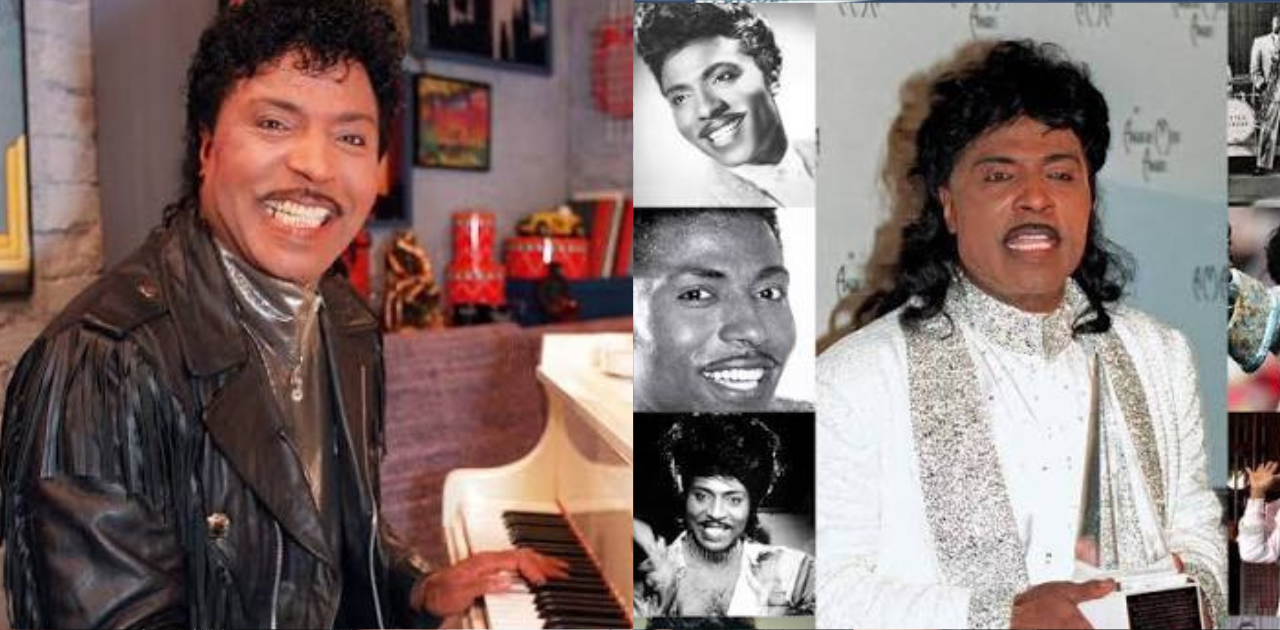

Danny Jones Penniman is best known as the adopted son of Little Richard, one of the most influential pioneers in rock and roll history. While his father became famous for his electrifying performances, distinctive voice, flamboyant style, and groundbreaking recordings, Danny developed a much quieter public identity. His story offers a rare look at the personal life of a music icon whose fame often overshadowed the relationships that mattered to him away from the stage.
Much of the reliable information about Danny comes from a detailed 2020 interview published by Rolling Stone, in which he reflected on growing up around Little Richard, becoming part of his household as a teenager, and helping him during his final years. The account revealed a relationship shaped by family responsibility, personal guidance, faith, and companionship. It also helped readers see a different side of the legendary performer: not just the artist who transformed popular music, but the father figure who shared everyday experiences with his son.
Although Danny Jones Pennimanhttps://www.google.com/search?q=danny+jones+penniman&oq attracts public interest because of his connection to a major figure in music history, many details of his personal life remain private. His exact birth date, current professional activities, marital status, and financial circumstances are not firmly established in reliable public reporting. Understanding his story therefore requires separating documented facts from online speculation and recognizing that his importance does not depend on how much of his private life is publicly available.

Who Is Danny Jones Penniman?
Danny Jones Penniman is the adopted son of American singer, pianist, and songwriter Little Richard, whose birth name was Richard Wayne Penniman. Little Richard helped establish the sound and spirit of early rock and roll through his energetic piano playing, powerful vocals, and theatrical performances. His best-known recordings include “Tutti Frutti,” “Long Tall Sally,” “Lucille,” and “Good Golly, Miss Molly.” Danny’s connection to this musical legacy has made him a subject of interest for fans researching the singer’s family and private life.
Unlike many relatives of famous entertainers, Danny has not built a highly visible public profile through regular interviews, reality television, or frequent social media appearances. His public identity is largely connected to his relationship with Little Richard and the memories he shared about their life together. This limited public presence can make it difficult to find trustworthy information about his own ambitions, career, and day-to-day activities. Rather than treating every online biography as equally reliable, readers should give greater weight to direct interviews and established publications.
Danny’s story is particularly interesting because it provides a family perspective on an artist who spent much of his life performing for enormous audiences. Concert footage and music histories explain Little Richard’s influence on rock and roll, but they cannot fully describe what he was like at home or how he behaved in private. Danny’s recollections help fill part of that gap by showing the relationship between a celebrated performer and the son who knew him beyond his public image.
Danny Jones Penniman’s Early Life and Family Background
Public accounts of Danny’s early life are limited, so a complete biography of his childhood cannot be established with confidence. In his interview with Rolling Stone, however, Danny recalled knowing Little Richard from the time he was in the second grade. Richard would visit his mother’s home in South Central Los Angeles, where children from the neighborhood gathered to see the famous entertainer. Danny remembered Richard arriving with bags of coins that he would toss into the air for the children to collect.
These memories suggest that Danny’s first experiences with Little Richard were not necessarily defined by celebrity culture. To the children who gathered around him, Richard could be an entertaining visitor who brought excitement to an ordinary day. His fame was part of the experience, but the small gestures Danny remembered were personal and immediate. Such moments help explain why the relationship later became more than a connection between a music star and a child from his social circle.
https://celebrityfocus.co.uk/growing up in a family with several siblings. His mother, Creola Jones, was a friend of Little Richard through their religious community. According to Danny’s account, their relationship developed when Richard was deeply involved in the Seventh-day Adventist Church and had stepped away from his earlier rock-and-roll lifestyle. Danny’s recollections show that his mother and Richard connected through faith and personal friendship rather than simply through his celebrity status.
There is no need to fill the gaps in Danny’s early biography with unverified claims about his birth date, education, or childhood circumstances. Reliable reporting provides some important details, but it does not offer a complete record of his life before he joined Richard’s household. A responsible account acknowledges these limits while focusing on the events Danny himself described.
How Little Richard Became Danny Jones Penniman’s Father
The relationship between Danny and Little Richard became more significant after Danny’s biological father died. Danny explained that his mother wanted someone she trusted to help guide her son. She approached Richard and asked whether he could take Danny into his care, and Richard agreed. The Rolling Stone profile reports that Little Richard adopted Danny when he was 14, in 1984. Danny described the arrangement as a handshake adoption rather than a process accompanied by formal paperwork.
This detail deserves careful interpretation. Many articles refer to Danny as Little Richard’s adopted son, and established biographical accounts also identify him as Richard’s adopted child. However, Danny’s description of the arrangement does not by itself establish every legal detail of the adoption. The most accurate approach is to describe the relationship as an adoption or parental arrangement, while making clear that the publicly reported circumstances included the informal agreement Danny recalled.
For a teenager, moving into the care of another adult can be a major change, even when the adult is familiar and trusted. In Danny’s case, that transition also meant becoming part of the life of a performer whose career had taken him through extraordinary success, personal struggles, religious commitments, and repeated changes in direction. Richard was not simply a famous person who offered occasional advice; he became a central figure in Danny’s upbringing.
The story also demonstrates that family relationships can develop through commitment and responsibility rather than biological connection alone. Richard took on a parental role, and Danny later remained closely involved in his life. Their relationship continued for decades, eventually extending beyond childhood guidance into the practical responsibilities associated with caring for an aging parent.
The Father-Son Relationship Behind the Celebrity Image
Little Richard was famous for his extravagant stage presence. His performances often featured dramatic costumes, bold makeup, elaborate hairstyles, powerful piano playing, and a vocal style that mixed gospel intensity with rhythm and blues. Yet the person Danny knew at home was not always the larger-than-life entertainer audiences saw onstage. In his account, Danny remembered a man who could be humble and understated in everyday settings.
That difference between public image and private behavior is common among performers whose careers depend on creating a memorable persona. A concert audience may see confidence, theatricality, and spectacle, while family members experience routines, conversations, disagreements, jokes, and moments of vulnerability. Danny’s memories matter because they offer a glimpse of the ordinary human experiences that exist behind a celebrated public identity.
Danny also recalled receiving guidance from his father. One piece of advice he shared concerned money: “You control the money, don’t let the money control you.” The point was not simply about wealth. It reflected a broader lesson about maintaining personal independence and avoiding a situation in which possessions or financial pressure determine a person’s decisions. Danny explained that the meaning of such advice became clearer as he grew older.
Advice like this can be difficult for a young person to understand immediately. A teenager might hear a warning about money without fully appreciating how financial decisions affect freedom, relationships, and long-term security. With experience, the same words can take on a deeper meaning. Danny’s recollection provides a specific example of how a parent’s influence can continue long after a conversation has ended.
Danny Jones Penniman’s Connection to Music and Entertainment
Because Little Richard was a major musical innovator, people naturally wonder whether Danny pursued a career in music. Some online biographies describe Danny as a rapper or musician, but reliable sources provide limited verifiable information about a substantial independent recording career, released albums, chart positions, or major professional achievements under his name. Without strong evidence, it would be misleading to present specific songs, awards, or commercial successes as established facts.
Being raised by a celebrated musician can create both opportunities and expectations. A child may have access to music, performance environments, and people working in entertainment, but that does not automatically determine the career he or she will choose. Some children of performers become artists themselves, while others work behind the scenes or pursue entirely different interests. Danny’s limited public profile makes it difficult to establish precisely how he approached those possibilities.
It is also important to distinguish Danny from other entertainers who share similar names. For example, Danny Jones of the British band McFly is a separate person and should not be confused with Danny Jones Penniman. Name confusion can cause inaccurate search results and misleading biographical claims, particularly when articles use similar headlines or omit the full name.
For readers researching Danny’s professional life, the strongest approach is to look for verifiable credits, official releases, interviews, or reputable reporting. At present, his best-documented public significance remains his relationship with Little Richard and his role in the singer’s later life. That does not mean Danny had no interests or professional experiences of his own; it means that the available evidence does not support a detailed account of them.
Little Richard’s Career and the Legacy Danny Inherited
To understand why Danny Jones Penniman receives attention, it helps to understand the extraordinary place his father holds in music history. Born Richard Wayne Penniman in Macon, Georgia, on December 5, 1932, Little Richard emerged as one of the defining artists of early rock and roll. His recordings combined rhythm and blues, gospel-influenced vocals, an explosive piano style, and a theatrical performance approach that helped reshape popular music. The Georgia Encyclopedia describes him as the “architect of rock and roll,” reflecting his lasting importance to the genre.
Songs such as “Tutti Frutti” and “Long Tall Sally” helped establish the energetic sound that became associated with the emerging rock-and-roll movement in the 1950s. His influence reached beyond his own recordings, inspiring later generations of performers and helping demonstrate how Black rhythm-and-blues artists shaped the development of mainstream popular music. His legacy is connected not only to his commercial success but also to the expressive freedom and musical intensity he brought to the stage.
Richard’s life was not a straightforward journey from success to retirement. He moved between secular music and religious work, at different times stepping away from rock and roll to focus on Christian preaching and evangelism. His relationship with faith remained a major part of his public identity, even as he continued to be recognized as a foundational rock performer. The Seventh-day Adventist Encyclopedia’s account of his life documents this complicated relationship between his musical career, religious convictions, and later years.
Danny grew up within this unusual combination of music, fame, faith, and personal reinvention. His father’s history meant that family life was connected to a wider cultural story. Yet Danny’s memories also show that a person can be historically important and still occupy ordinary roles within a family. The public remembers Little Richard for the records and performances; Danny could also remember him as the parent who offered advice, shared daily routines, and needed support later in life.
Danny Jones Penniman During Little Richard’s Final Years
One of the most revealing parts of Danny’s story concerns the years before Little Richard died. As Richard’s health deteriorated, he experienced significant mobility problems and spent time using a wheelchair. Danny remained close to him and helped with everyday activities. In the Rolling Stone profile, journalist Patrick Doyle described the pair’s routine at a hotel in Nashville, where Danny accompanied his father as they moved through the lobby and out to their vehicle.
The scene offers a striking contrast with the images that defined Richard’s early career. The performer who had once dominated concert stages with boundless energy was now an older man whose daily movements required assistance. Danny’s presence during this period illustrates a shift in their relationship: the father who had guided a teenager was now relying on the adult son who had grown up under his care.
Supporting an aging parent can involve a range of responsibilities, from helping with mobility to accompanying the person on errands and making everyday routines more manageable. These tasks may not attract the attention given to a celebrity’s public appearances, but they can become central to family life. Danny’s involvement highlights the often-unseen work that accompanies aging, illness, and the effort to preserve dignity and independence.
The final years of a famous person’s life can also be misunderstood when public attention focuses mainly on health updates or dramatic headlines. Danny’s account provided a more personal view of Richard’s later circumstances, including his religious outlook and the quieter life he led away from the stage. It showed that Richard’s identity continued to evolve and that his son remained part of that journey.
Little Richard’s Death and Danny’s Role in Confirming the News
Little Richard died on May 9, 2020, at the age of 87. His death marked the end of a life that had helped transform the development of rock and roll and influence generations of performers. The Seventh-day Adventist Encyclopedia reports that he died of bone cancer in Tennessee and identifies Danny Jones Penniman among his survivors.
Danny also became an important source of confirmation following his father’s death. Contemporary reporting stated that he confirmed the news to Rolling Stone, linking him to the public announcement of a moment that mattered deeply to music fans around the world. This was not merely a media responsibility. For Danny, the death meant losing the man who had become his father when he was a teenager and who had remained a central presence in his life for decades.
The public response to Richard’s death reflected the scale of his cultural influence. Musicians, journalists, and fans remembered his contributions to rock and roll, his distinctive performance style, and his role in opening new creative possibilities for popular music. Yet the loss also had a private dimension that could not be measured through tributes or record sales. For family members, grief is shaped by shared experiences and the absence of everyday contact.
Danny’s role during this period adds another dimension to his biography. He was connected to the public history of Little Richard because he confirmed the death, but his relationship with Richard had never been limited to the public. He had experienced the long arc of a family bond, from childhood memories and teenage adoption to the responsibilities of caring for an aging parent.
Danny Jones Penniman’s Personal Life, Marriage, and Privacy
Interest in Danny often extends beyond his relationship with Little Richard. Readers search for information about his age, romantic relationships, marriage, children, and current lifestyle. However, dependable public sources do not establish all these details. His exact birth date is not consistently documented in authoritative reporting, and there is no sufficiently reliable public evidence to state with confidence whether he is married or has children.
The lack of information can encourage speculation. Some entertainment websites publish specific personal details without showing where those claims originated, and other sites may repeat the same claims until they appear established. Repetition, however, is not proof. A fact becomes more trustworthy when it can be traced to a direct interview, an official statement, a credible publication, or a public record appropriate to the claim.
Privacy is particularly important when a person is known primarily because of a relative’s fame. A well-known parent may attract decades of public attention, but that does not mean every family member has chosen a similar life. Danny has generally maintained a low public profile, and there is no need to treat his limited media presence as evidence of a hidden controversy or a dramatic personal story.
A careful biography can still be informative without inventing details. It can explain what is known about Danny’s family relationship, his father’s influence, and the years they spent together, while clearly identifying the areas where public evidence is limited. This approach respects the individual and helps readers distinguish genuine information from entertainment-site speculation.
Danny Jones Penniman’s Net Worth and Financial Information
The financial circumstances of Danny Jones Penniman are not established by reliable, publicly documented figures. Some online articles may provide estimates, but without verified financial records, credible disclosures, or authoritative reporting, those numbers should not be presented as facts. A connection to a wealthy or successful entertainer does not automatically reveal an individual’s own net worth.
Net worth is generally calculated by subtracting liabilities from assets. For a private individual, that calculation may require information about property, investments, business interests, debts, and other financial obligations. Unless those details are publicly documented, an online figure is usually an estimate at best. The same caution applies to claims about inherited money, estate distributions, or the value of personal assets.
Little Richard’s musical success and long career are well documented, but his achievements cannot be used to calculate Danny’s personal wealth. Questions about inheritance are also distinct from questions about net worth. An inheritance depends on legal and estate circumstances, while a person’s financial position may change through employment, investments, spending, and other factors.
For readers researching this topic, the most accurate conclusion is that Danny Jones Penniman’s net worth has not been reliably established in public sources. Avoiding an unsupported number is more useful than repeating a figure that may have originated without evidence. It also reinforces an important principle in celebrity reporting: financial estimates should be clearly labeled and supported, not treated as confirmed personal information.
Quick Facts About Danny Jones Penniman
The table below summarizes the main biographical details that can be stated with reasonable confidence. It also distinguishes established information from details that remain uncertain.
| Detail | What is publicly known |
|---|---|
| Full name | Danny Jones Penniman |
| Best known for | Being the adopted son of Little Richard |
| Adoptive father | Richard Wayne Penniman, known professionally as Little Richard |
| Mother | Creola Jones |
| Adoption account | Danny said Richard took him into his care when he was 14, in 1984 |
| Early-life memories | Danny recalled Richard visiting his mother’s home in Los Angeles |
| Family relationship | Danny remained close to Richard through his later years |
| Father’s death | May 9, 2020 |
| Father’s age at death | 87 |
| Career details | A substantial independent music career is not well documented in reliable sources |
| Birth date | Not firmly established in authoritative public reporting |
| Marital status | Not reliably confirmed in public sources |
| Net worth | No verified public figure available |
| Current private life | Limited reliable information is publicly available |
These facts help establish the core of Danny’s public biography without presenting uncertain claims as confirmed. The adoption details come from Danny’s account in Rolling Stone, while the circumstances of Little Richard’s death are documented in biographical reporting and the Seventh-day Adventist Encyclopedia.
The table also illustrates why celebrity biographies should distinguish between well-supported facts and missing information. A reader may want to know Danny’s age or financial position, but the absence of a reliable public answer does not justify filling the gap with a guess. Accurate reporting is often as much about recognizing uncertainty as it is about presenting established facts.
Why Danny Jones Penniman’s Story Matters
At first glance, Danny’s biography may seem like a small part of a much larger story about rock and roll. Little Richard’s musical achievements, cultural influence, and distinctive personality have been discussed for decades. Yet Danny’s experiences reveal a different dimension of that history: the personal relationships that continued while the artist’s public career changed direction.
His account helps readers understand how a celebrity’s identity can look different depending on the relationship through which it is viewed. Fans may associate Richard with concerts, hit songs, television appearances, and extravagant costumes. Danny remembered neighborhood visits, conversations, parental advice, and the ordinary routines of later life. Both perspectives are valid, but they describe different parts of the same person.
Danny’s story also demonstrates the importance of family responsibility over time. Richard took him into his care when he was a teenager, and Danny later helped support Richard as his health declined. Their relationship was not frozen at the moment of adoption. It developed as both men moved through different stages of life, with each stage bringing new responsibilities and forms of understanding.
Finally, Danny’s experience reminds readers that the family members of famous people have their own boundaries. A person can contribute meaningfully to a public figure’s story without becoming a celebrity in their own right. Danny’s recollections are valuable because they provide insight into Little Richard’s private world, not because they reveal every detail of Danny’s personal life.
Frequently Asked Questions About Danny Jones Penniman
Who is Danny Jones Penniman?
Danny Jones Penniman is the adopted son of legendary rock-and-roll musician Little Richard, whose birth name was Richard Wayne Penniman. He became part of Richard’s household as a teenager and remained closely connected to him for decades. Danny is best known publicly for sharing memories of their relationship and for helping his father during his later years, rather than for maintaining a high-profile entertainment career of his own.
Was Danny Jones Penniman legally adopted by Little Richard?
Danny is widely described as Little Richard’s adopted son, and biographical accounts identify him as Richard’s adopted child. In a 2020 interview, Danny said his mother asked Richard to take care of him after his biological father died, and he described their arrangement as a handshake adoption. The interview reports that Richard adopted him when he was 14 in 1984, but Danny’s description does not independently establish every legal detail of the arrangement.
How old was Danny Jones Penniman when Little Richard adopted him?
According to the Rolling Stone profile published in June 2020, Danny was 14 years old when Little Richard adopted him in 1984. Danny explained that his mother wanted Richard to take him in and provide guidance following the death of his biological father. His recollections indicate that the relationship developed from an existing connection between Richard and Danny’s family rather than from a sudden introduction between strangers.
Did Danny Jones Penniman become a musician like Little Richard?
Some online biographies describe Danny as a rapper or musician, but reliable public reporting does not establish a detailed independent discography or a major music career with clearly documented releases and achievements. It is therefore best not to attribute particular albums, chart positions, or awards to him without stronger evidence. His best-documented public role remains his relationship with Little Richard and his involvement in his father’s later life.
Was Danny Jones Penniman with Little Richard when he died?
Danny was closely involved in Little Richard’s life during his final years, and contemporary reporting identified him as the person who confirmed his father’s death to Rolling Stone. Little Richard died on May 9, 2020, aged 87. Danny’s account of their later years described the practical support he provided as his father experienced serious health and mobility problems.
What is Danny Jones Penniman’s net worth?
Danny Jones Penniman’s net worth has not been established through reliable public financial disclosures. Online estimates should be treated cautiously because a person’s wealth cannot be calculated accurately without trustworthy information about assets, liabilities, investments, and other financial circumstances. Little Richard’s success as a musician does not, by itself, establish Danny’s personal financial position or the details of any inheritance.
Is Danny Jones Penniman married?
Danny’s marital status has not been reliably confirmed in authoritative public reporting. He has generally maintained a private life, and available information does not support a confident statement about whether he has a wife or children. Claims about his relationships should therefore be treated as unverified unless they can be traced to a credible source or a direct statement.
Where is Danny Jones Penniman now?
Danny has largely remained outside the public spotlight since Little Richard’s death in 2020. There is limited reliable, up-to-date information about his current residence, professional activities, or personal circumstances. It would be inaccurate to state a specific location or describe his daily life as fact without trustworthy evidence. His continued privacy should be distinguished from the well-documented history of his relationship with his father.
Conclusion
Danny Jones Penniman occupies a distinctive place in the story of Little Richard. He was the teenager whom the pioneering musician took into his care, the son who received his guidance, and the adult who remained close to him as his health declined. Through Danny’s memories, audiences can see a side of Richard that the stage rarely revealed: a father figure whose influence extended beyond music and into everyday family life.
The story also offers a useful reminder about researching the relatives of famous people. Some details of Danny’s life are well documented, particularly his relationship with Richard and his presence during the singer’s final years. Other subjects, including his precise birth date, marital status, independent career, and net worth, remain uncertain in reliable public sources. Treating those gaps honestly creates a stronger and more trustworthy biography than repeating unsupported claims.
Ultimately, Danny Jones Penniman’s significance lies in the personal perspective he provides on a musical pioneer. Little Richard’s recordings helped shape rock and roll, but Danny’s recollections reveal the family bond behind the public legend. His story shows that a cultural icon’s legacy is not measured only by songs, performances, or awards; it also lives on through the people who knew, supported, and loved him away from the spotlight.
Remove the FAQ sectionUse Danny Jones Penniman consistently