
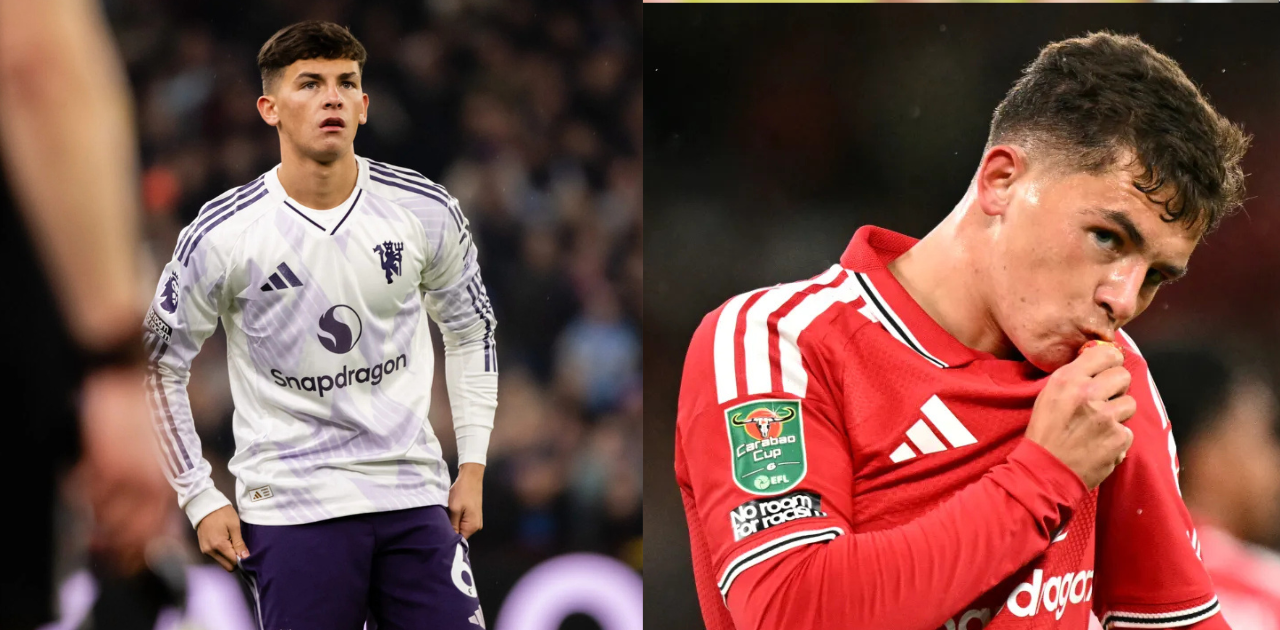

Who Is Shea Lacey?
Shea Lacey https://www.google.com/search?sca_esv=293e4396c971566a&sxsrfis an English professional footballer who plays as a winger and attacking midfielder for Manchester United. Born in Liverpool, England, on 14 April 2007, he has developed through the club’s youth system into one of its most exciting young attacking prospects. Known for his exceptional close control, creativity, powerful left foot, and confidence in one-on-one situations, he has attracted considerable attention from football supporters and youth development experts.
What makes Shea Laceyhttps://www.google.com/search?sca_esv=293e4396c971566a&sxsrf particularly interesting is the combination of technical ability and attacking intelligence in his game. Rather than relying exclusively on pace or physical strength, he uses balance, quick changes of direction, and clever movement to create opportunities. His development reflects Manchester United’s longstanding commitment to nurturing young footballers through its academy system. Manchester United+1
As a young player progressing into senior football, his story also illustrates the challenges of moving from youth competitions to the Premier League. Expectations, injuries, competition for places, and the demands of professional training all become important factors in determining how quickly a promising academy player can establish himself.

Shea Lacey Biography and Personal Details
For readers looking for a quick overview, the following table summarises the principal publicly available information about the young footballer.
| Personal detail | Information |
|---|---|
| Full name | Shea Lacey |
| Date of birth | 14 April 2007 |
| Birthplace | Liverpool, England |
| Nationality | English |
| Position | Right winger, attacking midfielder |
| Preferred foot | Left |
| Club | Manchester United |
| Shirt number | 31 |
| Youth development | Manchester United Academy |
| International experience | England youth teams |
| Brothers | Paddy Lacey and Luis Lacey |
| Playing style | Creative, technical attacking player |
These details are supported by Manchester United’s player profile and the Premier League’s official player information. Manchester United+1
Although these basic facts explain who he is, they do not fully capture why he has become a player of interest. His footballing background, development within Manchester United, and ability to operate in several attacking roles provide a clearer picture of his potential.
Early Life and Childhood in Liverpool
Shea Lacey was born and raised in Liverpool, a city with an exceptionally strong football culture. Growing up in such an environment meant that football was more than simply a recreational activity. The sport was deeply embedded in the city’s identity, with local clubs, grassroots teams, and passionate supporters influencing the experiences of young players.
Lacey began playing football at a very young age. His early interest in the game developed into a serious commitment as he progressed through youth football. Reports about his childhood indicate that he started playing at approximately three years old, demonstrating how early his connection with the sport began. Wikipedia+1
His upbringing also involved exposure to other sporting interests, including boxing. Such experiences can be useful for young athletes because different sports encourage different physical and mental skills. Football develops coordination, spatial awareness, and teamwork, while boxing can introduce balance, discipline, and the importance of controlled movement.
For a player whose game depends heavily on close control and balance, these early athletic experiences offer an interesting context. However, his technical football development remains the central explanation for his progress.

Shea Lacey’s Family and Footballing Background
Football has played an important role in the Lacey family. Shea has two older brothers, Paddy Lacey and Luis Lacey, who have also pursued football careers. Growing up alongside siblings with an interest in the sport can create a competitive environment in which young players learn to improve through regular practice and comparison.
His older brother Paddy previously pursued a football career, while Luis has also been involved in professional football. Their experiences provide a useful family connection to the sport, although each brother has developed his own career path. Wikipedia+1
The family’s footballing background is relevant because academy development often involves considerable commitment from parents and siblings. Training schedules, travel, school responsibilities, and the emotional demands of competition can affect the entire household.
For Shea, the presence of older footballing siblings may have provided both inspiration and a competitive atmosphere. Nevertheless, his achievements at Manchester United are based on his own performances, technical qualities, and progress through the club’s development pathway.
His Connection With Liverpool and Manchester United
One of the more interesting aspects of Lacey’s background is that he was born in Liverpool but developed as a Manchester United supporter. This connection makes his footballing journey particularly distinctive given the historic rivalry between Manchester United and Liverpool.
His family ultimately chose Manchester United’s academy as the environment in which he and his brother Luis would continue their football development. The club’s facilities, coaching opportunities, and youth development structure were important considerations in that decision. Wikipedia+1
His story demonstrates that a player’s birthplace does not necessarily determine their club allegiance or professional destination. Modern academy football regularly brings together young athletes from different regions, allowing clubs to identify and develop talent beyond their immediate local communities.
Joining Manchester United Academy
Manchester United’s academy has a long history of developing players capable of progressing into senior football. For young prospects, joining the academy provides access to professional coaching, structured competition, sports science, and a pathway toward the first team.
Shea Lacey joined Manchester United’s youth system as a child and spent years developing within its age-group teams. His progress was particularly notable because he was often competing against older players, an experience that can accelerate technical and tactical development when managed appropriately. Manchester United+1
The academy environment requires more than individual talent. Young players must learn how to operate within team structures, understand tactical instructions, maintain physical fitness, and perform consistently throughout a season.
For Lacey, the transition from grassroots football to an elite academy represented the beginning of a much more demanding journey. Each stage required him to demonstrate that his natural ability could translate into reliable performances against increasingly competitive opposition.
Progress Through Manchester United’s Youth Teams
Lacey’s development through Manchester United’s youth ranks attracted attention because of his technical ability and attacking contribution. He progressed into the Under-18 team while still young enough to compete at lower age groups.
His performances demonstrated that he could handle the physical and tactical demands of playing against older opponents. He also gained experience with the Under-21 side, providing an early opportunity to understand the demands of football closer to the senior professional level. MUFCINFO.com+1
The move from Under-18 to Under-21 football is particularly significant. At the younger level, individual technical quality can often create advantages. At Under-21 level, players face stronger opponents, more experienced defenders, and tactical systems designed to resemble senior football.
This transition helps explain why academy coaches assess more than goals and assists. They also consider decision-making, defensive contribution, physical readiness, and the ability to maintain performance under pressure.
Professional Contract and Career Development
Signing a professional contract is a major milestone for any academy footballer. It represents a club’s confidence in the player’s development and provides a formal foundation for a potential senior career.
https://celebrityfocus.co.uk/ signed his first professional contract with Manchester United in April 2024, shortly after turning 17. The agreement marked an important step in his progression from academy prospect to professional footballer. Wikipedia+1
A professional contract does not guarantee first-team success. Instead, it creates an opportunity for continued development within a competitive environment. Players must still demonstrate that they can adapt to senior football, remain physically available, and meet the tactical demands of the coaching staff.
For Lacey, the contract was an encouraging sign that Manchester United viewed him as a player worth investing in over the longer term.
Shea Lacey’s Playing Position and Tactical Rolea Laceyily an attacking player who can operate as a right winger or attacking midfielder. His left-footedness gives him several tactical possibilities, particularly when playing on the right side of the pitch.
A left-footed winger positioned on the right can move toward the centre rather than remaining close to the touchline. This movement creates opportunities to shoot, play through-balls, or combine with overlapping full-backs.
Lacey’s ability to operate in central attacking areas also makes him useful when a team needs creativity between the opposition’s midfield and defensive lines. His versatility gives coaches different ways to use his technical strengths depending on the formation and match situation. Premier League+1
Right Winger
As a right winger, Lacey can receive the ball near the touchline and use his close control to challenge defenders. His stronger left foot allows him to cut inside, creating shooting opportunities or passing angles toward central teammates.
This role is particularly effective against defensive opponents who protect the penalty area with several players. A winger capable of moving inside can force defenders to make difficult decisions about whether to follow him or protect their positions.
Lacey’s ability to manipulate the ball in tight spaces is valuable in these situations. Instead of depending on a single burst of speed, he can use body movement, changes of direction, and close touches to create separation.
Attacking Midfielder
As an attacking midfielder, Lacey can operate behind the striker and look for opportunities to connect midfield possession with attacking movement.
This position requires excellent awareness because the player frequently receives the ball with opponents approaching from multiple directions. A successful attacking midfielder must identify passing options quickly and understand when to carry the ball forward.
Lacey’s technical qualities make this role a natural alternative to playing on the wing. It also gives him opportunities to contribute through assists, combination play, and shots from outside the penalty area.
Technical Ability and Playing Style
The most distinctive part of Shea Lacey’s game is his technical quality. He is comfortable receiving the ball under pressure, moving through tight spaces, and using subtle touches to keep possession when defenders attempt to close him down.
His style is built around creativity rather than predictable movement. A defender facing a conventional winger may expect a sprint toward the byline. Lacey can instead slow the play, shift his body position, and suddenly accelerate into a different direction.
This ability to change the rhythm of an attack is valuable in modern football. Teams often face opponents who defend in compact formations, leaving little room for straightforward passing combinations. Players who can create space individually become important attacking resources.
Close Control and Dribbling
Close control is one of the strongest aspects of Lacey’s profile. He can keep the ball close to his feet while moving at different speeds, allowing him to remain balanced when challenged by defenders.
Effective dribbling is not simply about beating opponents with complicated tricks. It involves recognising the defender’s positioning, identifying available space, and selecting the most efficient movement.
Lacey’s ability to change direction quickly makes him particularly interesting in one-on-one situations. When a defender commits to one side, a small adjustment in body position can create an opportunity to move into the opposite direction.
This skill is especially useful in the final third, where even a small amount of space can make the difference between a blocked shot and a clear opportunity.
Left-Footed Shooting and Creativity
Lacey’s preferred left foot gives him a natural advantage when moving inside from the right wing. It creates a direct route toward goal and allows him to attempt shots from positions where a right-footed player might need an additional touch.
His shooting ability is complemented by his creativity. He can look for passes into dangerous areas, attempt combinations around the penalty box, and use his technical confidence to find solutions when conventional attacking patterns are unavailable.
A useful way to understand his attacking potential is to compare it with a playmaker’s role in a team sport. A playmaker does not necessarily need to dominate possession; the important contribution is often making the right decision at the moment when the opposition is least prepared.
Set-Piece Potential
Young attacking players who possess strong technique can also become valuable set-piece specialists. Free kicks, corners, and indirect attacking situations require precision, composure, and an understanding of how to manipulate the ball.
Lacey has developed a reputation for his free-kick ability during his academy career. This is an additional dimension to his attacking profile because set pieces can provide opportunities even when a team struggles to create chances through open play. MUFCINFO.com+1
However, establishing himself as a regular senior set-piece taker would require consistent performance against experienced professional goalkeepers and defenders.
Shea Lacey’s Career Statistics and Achievements
Statistics provide a useful way to understand a young footballer’s progress, but they must be interpreted carefully. Academy appearances, senior substitute appearances, and international youth matches represent different levels of competition.
For a developing player, the number of minutes played and the quality of opposition can sometimes be more informative than raw goal totals. A short appearance against a Premier League team may provide a different learning experience from an entire match at youth level.
The following table highlights important milestones in Lacey’s development.
| Career milestone | Achievement |
|---|---|
| Early childhood | Began playing football at a very young age |
| Academy development | Joined Manchester United’s youth system |
| Under-18 football | Progressed into the Under-18 team while young |
| Under-21 football | Gained experience at a higher youth level |
| April 2024 | Signed his first professional contract |
| 2025 | Continued development with Manchester United’s senior training group |
| December 2025 | Made his Manchester United first-team debut |
| January 2026 | Made his FA Cup debut |
| 2026 | Continued gaining senior match experience |
| International football | Represented England at youth levels |
These milestones are documented in Manchester United’s player information and established football reporting. Manchester United+2
The figures and milestones should not be confused with a complete statistical record. Appearance totals can change as a player moves between competitions, and different statistical providers may use different cut-off dates.
For the most reliable current information, Manchester United’s official profile and the Premier League’s player statistics are preferable to unofficial social media summaries.
First-Team Debut for Manchester United
Making a first-team debut is one of the most memorable moments in a young footballer’s career. It represents the point at which years of academy training lead to an opportunity to compete in senior professional football.
Shea Lacey made his Manchester United debut on 21 December 2025, coming on as a substitute during the Premier League match against Aston Villa. The appearance marked a significant step in his development and added his name to the long list of academy graduates who have represented the club. MUFCINFO.com+1
The match itself was challenging, with Manchester United losing 2–1. Nevertheless, the result did not diminish the importance of the occasion for the young player.
A debut provides a first experience of senior match intensity, including the speed of decision-making, physical contact, tactical discipline, and the atmosphere surrounding elite football.
Why the First-Team Debut Matters
Manchester United’s academy is closely associated with the club’s identity. Giving young players opportunities in the senior team reflects a tradition that supporters often consider an important part of the club’s culture.
For Lacey, his debut demonstrated that his performances at youth level had attracted sufficient confidence from the senior coaching staff to earn a competitive opportunity.
It also changed the nature of his development. Once a player has experienced first-team football, coaches can evaluate how he responds to the demands of the senior game rather than relying exclusively on academy performances.
The next challenge is turning a debut into a sustained role. Many talented youngsters make their first appearances, but establishing themselves requires consistency, adaptability, and continued improvement.
Challenges, Injuries, and Development Setbacks
The pathway from academy football to the first team is rarely straightforward. Injuries, competition for places, tactical changes, and the physical demands of professional football can all interrupt a young player’s progress.
Lacey has experienced injury-related setbacks during his development. These interruptions have required him to rebuild fitness and regain match rhythm before returning to competitive action. BBC Sport+1
For young athletes, injury management is particularly important because their bodies are still developing. Rushing a return can create additional risks, while a carefully managed rehabilitation programme can help restore strength, movement, and confidence.
The Importance of Physical Development
Lacey is relatively short compared with many professional footballers. His reported height is approximately 1.67 metres, although height alone is not a reliable indicator of whether a player can succeed at the highest level. Premier League+1
Football history includes many technically gifted players who have excelled without possessing exceptional height or physical strength. Their success often depends on balance, awareness, anticipation, and the ability to avoid unnecessary physical confrontations.
For Lacey, continued development in strength, conditioning, and physical resilience can help him handle the demands of senior football.
The goal is not to change the characteristics that make him effective. Instead, physical development should support his technical qualities and allow him to use them more consistently.
Learning From Difficult Match Experiences
Senior football also introduces psychological challenges. Young players must learn how to respond when decisions go against them, when opponents attempt to provoke them, or when mistakes become visible to large audiences.
Lacey’s early senior career included a difficult FA Cup appearance against Brighton & Hove Albion in January 2026, when he was dismissed after receiving two yellow cards. Wikipedia+1
Such incidents can become valuable learning experiences when players receive appropriate support. Professional football requires emotional control as well as technical ability.
For a young attacker, learning to remain composed under pressure is an important part of becoming a dependable senior player.
England Youth International Career
Representing England is another important part of Shea Lacey’s football development. International youth football provides players with opportunities to compete against talented opponents from different countries and experience different tactical approaches.
Lacey has represented England at several youth levels, progressing through the Under-15, Under-16, Under-17, and Under-20 age groups. Wikipedia+1
This progression reflects his continued standing among England’s developing footballers. International selection also provides a valuable opportunity to test individual skills in unfamiliar team environments.
England Under-17 Experience
Lacey’s England Under-17 experience included matches against strong European opposition. His performances demonstrated his ability to contribute creatively in international football.
Youth international matches can be tactically demanding because opponents may have different approaches to pressing, defending, and building attacks. Players must adapt quickly while maintaining their individual strengths.
For an attacking midfielder or winger, these experiences can improve decision-making and broaden tactical understanding.
England Under-20 Development
Progressing to the England Under-20 level represents another step toward senior international football. At this stage, players are closer to the physical and tactical demands of professional senior competitions.
The Under-20 environment allows coaches to assess whether young players can perform consistently against older and more experienced opponents.
Although youth international experience does not guarantee a senior England call-up, it provides a foundation for future development. Continued club performances will be important in determining whether Lacey can eventually compete for a place in the senior national team.
Shea Lacey and Manchester United’s Youth Development Philosophy
Manchester United has a well-established reputation for developing young footballers. The club’s academy has produced generations of players who have progressed into professional football, including members of the celebrated Busby Babes and the Class of 92.
This history creates an environment in which young prospects are expected to develop both their individual abilities and their understanding of the club’s playing philosophy.
Shea Lacey represents a modern example of this development approach. His progress through the academy reflects the importance of identifying technical ability early and providing players with opportunities to develop through increasingly demanding competitions.
The Role of Academy Coaches
Academy coaches play a crucial role in helping young footballers understand the tactical and technical requirements of professional football.
For an attacking player such as Lacey, coaching involves more than improving dribbling or shooting. It also includes learning when to release the ball, how to support teammates, and how to contribute defensively.
These details become particularly important when a player moves into senior football, where opponents are more experienced at identifying and exploiting tactical weaknesses.
The academy’s objective is to prepare players for these challenges gradually rather than expecting them to adapt immediately.
Comparisons With Other Young Footballers
Shea Lacey has attracted comparisons with technically gifted English attacking players because of his close control, creativity, and ability to operate in several attacking positions.
Comparisons with established footballers can help supporters understand a young player’s style. However, they should not be treated as predictions of future success.
Every player develops differently. Differences in physical characteristics, tactical environments, coaching, injury history, and opportunities can produce very different career outcomes.
Why Comparisons Should Be Used Carefully
A young player may share certain technical qualities with an established star without possessing the same overall playing profile.
For example, two left-footed attackers might both enjoy moving inside from the right wing. However, one may be primarily a goalscorer, while the other may focus more heavily on creating opportunities for teammates.
The most useful assessment of Lacey therefore focuses on his own qualities: close control, left-footed creativity, attacking versatility, and his progress through Manchester United’s development system.
His long-term career will depend on how effectively he develops these strengths and adapts to the demands of senior football.
Future Prospects and Career Potential
The future of Shea Lacey’s career depends on several interconnected factors. Technical ability has already helped him progress through the academy, but sustained senior success requires consistency, physical readiness, tactical understanding, and the ability to remain available for selection.
Manchester United offers an environment in which talented young players can compete for first-team opportunities. However, the club also faces pressure to achieve results, meaning academy graduates must demonstrate that they can contribute effectively when selected.
For Lacey, the next stages of development will involve gaining regular competitive minutes, improving his decision-making against senior defenders, and continuing to build the physical strength needed for demanding matches.
What Could Help Him Become a Regular First-Team Player?
Several areas are particularly important for a young attacking player moving toward senior football.
| Development area | Why it matters |
|---|---|
| Physical conditioning | Helps withstand the intensity of professional matches |
| Tactical awareness | Improves positioning and decision-making |
| Consistency | Builds confidence among coaches and teammates |
| Injury management | Supports long-term availability |
| Defensive contribution | Makes him more adaptable to different systems |
| Composure | Helps manage pressure and difficult match situations |
| Attacking output | Converts technical ability into goals and assists |
These areas are relevant to most young attackers, not just Lacey. The difference between a promising academy player and an established senior professional often comes down to how consistently these qualities are demonstrated.
Could Shea Lacey Become an England Senior International?
A senior England career is a possible long-term ambition for any talented English footballer, but it remains too early to make a confident prediction about Lacey’s international future.
His experience with England’s youth teams provides a foundation, while his development at Manchester United offers opportunities to compete at a high level.
The most realistic approach is to evaluate his progress season by season. Regular senior football, strong performances, and continued development would strengthen his prospects of attracting attention from the senior national team.
Public Profile, Social Media, and Personal Life
Interest in Shea Lacey extends beyond his football performances. Supporters frequently search for information about his age, family, background, and personal interests as his profile grows.
However, publicly available information about his private life remains more limited than information about his football career.
His family connection to football is well documented, particularly through his brothers Paddy and Luis. Beyond those established details, it is important to distinguish verified information from speculation about relationships, personal finances, or private activities.
For a young professional footballer, maintaining a degree of privacy can be especially important while developing a career under public scrutiny.
Why Interest in His Biography Is Growing
Several factors help explain the growing attention surrounding Lacey.
His association with Manchester United gives him exposure to a worldwide football audience. His technical ability makes him an interesting prospect for supporters who enjoy watching creative attacking players. His progress through England’s youth teams adds another dimension to his profile.
The combination of these factors means that searches for his biography are likely to include both football-related questions and general interest in his personal background.
The most useful information for readers remains his verified career history, playing position, development milestones, and performances.
Frequently Asked Questions About Shea Lacey
How old is Shea Lacey?
Shea Lacey was born on 14 April 2007 in Liverpool, England. His age can be calculated from that birth date, and he is part of the generation of young footballers progressing through elite academy systems into senior professional competition. Manchester United+1
What position does Shea Lacey play?
Shea Lacey primarily plays as a right winger or attacking midfielder. His left-footedness allows him to move inside from the right flank, while his technical ability also makes him comfortable operating in central attacking areas. Premier League+1
Which club does Shea Lacey play for?
Shea Lacey plays for Manchester United. He developed through the club’s academy before making his first-team debut in December 2025. His progression reflects Manchester United’s continued commitment to developing young players. Manchester United+1
Who are Shea Lacey’s brothers?
Shea Lacey’s brothers are Paddy Lacey and Luis Lacey. Both have also pursued football careers, making football an important part of the family’s sporting background. Wikipedia+1
Is Shea Lacey left-footed?
Yes, Shea Lacey is left-footed. His preferred foot is an important part of his attacking style because it allows him to move inside from the right wing and create shooting or passing opportunities. Premier League+1
Has Shea Lacey played for England?
Yes, Shea Lacey has represented England at youth international levels. His international experience includes the Under-15, Under-16, Under-17, and Under-20 teams. These appearances have provided valuable experience against international opposition. Wikipedia+1
When did Shea Lacey make his Manchester United debut?
Shea Lacey made his Manchester United first-team debut on 21 December 2025 against Aston Villa in the Premier League. He came on as a substitute during the match, marking an important milestone in his professional career. MUFCINFO.com+1
What makes Shea Lacey a promising young footballer?
His close control, creativity, left-footed shooting, and ability to play in multiple attacking positions make him an interesting prospect. His progression through Manchester United’s academy and England’s youth teams also demonstrates that he has experience competing at increasingly demanding levels.
What is Shea Lacey’s playing style?
Shea Lacey is a technically gifted attacking player who uses close control, balance, and changes of direction to create opportunities. He can operate as a winger or attacking midfielder and is comfortable moving inside to combine with teammates or attempt shots.
Conclusion: Why Shea Lacey Is a Footballer to Watch
Shea Lacey’s journey from a young football enthusiast in Liverpool to a Manchester United first-team player demonstrates the importance of talent, development, and opportunity in professional football.
His technical qualities, creativity, and ability to operate in different attacking positions have helped him progress through one of England’s most recognisable academy systems. His professional contract, first-team debut, and England youth international experience represent important milestones in a career that is still developing.
The challenges ahead are equally significant. Consistency, physical development, injury management, and tactical maturity will all influence how far he progresses. These factors are common to young footballers entering senior competition, and their importance should not be underestimated.
Ultimately, the most compelling part of Shea Lacey’s story is not simply the promise of future success, but the progress he has already made. His development illustrates how technical ability can create opportunities, while discipline, resilience, and continued learning determine whether those opportunities become a lasting professional career.
For football supporters, his journey offers a reason to follow Manchester United’s academy and watch how one of its young attacking talents develops in the seasons ahead.