
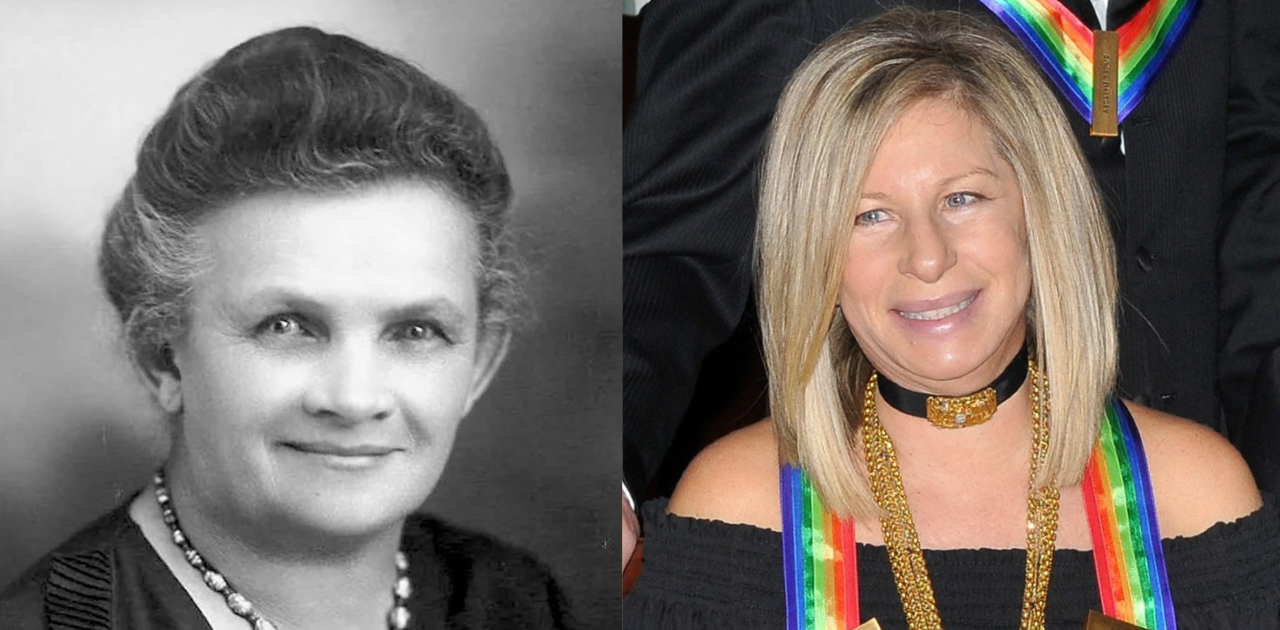

Augusta Wilhelmine Gein remains one of the most discussed figures connected to the Ed Gein case, not because she committed the crimes that made her family’s name infamous, but because historians and biographers have examined the unusually intense relationship between mother and son. Born in Wisconsin in 1878, she married George Philip Gein and raised two sons, Henry and Edward, in a household shaped by poverty, isolation, strict religious beliefs, and difficult family circumstances.
The story of Augusta is particularly complicated because much of what is publicly known about her comes through accounts of Ed Gein’s childhood and later criminal investigation. That creates an important distinction between documented facts and retrospective interpretations. Her influence on Ed is frequently discussed, but it would be misleading to claim that her parenting alone caused his later crimes. Modern understandings of criminal behavior emphasize that extreme violence cannot be reduced to one childhood relationship or one environmental factor.
For readers searching for an accurate biography, the essential story is more nuanced. Augusta was a deeply religious and highly controlling mother according to surviving accounts, but she was also a woman living in rural Wisconsin during the early twentieth century, managing a difficult household and a family affected by her husband’s alcoholism and financial instability. Her life ended in 1945, more than a decade before Ed’s crimes became public.

Who Was Augusta Wilhelmine Gein?
Augusta Wilhelmine Gein https://www.google.com/search?sca_esv=7238945f6dc4c904&sxsrf was born Augusta Wilhelmine Lehrke on July 21, 1878, in La Crosse, Wisconsin. Records identify her as the wife of George Philip Gein and the mother of two sons, Henry and Edward Theodore Gein. She died on December 29, 1945, in Plainfield, Wisconsin, at the age of 67.
Her historical importance comes largely from her role in the childhood of Ed Gein, who later became notorious after authorities uncovered evidence of murder and grave robbing in 1957. Contemporary and later accounts describe Augusta as intensely religious and highly restrictive toward her sons. She reportedly warned them about sin, sexuality, alcohol, and the outside world, creating an environment in which religious instruction became a major part of everyday family life.
It is important, however, to distinguish biography from mythology. Because Ed Gein became one of America’s most notorious criminals, almost every aspect of his childhood has been examined through the lens of his later crimes. That can make ordinary or complicated family experiences appear more directly connected to criminal behavior than the historical evidence actually demonstrates.

Augusta Wilhelmine Gein’s Early Life and Family Background
The available biographical record places Augusta’s birth in La Crosse, Wisconsin, where she grew up in a family of German ancestry. Genealogical records identify her parents as Friedrich Wilhelm Lehrke and Amalia Mathilde Fregin, although genealogical information should be treated separately from contemporary documentation because family-tree records can vary in quality.
The broader Wisconsin setting is relevant to understanding her life. Augusta belonged to a generation shaped by immigrant communities, Protestant religious traditions, rural work, and relatively conservative social expectations. Her later religious outlook was therefore not created in isolation. It developed within a particular historical environment in which church, family authority, morality, and community reputation could have substantial influence.
She married George Philip Gein in 1900. Their marriage produced two sons, Henry and Edward. George’s work history included occupations such as carpenter and tanner, and the family eventually moved away from the city environment of La Crosse toward a rural farm near Plainfield.

Marriage to George Philip Gein
George Philip Gein was born in Wisconsin in 1873 and married Augusta before the family eventually established itself near Plainfield. Later descriptions of the household portray George as an alcoholic whose instability contributed to the difficult domestic environment. Biography.com, for example, describes him as a timid alcoholic and emphasizes that Augusta exercised considerable influence over the children.
The family’s circumstances help explain why Augusta’s role became so dominant. If one parent was frequently absent, unreliable, or struggling with alcohol, the other parent could naturally assume more responsibility for household management and child-rearing. That does not excuse controlling behavior, but it provides historical context for why family authority may have become concentrated in Augusta.
Their marriage lasted until George’s death in 1940. Official-style biographical records identify April 1, 1940, as his date of death. After his death, Augusta’s household became even more dependent on her sons, particularly because the family was already living in an isolated rural environment.
The Move to the Plainfield Farm
One of the most important developments in the family’s history was the move from La Crosse to a farm outside Plainfield around 1915. Sources describe Augusta as fearful of the influence of the wider community and determined to protect her children from what she regarded as immoral influences.
The rural property became the central setting of the family’s life. Ed and Henry attended school, but their social world outside the family was reportedly restricted. The isolation meant that the household itself became the primary environment in which the boys learned about morality, relationships, religion, and social behavior.
This is an important example of how environment can shape a person’s experiences without establishing a simple cause-and-effect relationship. Growing up in an isolated household can limit social opportunities, but isolation by itself does not produce violent criminality. Millions of people have experienced rural isolation, strict parenting, religious households, or family hardship without becoming violent offenders.
Augusta Wilhelmine Gein’s Religious Beliefs
Religious belief was central to the way Augusta raised her sons. Historical accounts describe her as intensely religious, with a strong emphasis on sin, punishment, sexuality, and the dangers of the outside world. She reportedly read the Bible with her sons and emphasized passages dealing with death, judgment, and divine punishment.
Her attitude toward women was also frequently discussed in later accounts. According to descriptions of the family, Augusta taught her sons that women outside the family were morally dangerous and associated female sexuality with sin. These beliefs became especially significant when investigators and biographers later tried to understand Ed’s deeply distorted relationship with women.
Still, it is crucial to avoid treating religious belief itself as the explanation for Ed Gein’s crimes. Augusta’s behavior represented her own extreme interpretation of morality, not evidence that ordinary religious upbringing causes violence. The historical issue is her particular pattern of control, fear, isolation, and moral instruction rather than religion as a general category.
Relationship Between Augusta and Ed Gein
The relationship between Augusta and Ed Gein became the central psychological theme in accounts of the family. Ed reportedly idolized his mother and remained exceptionally attached to her even as he became an adult. Biographical sources describe a relationship in which Augusta’s approval was extremely important to him and her worldview dominated his understanding of relationships.
That attachment became particularly significant after the deaths of George and Henry. Ed and Augusta were left together on the farm, and when Augusta’s health deteriorated, Ed became her primary caregiver. Her death in 1945 therefore represented not merely the loss of a parent but the collapse of the central relationship around which much of his adult life had revolved.
A useful way to understand the dynamic is to imagine a person’s social world becoming progressively smaller until one relationship occupies almost all available emotional space. That does not automatically produce pathology or violence, but it can create extreme dependency. In Ed’s case, later criminal behavior made that dependency especially disturbing when investigators discovered the extent of his obsession with his deceased mother.
The Death of Augusta Wilhelmine Gein
Augusta suffered serious health problems during the final years of her life. Accounts indicate that she experienced strokes and became increasingly disabled. After Henry’s death in 1944, her health reportedly deteriorated further, leaving Ed responsible for much of her care.
Augusta died on December 29, 1945, at age 67. Her death was a defining moment in Ed’s life because he lost the person to whom he had been most closely attached. Importantly, she died roughly twelve years before authorities discovered the crimes that would make her son’s name infamous.
This timeline matters when separating established history from dramatic retellings. Augusta did not live to witness Ed’s 1950s crimes or his arrest. Claims that she directly participated in or knowingly encouraged those later offenses therefore require evidence that is not established by the standard historical record.
What Happened to Ed Gein After His Mother Died?
Following Augusta’s death, Ed remained on the family property and increasingly withdrew from ordinary social life. Later investigations found that he had preserved parts of the house and reportedly kept rooms associated with his mother unchanged. This behavior became part of the larger picture of his inability to adapt to her absence.
Authorities eventually uncovered the extent of his crimes in 1957 after the disappearance of hardware-store owner Bernice Worden. Investigation of the Gein property revealed evidence of grave robbing and human remains. Gein also confessed to killing Mary Hogan, a tavern owner who had disappeared in 1954.
The relationship between these crimes and Augusta has been heavily debated in popular culture. Some accounts portray Gein as attempting to recreate his mother or somehow become her. Those interpretations are grounded partly in statements and investigative findings, but they should not be transformed into an absolute psychological explanation for every aspect of his criminal behavior.
Did Augusta Cause Ed Gein’s Crimes?
There is no responsible historical basis for reducing Ed Gein’s criminality to Augusta’s parenting alone. This is one of the most important points to understand when researching Augusta Wilhelmine Gein. Her strictness and influence are well documented in secondary accounts, but criminal behavior is complex and cannot be assigned to a single cause without substantial evidence.
The problem with the simple “bad mother created a killer” explanation is that it ignores other factors. Ed experienced social isolation, family instability, bereavement, and profound psychological disturbance. His later crimes were his own actions and responsibility, even though his childhood environment forms part of the broader biographical context.
This distinction is especially important because popular true-crime storytelling often prefers a neat explanation. Real lives rarely work that way. A difficult childhood can be one part of a person’s history without functioning as a direct mechanism that determines their future.
The Death of Henry Gein and Its Impact on the Family
Henry Gein, Augusta’s older son, died in 1944 while he and Ed were reportedly clearing brush on the family property. His death was initially treated as an accident, but later writers have raised questions about the circumstances because of Ed’s subsequent criminal history.
Those suspicions should be treated carefully. Some later investigators and writers have suggested that Ed may have been responsible, but no murder conviction established that he killed Henry. Historical accounts describe the circumstances as suspicious rather than conclusively proven homicide.
Henry’s death nevertheless had a major effect on the family structure. With Henry gone and George already dead, Augusta and Ed became increasingly isolated from the rest of the world. Her subsequent health problems meant that the mother-son relationship became even more concentrated.
Augusta Wilhelmine Gein in True Crime History
Augusta has become an enduring figure in true-crime discussions because Ed Gein’s story influenced popular horror culture. His crimes contributed inspiration to fictional characters and stories associated with works such as Alfred Hitchcock’s Psycho, although fictional portrayals should not be treated as literal biographies of the Gein family.
The 2025 Netflix series Monster: The Ed Gein Story brought renewed attention to Augusta. Actress Laurie Metcalf portrayed her in the series, making the historical figure part of a dramatized retelling of the Gein case.
Dramatization creates a familiar problem for historical readers: television can combine documented events with reconstructed dialogue, compressed timelines, invented scenes, and interpretive characterization. A dramatic depiction can generate interest in a historical figure, but it should not automatically be treated as evidence of what that person actually said or did.
Augusta Wilhelmine Gein in Popular Culture
The renewed interest in Augusta has largely followed new documentaries, television programs, and true-crime publications examining Ed Gein. IMDb records her appearance through archival footage in productions such as Psycho: The Lost Tapes of Ed Gein and Ed Gein: Original Psycho.
Her representation in popular culture tends to emphasize her strict personality and religious worldview. That emphasis reflects the part of her biography most relevant to Ed’s story, but it can also flatten her identity into a single stereotype. A historical biography should instead recognize that she was a wife, mother, rural resident, and woman living through major social changes before becoming known primarily because of her son’s crimes.
This distinction is especially valuable when examining older historical figures. The person who existed in everyday life and the character reconstructed decades later are not necessarily identical. Primary evidence is often limited, while later accounts are shaped by the extraordinary events that happened after the person’s death.
Key Facts About Augusta Wilhelmine Gein
| Biographical detail | Documented information |
|---|---|
| Full name | Augusta Wilhelmine Gein |
| Birth name | Augusta Wilhelmine Lehrke |
| Born | July 21, 1878 |
| Birthplace | La Crosse, Wisconsin |
| Husband | George Philip Gein |
| Children | Henry and Edward Theodore Gein |
| Family residence | Farm near Plainfield, Wisconsin |
| Religious background | Lutheran tradition; strongly religious |
| Major role in historical accounts | Mother of Ed Gein |
| Died | December 29, 1945 |
| Age at death | 67 |
| Historical significance | Her relationship with Ed became central to later accounts of his childhood and psychology |
The most securely documented dates come from biographical and genealogical records, while interpretations of Augusta’s personality and influence come largely from later historical accounts.
Why Her Story Still Attracts Attention
The continuing interest in https://celebrityfocus.co.uk/ comes partly from the enduring fascination with Ed Gein, but it also reflects a broader interest in the family histories behind notorious crimes. People naturally want to know what kind of environment existed before a shocking criminal case emerged.
Her story also illustrates the danger of looking backward with too much certainty. Once someone becomes associated with a notorious criminal, ordinary family characteristics can be reinterpreted as warning signs. Strict discipline, religious devotion, isolation, and family conflict can all become loaded with meaning after the fact.
A more historically responsible approach is to treat those elements as context rather than destiny. Augusta’s behavior mattered to the environment in which Ed grew up, but the existence of that environment does not establish a simple causal chain between mother, childhood, and crime.
Frequently Asked Questions About Augusta Wilhelmine Gein
Who was Augusta Wilhelmine Gein?
Augusta Wilhelmine Gein was the mother of Ed Gein and Henry Gein and the wife of George Philip Gein. Born in Wisconsin in 1878, she became known after her death because of the intense relationship described between her and Ed and the later discovery of his crimes.
When did Augusta Wilhelmine Gein die?
Augusta Wilhelmine Gein died on December 29, 1945, in Plainfield, Wisconsin. She was 67 years old. Her death occurred approximately twelve years before Ed Gein’s crimes were publicly uncovered in 1957.
Who was Augusta Gein’s husband?
Augusta’s husband was George Philip Gein, whom she married around the beginning of the twentieth century. George was the father of both Henry and Edward Gein and died in 1940, several years before Augusta’s death.
How many children did Augusta Gein have?
Augusta had two sons, Henry and Edward Theodore Gein. Henry was the older brother, while Ed was born in 1906. Both boys grew up in the family’s Wisconsin household under Augusta’s strong religious influence.
Was Augusta Gein responsible for Ed Gein becoming a murderer?
There is no sound basis for saying that Augusta alone caused Ed Gein’s crimes. Historical accounts document her strict parenting, religious beliefs, and strong influence over Ed, but his later violence involved complex psychological and social factors. Treating one parent as the sole cause oversimplifies the available evidence.
What religion did Augusta Gein follow?
Sources describe Augusta as deeply religious and associated with a Lutheran background. Her personal religious practices were particularly strict, and accounts of Ed’s childhood emphasize her frequent use of biblical teachings concerning sin, morality, death, and judgment.
Did Augusta Gein know about Ed Gein’s later crimes?
No evidence establishes that Augusta knew about the crimes for which Ed became notorious. She died in 1945, while the best-known crimes and the investigation that exposed them occurred more than a decade later.
Conclusion: The Historical Legacy of Augusta Wilhelmine Gein
Augusta Wilhelmine Gein occupies an unusual place in American true-crime history. She was not alive when her son’s most notorious crimes were discovered, yet her strict religious worldview, controlling parenting style, and exceptionally close relationship with Ed became central to later attempts to understand his childhood.
The documented timeline provides a useful foundation. Augusta was born in 1878, married George Philip Gein, raised Henry and Edward, moved with the family to rural Plainfield, and died in 1945. Her son Ed remained deeply attached to her, and her death preceded the crimes that eventually made the Gein name internationally infamous.
The most important insight is that historical context should not be confused with a simple explanation for criminal behavior. Augusta’s influence was significant within Ed’s family history, but describing her as the sole reason for his crimes turns a complicated life into a convenient narrative. The more accurate picture is one of family isolation, rigid beliefs, personal dependency, psychological disturbance, and individual responsibility.
That distinction is what makes the story of Augusta Wilhelmine Gein worth examining carefully. Her life has been overshadowed by her son’s crimes for decades, but understanding the historical record requires looking beyond the sensational details and separating documented facts from later interpretations.