
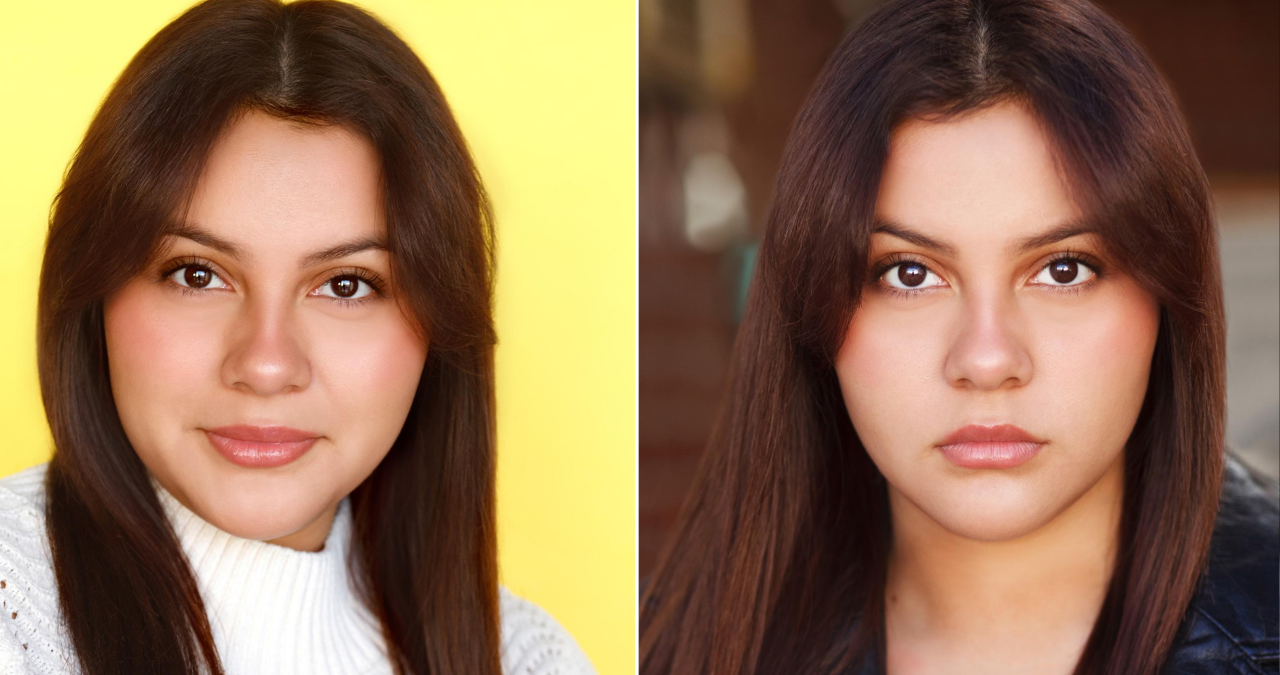

When people search for Gabriela Rico Jimenez, they are usually looking for answers to a story that has become unusually difficult to separate from internet speculation. A video recorded in Monterrey, Mexico, in 2009 shows a young woman making alarming accusations outside a hotel before being taken away by police. Years later, the footage became an enduring internet mystery, and renewed interest in Jeffrey Epstein-related documents in 2026 brought the clip back into public discussion.
The important distinction is between what can actually be established and what has been added to the story through social media, blogs, podcasts, and conspiracy-oriented posts. There is credible reporting that the 2009 incident occurred and that the woman in the footage was identified as Gabriela Rico Jiménez. There is also extensive reporting that she subsequently disappeared from public view. However, many additional claims about her fate, alleged connections to powerful figures, and supposed links to Epstein remain unverified.
That distinction matters because mysterious stories are especially vulnerable to becoming distorted through repetition. A claim repeated by 100 websites is not necessarily 100 independent confirmations. In this case, the strongest approach is to examine the chronology, separate primary evidence from secondary reporting, and treat extraordinary allegations as allegations rather than established facts.
Who Is Gabriela Rico Jimenez?
Gabriela Rico Jimenez is a Mexican woman associated with a widely circulated 2009 incident in Monterrey, Nuevo León. Contemporary and later reporting generally identifies her as a young model who was approximately 21 years old at the time. However, biographical information published online is inconsistent, and many details repeated in modern profiles cannot be independently established through strong primary sources.
The most reliable part of her public story is therefore not an extensive biography but the documented existence of the video itself. In August 2009, footage captured a visibly distressed woman outside a Monterrey hotel making extraordinary accusations about people she associated with an elite gathering. The episode attracted attention because of the intensity of her statements and the unusual circumstances surrounding the confrontation. Reports say police eventually removed her from the scene.
This creates an important research problem. Search engines often present a mixture of archival reporting, reposted articles, social-media summaries, and later commentary as though all sources carry the same evidentiary weight. They do not. A contemporary report describing what happened on camera is fundamentally different from a later post claiming to know what happened to the woman years afterward.
For readers researching the subject, that difference is essential. The historical record should begin with the event that can be independently observed and reported, rather than with theories that developed much later.
What Happened in the 2009 Monterrey Hotel Video?
The central event occurred outside a Fiesta Inn hotel in Monterrey. Video from the episode shows the young woman speaking emotionally and making disturbing allegations, including claims involving powerful people and alleged cannibalism. Mexican media later revisited the footage because its contents were so unusual and because virtually no detailed public account of her later life emerged.
One important contextual point is that the video records what a person said, not proof that everything she said was true. This sounds obvious, but it is frequently overlooked when old viral footage returns to social media. A recording can establish that an allegation was made; it cannot, by itself, establish the truth of the allegation.
Contemporary and later accounts describe the incident as an emotionally intense episode. Several reports say authorities took her into custody and that she subsequently underwent medical or psychiatric evaluation. Some later reporting also refers to a missing-person report that was eventually withdrawn by her family, although the underlying official documentation is not broadly available in the public record cited by online coverage.
The simplest way to understand the video is therefore to treat it as the beginning of a public mystery, not as a documentary proving the conspiracy theories that later grew around it.
“The video where she appears … could be related” to Epstein-related information, but the connection has not been proven.
That distinction is one of the most important facts surrounding the case.
Why Did Gabriela Rico Jimenez Become an Internet Mystery?
The mystery developed largely because the public record becomes extremely thin after the 2009 incident. Reports repeatedly describe Rico Jiménez as having disappeared from public view, while offering little reliable information about her subsequent whereabouts. That absence created a vacuum that was gradually filled by speculation.
This is a familiar pattern in internet mysteries. When a person has a highly memorable public incident followed by years of silence, audiences naturally want a complete narrative. If authorities, family members, or reputable journalists do not provide one, online communities may construct their own explanations.
Some reports and social-media posts have claimed that she was taken to a psychiatric facility, including speculation about treatment outside Mexico. Other versions suggest that powerful people deliberately silenced her. Still others portray her as a victim of organized trafficking or an international conspiracy. These theories are dramatic, but dramatic does not mean documented. Available reporting does not establish these claims as fact.
A useful principle for understanding the case is: absence of public information is not evidence of a particular explanation. Someone can disappear from public view for many reasons, including privacy, family decisions, medical circumstances, relocation, or deliberate avoidance of publicity. Without records or credible testimony, choosing one explanation simply because it fits an existing theory is unreliable.
What Is Verified and What Remains Unconfirmed?
A careful review of available reporting produces a much more restrained picture than many viral posts suggest. The core facts are relatively straightforward: a young woman identified as Rico Jiménez appeared in a widely circulated 2009 video in Monterrey, made extraordinary allegations, was removed by authorities, and subsequently became difficult to trace in public reporting.
The uncertainty begins when people move beyond those points. There is no strong publicly available evidence establishing that the allegations made in the video were true. There is also no reliable public evidence demonstrating that she was abducted, murdered, trafficked, or permanently institutionalized. Claims about her current status therefore need to be presented cautiously.
| Topic | What available reporting supports | What remains unverified |
|---|---|---|
| 2009 incident | A video of the incident circulated from Monterrey | The full circumstances behind every allegation |
| Identity | Reports identify the woman as Gabriela Rico Jiménez | Detailed biographical claims vary between sources |
| Police response | She was removed by authorities | Complete official case documentation is not widely public |
| Medical evaluation | Several reports describe medical or psychiatric evaluation | Detailed medical records are not publicly available |
| Later whereabouts | She largely disappeared from public reporting | Her current location and circumstances |
| Missing-person claims | Some reporting discusses a missing-person report and later withdrawal | Complete primary documentation |
| Epstein connection | Online speculation revived the subject in 2026 | A verified personal connection has not been established |
| Cannibalism allegations | The statements were recorded on video | Independent evidence proving the allegations |
This distinction is particularly important for anyone writing about Gabriela Rico Jimenez for a news site, biography page, documentary project, or research article. Search visibility should never come at the expense of evidentiary standards.
Did Gabriela Rico Jimenez Have a Connection to Jeffrey Epstein?
The alleged Epstein connection is one of the main reasons the story returned to public attention in 2026. Following the release and renewed examination of Jeffrey Epstein-related documents, social-media users began comparing the material with the old Monterrey footage. The similarity in themes involving wealthy and powerful circles encouraged speculation that the two stories were connected.
But the available evidence does not establish that connection. Mexican reporting discussing the renewed controversy explicitly notes that the supposed relationship between Rico Jiménez and Epstein has not been proven. One report states that her name does not appear in the released files in a way that establishes such a relationship.
This is a classic example of correlation being mistaken for evidence. The fact that two stories involve allegations about powerful people does not demonstrate that the stories concern the same people, events, organizations, or criminal activity.
The distinction is especially important because Epstein-related documents contain genuine and serious material, but the presence of a person’s name in a document would not automatically prove criminal conduct anyway. In the case of Gabriela Rico Jimenez, the available reporting provides no solid documentary bridge between her 2009 allegations and Epstein’s criminal investigation.
Why the Epstein Theory Spread So Quickly
The renewed attention illustrates how modern information ecosystems can transform an old local incident into an international story almost overnight. The original event happened before today’s dominant short-form social-media environment, but the footage was highly suited to online sharing: it was visually striking, emotionally intense, mysterious, and apparently unfinished. When interest in Epstein-related documents increased, the clip gained a new narrative context.
Once users began proposing a connection, individual posts could reinforce one another. One account might say that the woman knew something about wealthy figures. Another could interpret that as evidence of a cover-up. A third might cite the second post as confirmation. Eventually, a chain of speculation can look like a body of evidence even when every link traces back to the same original video.
That is why source tracing is so valuable. Researchers should ask where a claim first appeared, whether the source identifies a primary document, whether independent outlets verified it, and whether officials or named individuals provided corroboration.
In the case of Gabriela Rico Jimenez, this process repeatedly leads back to the same small collection of facts: the 2009 footage, accounts of police involvement, reports about subsequent evaluation, and the absence of reliable public information about her later life. The much larger conspiracy narrative rests on material that is considerably less certain.
What Happened to Her After 2009?
The honest answer is that her later life is not reliably documented in the public sources currently available. Numerous articles say that she disappeared after the incident or was not seen publicly again. Other accounts claim that her family withdrew a missing-person report after learning that she wanted to avoid publicity. However, these claims should not be presented as a complete official explanation without access to the underlying records.
This uncertainty is different from proving that she was kidnapped or killed. In fact, some of the reporting that discusses the mystery explicitly acknowledges the lack of publicly available police, hospital, judicial, or missing-person documentation sufficient to establish what ultimately happened.
That means phrases such as “vanished without a trace” can be misleading when interpreted literally. They accurately describe the lack of public information but can also imply that a criminal disappearance has been established. Those are not the same thing.
For responsible readers, the safest conclusion is that Rico Jiménez ceased to have a substantial public footprint after the 2009 incident, while her precise circumstances remain undocumented in reliable public reporting.
How Should the Viral Claims Be Evaluated?
The story of Gabriela Rico Jimenez is a useful case study in digital-source evaluation. When researching a controversial figure, it helps to divide information into three categories: directly observable evidence, independently reported information, and unsupported claims.
Directly observable evidence includes the existence of the video and what can actually be seen or heard in it. Independently reported information includes reputable journalism describing the incident and subsequent official actions. Unsupported claims include assertions about secret organizations, deliberate silencing, trafficking, or other criminal activity when no credible documentation is supplied.
A good researcher should also be alert to “citation laundering.” This occurs when a weak source cites another weak source until the original claim appears authoritative. A blog cites a social-media post, another website cites the blog, and a video cites both websites. The resulting quantity of references can create an illusion of corroboration.
The same principle applies to biographies. Online profiles sometimes provide precise birth dates, family histories, modeling careers, or later sightings that are repeated from page to page. Unless those details can be traced to credible documentation, they should be treated as provisional rather than established biography. Research examining this subject has specifically identified conflicting biographical claims across secondary sources.
Why the Story Still Attracts Public Interest
Part of the continuing fascination comes from the combination of several powerful narrative ingredients: a dramatic video, allegations involving elites, a mysterious disappearance from public view, and decades of uncertainty. Each element creates a natural desire for resolution.
There is also a broader cultural interest in the question of whether unusual accusations made by distressed people should automatically be dismissed or believed. The responsible answer is neither. An allegation should be taken seriously enough to investigate, while the truth of the allegation should be determined through independent evidence.
That principle applies far beyond Gabriela Rico Jimenez. Journalism, historical research, and legal investigation all depend on separating testimony from corroboration. A person’s emotional state in a video may be relevant context, but it does not independently establish whether their claims are true or false.
The most credible interpretation of the case therefore leaves room for uncertainty. It acknowledges the unusual incident, recognizes that important questions remain unanswered, and avoids filling those gaps with unsupported conclusions.
Frequently Asked Questions About Gabriela Rico Jimenez
Who is Gabriela Rico Jimenez?
Gabriela Rico Jimenez is the name associated with a Mexican woman filmed during a highly publicized incident in Monterrey in 2009. Reports identify her as a young model who made extraordinary accusations outside a hotel before being taken away by authorities. Much of the detailed biography published online is inconsistent, so only well-supported information should be treated as established fact.
What happened to Gabriela Rico Jimenez after the 2009 video?
Her later whereabouts are not reliably documented in publicly available reporting. Multiple articles describe her as having disappeared from public view, while other accounts discuss medical or psychiatric evaluation and a reportedly withdrawn missing-person complaint. However, the available evidence does not establish a definitive explanation for what happened to her afterward.
Was Gabriela Rico Jimenez connected to Jeffrey Epstein?
No verified connection has been established in the reporting reviewed for this article. Her old video resurfaced in 2026 as people discussed newly released Epstein-related material, but the apparent thematic similarities between the stories are not evidence of a direct relationship. Mexican reporting has specifically noted that the alleged connection remains unproven.
Were the cannibalism allegations proven?
No. The video demonstrates that the allegations were made, but it does not independently prove them. Available reporting does not provide credible evidence establishing that the extreme claims made during the incident were factually accurate. They should therefore be described as allegations rather than verified events.
Was she really a professional model?
Several media reports describe her as a model, but the broader biographical record is limited and inconsistent. Some online profiles add extensive details about her career and personal background without clearly identifying authoritative primary sources. Consequently, the safest description is the one supported by reputable reporting rather than more elaborate internet biographies.
Why did the story become viral again in 2026?
The story resurfaced because renewed public attention surrounding Jeffrey Epstein-related document releases prompted social-media users to revisit old material involving allegations about wealthy and powerful people. The 2009 video was particularly suited to renewed viral circulation because it already had an unresolved and mysterious narrative.
Conclusion: What We Can Actually Say With Confidence
The enduring story of Gabriela Rico Jimenez is less about having a definitive mystery solved and more about understanding the limits of the available evidence. A real 2009 incident occurred in Monterrey, a disturbing video was recorded, authorities became involved, and the woman identified in the footage subsequently disappeared from public reporting. Those are the foundations of the story.
Everything beyond that foundation requires greater caution. Claims that she was secretly imprisoned, trafficked, murdered, permanently institutionalized, or connected to Jeffrey Epstein have circulated widely, but the available evidence does not establish those conclusions. The renewed Epstein discussion may explain why the old video became popular again, but it does not transform speculation into proof.
The most trustworthy takeaway is therefore straightforward: the mystery is real, but many of the explanations offered for it are not verified. For anyone researching Gabriela Rico Jimenez, the best approach is to distinguish the documented 2009 incident from later narratives, trace claims back to their original sources, and resist treating repetition as confirmation.