
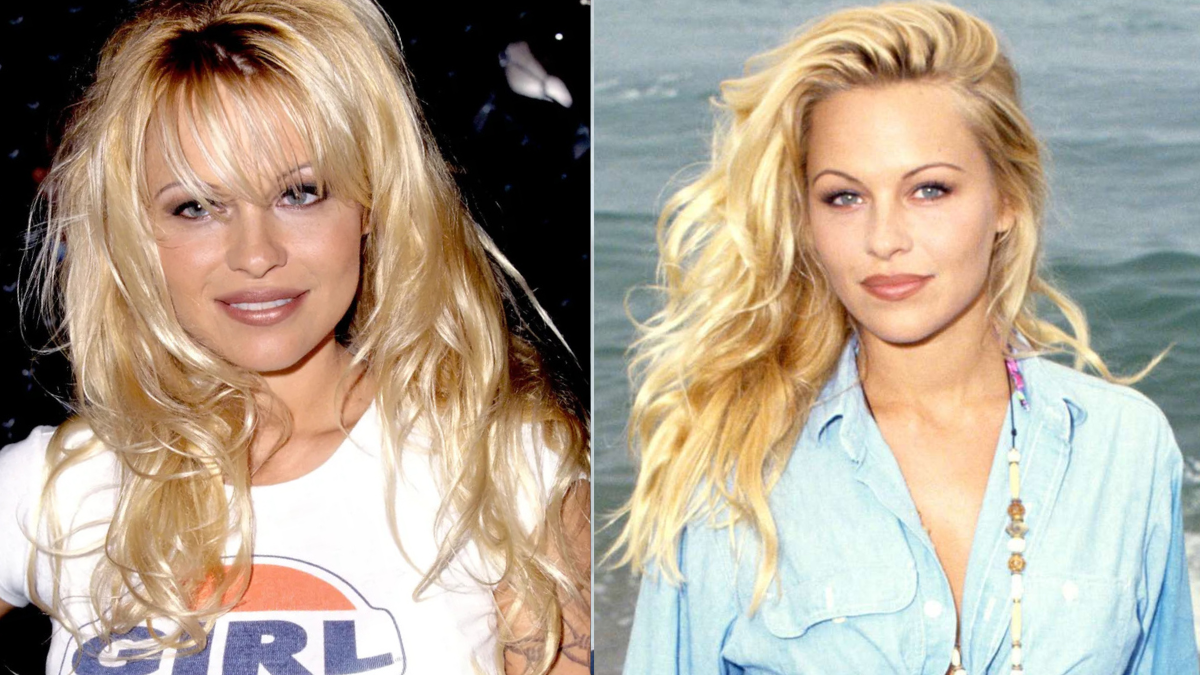

Discover Pamela Anderson young, from her Canadian childhood and first modeling opportunity to Playboy, Baywatch, Hollywood fame, and her evolving public image.
When people search for pamela anderson young, they are often looking for more than old photographs. They want to understand what Pamela Anderson was like before Baywatch made her internationally recognizable, how she entered modeling, and how a young woman from British Columbia became one of the most recognizable faces of the 1990s.
Pamela Denise Anderson was born on July 1, 1967, in Ladysmith, British Columbia, Canada. Her early life was far removed from Hollywood celebrity culture. She grew up in British Columbia, attended school in Comox, participated in athletics, and eventually became a fitness instructor before an unexpected appearance at a Canadian football game changed the direction of her life.
The story of pamela anderson young is particularly interesting because her public image changed dramatically over time. She went from a relatively unknown Canadian woman to a Labatt spokesmodel, Playboy cover star, television actress, Baywatch sensation, and eventually a performer who deliberately redefined how the public viewed her.
Pamela Anderson Young: Childhood and Canadian Roots
The story of pamela anderson young begins in Ladysmith, British Columbia, where she was born to Barry Anderson, a furnace repairman, and Carol Anderson, a waitress. She was born on Canada Day in 1967, the centennial year of Canada’s Confederation, and received considerable local attention as the country’s so-called “Centennial Baby.”
Her family later lived in the Comox area, where Anderson attended Highland Secondary School. Her upbringing was distinctly Canadian and comparatively ordinary when viewed against the extraordinary celebrity career that followed. She participated in sports and developed an interest in physical fitness, experiences that later became useful when she entered the entertainment industry.
There were also creative and athletic elements to her childhood. Biographical records note that Anderson played saxophone in a school jazz band and was involved in athletics. These details are sometimes overlooked because later coverage concentrated heavily on her appearance and celebrity persona. Looking at her early years more closely provides a fuller picture of someone whose interests were broader than modeling alone.
What Was Pamela Anderson Like When She Was Young?
Descriptions of pamela anderson young often focus almost exclusively on her appearance, but her early life reveals several other characteristics. Anderson has described herself as shy when she was young, an interesting contrast with the confident public persona she eventually developed as a model and television star.
That contrast became important throughout her career. The young woman who grew up in British Columbia did not begin with a carefully engineered Hollywood identity. Her first major exposure came unexpectedly, and the opportunities that followed developed rapidly. In that sense, her story resembles a series of doors opening one after another rather than a single carefully planned route to fame.
Her athletic background also helped create a foundation for the physical demands of modeling and television. Long before she became associated with the beach-running imagery of Baywatch, she had already developed an interest in fitness and an active lifestyle.
The Unexpected Moment That Changed Her Career
One of the most famous parts of pamela anderson young history occurred at a British Columbia Lions football game in Vancouver in 1989. Anderson was wearing a Labatt beer T-shirt when she appeared on the stadium’s giant screen. The crowd reacted positively, and the moment attracted the attention of Labatt representatives.
That accidental exposure led to work as a Labatt spokesmodel. It was a classic example of how entertainment careers can begin through circumstances that have little connection to traditional auditions. Anderson did not arrive at the stadium expecting it to become a career-changing event. Yet within a relatively short period, the attention moved from a local sporting event to national advertising and eventually international modeling.
The episode is important because it demonstrates how Anderson’s early career was shaped by visibility. Before Hollywood casting directors knew her name, an audience saw her on a screen and reacted to her presence. That spontaneous recognition became the first major step toward the celebrity identity she would later develop.
Pamela Anderson Young and the Beginning of Her Modeling Career
After the Labatt opportunity, Anderson’s career moved quickly. Her appearance in advertising attracted further attention, and she was eventually approached by Playboy. Her first Playboy cover appeared in October 1989, when she was 22 years old. She was subsequently selected as Playmate of the Month for February 1990.
This period represents the major transition from pamela anderson young to Pamela Anderson the public figure. The move to Los Angeles followed, giving her access to a much larger entertainment market. She was no longer simply a Canadian spokesmodel; she was becoming a recognizable figure in American popular culture.
Anderson later described her first Playboy experience in unusually personal terms, recalling that opening her eyes to the camera flash felt like “falling off a cliff” and describing the moment as connected to a feeling of freedom. That perspective is useful because it shows that she did not necessarily view the opportunity only through the lens of celebrity or glamour. For her, it could also represent a major personal transition.
Moving From Canada to Los Angeles
For pamela anderson young, moving to Los Angeles was a defining professional decision. She entered an entertainment industry that was considerably larger and more competitive than the Canadian advertising market where she had started.
Los Angeles gave Anderson access to television producers, photographers, casting directors, entertainment executives, and a culture built around turning recognizable personalities into long-term careers. Her modeling work created visibility, but acting required a different set of skills and opportunities.
The transition was not instantaneous. Anderson began taking television roles and building her screen experience. Her first major television breakthrough came with Home Improvement, where she played Lisa, the “Tool Time Girl.” Biography.com identifies the role as her first major acting break in 1991.
That role mattered because it shifted her from print and advertising into a recurring television presence. Instead of being known primarily through photographs, she was now becoming familiar to viewers through a weekly series.
Pamela Anderson Young Before Baywatch
The period before Baywatch is essential to understanding pamela anderson young because it shows that her international fame did not arrive overnight. She already had modeling recognition and television experience when Baywatch became the defining opportunity of her early acting career.
Anderson joined Baywatch as C.J. Parker, a lifeguard character who became closely associated with her public image. She appeared on the series from 1992 to 1997, becoming one of its most recognizable cast members.
At the time, Baywatch was an unusual television phenomenon. Critics were not universally enthusiastic about the show’s artistic qualities, yet its international popularity was enormous. A 1994 Los Angeles Times profile described Anderson as one of the program’s major attractions and noted that the show was being seen in more than 100 countries.
This demonstrates an important lesson about celebrity careers: critical reputation and cultural reach are not always the same thing. Baywatch became a global television brand, and Anderson’s image became one of its most recognizable symbols.
How Baywatch Changed Pamela Anderson’s Image
The transformation from pamela anderson young to Baywatch star was about more than getting a famous television role. The character of C.J. Parker became part of a broader visual culture surrounding 1990s television.
The show’s California beaches, lifeguard uniforms, athletic imagery, and highly stylized production created a recognizable aesthetic. Anderson fit naturally into that world, but her growing fame also meant that the public increasingly separated the actress from the person.
A 1994 Los Angeles Times profile described Anderson as possessing a combination of glamour and an approachable “girl next door” quality. That combination helped make her commercially powerful: she could be marketed as glamorous while still being presented as accessible.
Her Baywatch years also demonstrated the global reach of syndicated television. The series traveled across international markets, meaning Anderson’s image reached audiences far beyond the United States and Canada.
Pamela Anderson Young: From Model to Actress
One of the most significant elements of pamela anderson young is the transition from modeling to acting. Modeling gave Anderson visibility, but acting required her to maintain a character, deliver dialogue, work within an ensemble, and perform according to a production schedule.
Her role on Home Improvement provided an important introduction to television, while Baywatch gave her a much larger international platform. She subsequently appeared in films, including Barb Wire in 1996, and later developed a television career beyond Baywatch.
This progression is useful when evaluating her career fairly. It is easy to reduce Anderson’s early fame to modeling or physical appearance because those were highly visible aspects of her public image. Yet her career also involved sustained work in television, film, endorsements, hosting, and later stage performance.
Her professional evolution demonstrates that celebrity branding can begin with one recognizable characteristic but eventually expand into multiple entertainment disciplines.
A Career Timeline From Youth to International Fame
| Period | Career stage | Key development |
|---|---|---|
| 1967 | Childhood | Born in Ladysmith, British Columbia |
| School years | Education and athletics | Attended school in British Columbia and participated in sports |
| 1989 | Early modeling | Discovered at a BC Lions football game |
| 1989 | Advertising | Became associated with Labatt as a spokesmodel |
| 1989–1990 | Playboy | First cover and Playmate of the Month |
| 1991 | Television | Joined Home Improvement |
| 1992–1997 | Baywatch | Played C.J. Parker |
| 1990s | Film and television | Expanded into movies and additional TV work |
| 2000s onward | Reinvention | Continued acting, advocacy, television, and other projects |
| 2022 | Broadway | Made her Broadway debut as Roxie Hart in Chicago |
| 2024 | Film recognition | Earned a Golden Globe nomination for The Last Showgirl |
This timeline puts pamela anderson young into a broader career context. The most recognizable phase of her early life was only the beginning of a much longer professional journey.
The Public Image of Pamela Anderson in the 1990s
The cultural meaning of cannot be separated fromhttps://celebrityfocus.co.uk/ the media environment of the 1990s. Celebrity magazines, television entertainment programs, men’s magazines, tabloids, and increasingly global television syndication helped create celebrity identities at a speed that was unusual for previous generations.
Anderson became one of the era’s most recognizable glamour figures. Her Playboy appearances and Baywatch role reinforced each other, creating a powerful image that was repeatedly reproduced across television, magazines, advertising, and popular culture.
Yet Anderson’s public identity was more complicated than that image suggested. Her later career included animal-rights activism, advocacy, documentary work, memoir writing, and acting projects that allowed her to revisit earlier assumptions about her. That evolution is one of the most interesting aspects of her biography.
How Pamela Anderson Reconsidered Her Earlier Image
The story of pamela anderson young becomes more nuanced when viewed alongside Anderson’s later reflections on fame. As she grew older, she increasingly challenged the idea that the image created around her in the 1990s represented the complete person.
Her later work has included projects centered on personal storytelling and reinvention. The documentary Pamela, a Love Story, released in 2023, offered a much more intimate perspective on her life and public experiences. Rotten Tomatoes lists the documentary among her highest-rated screen projects.
She also returned to the stage in 2022 as Roxie Hart in Chicago. The Golden Globes notes that the Broadway role represented a new direction and a moment of reinvention in her career.
This later development is significant because it changes how her early photographs should be interpreted. Instead of seeing young Anderson as the complete story, it is more accurate to view those years as one chapter in a career that continued to evolve.
Pamela Anderson Young and the Reality Behind Celebrity Reinvention
The most useful way to understand pamela anderson young is to avoid treating celebrity photographs as complete biographies. Images can tell us how a person was marketed, what styles were popular, or what a particular publication wanted audiences to notice. They cannot independently explain a person’s ambitions, personality, or private experiences.
Anderson’s career illustrates this perfectly. The public saw a blonde model and television actress, while her professional life involved constant movement between modeling, acting, endorsements, activism, family life, and later creative projects.
Her own reflections have sometimes challenged the assumptions attached to her image. That makes her career a useful case study in celebrity reinvention: a public persona can become enormously successful while also becoming difficult for the person behind it to control.
From Baywatch Icon to The Last Showgirl
The contrast between pamela anderson young and Anderson’s later acting work is especially striking when looking at The Last Showgirl. The 2024 film, directed by Gia Coppola, earned Anderson a Golden Globe nomination for her performance. The Golden Globes records the nomination as recognition for her role in the film.
The significance of this phase is not simply that Anderson continued acting. It demonstrates how far her professional identity had expanded from the model and television star audiences first encountered in the late 1980s and early 1990s.
Her later work places greater emphasis on performance, vulnerability, and character. That evolution allows audiences to reassess an entertainer who had long been defined by an image created during her youth.
Frequently Asked Questions About Pamela Anderson Young
Where was Pamela Anderson born?
Pamela Anderson was born on July 1, 1967, in Ladysmith, British Columbia, Canada. She grew up in British Columbia and attended Highland Secondary School in Comox. Her Canadian upbringing preceded the international entertainment career that eventually took her to Los Angeles.
How did Pamela Anderson become famous when she was young?
The early career of pamela anderson young changed dramatically after she was shown on the stadium screen at a British Columbia Lions football game in 1989. She was wearing a Labatt beer T-shirt, and the attention led to work as a Labatt spokesmodel. She subsequently appeared on Playboy and moved into television acting.
How old was Pamela Anderson when she appeared in Playboy?
Anderson was 22 when her first Playboy cover appeared in October 1989. She was subsequently named Playmate of the Month for the February 1990 issue. This period marked the beginning of her rapid transition from Canadian model and advertising figure to internationally recognized celebrity.
How old was Pamela Anderson when she joined Baywatch?
Anderson was 25 when she began appearing as C.J. Parker on Baywatch in 1992. She remained with the series through 1997, becoming one of the show’s most recognizable cast members.
Was Pamela Anderson always interested in acting?
The story of pamela anderson young shows that acting developed after her initial modeling and advertising opportunities. Her first major television role was on Home Improvement in 1991, followed by her breakthrough as C.J. Parker on Baywatch. She later expanded into film, television, Broadway, and dramatic acting.
What made Pamela Anderson famous in the 1990s?
Her fame came from several overlapping factors: Playboy modeling, television appearances, advertising, and especially her role as C.J. Parker on Baywatch. The international reach of Baywatch helped transform Anderson from a North American celebrity into a globally recognizable figure.
Conclusion: The Real Story Behind Pamela Anderson Young
The story of pamela anderson young is ultimately a story about transformation. Born in British Columbia in 1967, Anderson began life far from the Hollywood spotlight. Her unexpected appearance on a stadium screen in 1989 opened a door into advertising and modeling, while Playboy, Home Improvement, and eventually Baywatch turned that opportunity into international fame.
Her early image became so powerful that it sometimes overshadowed the rest of her identity. Yet Anderson’s career continued long after her Baywatch years. She explored activism, documentary filmmaking, memoir writing, Broadway, and more demanding screen roles, demonstrating that celebrity identity does not have to remain frozen in the era when it was first created.
Understanding pamela anderson young therefore means looking beyond old photographs. Her youth explains where the story began, but it does not define where the story ended. From a Canadian teenager and aspiring fitness professional to a global television star and later a performer seeking new creative territory, Pamela Anderson’s career illustrates how dramatically a public identity can evolve.
The most important takeaway is simple: the young Pamela Anderson became famous through a remarkable sequence of unexpected opportunities, but her lasting cultural significance comes from what she did with that visibility afterward. Her journey from British Columbia to Baywatch and eventually to acclaimed later-career projects is a reminder that a celebrity’s first image is only one chapter of a much larger life and career.