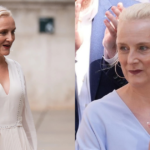


Sophie Turner has grown from a young British actress into one of the most recognisable performers of her generation. Best known for portraying Sansa Stark in HBO’s fantasy phenomenon Game of Thrones, she captured audiences with a performance that evolved from an uncertain young noblewoman into a politically intelligent and resilient leader. Her journey reflects years of professional growth, changing public expectations, and a willingness to explore different characters beyond the role that first brought her international fame.
For many viewers, Sophie Turner https://www.google.com/search?sca_esv=136eabc9db6c0ef3&sxsrfremains closely associated with the fictional world of Westeros. However, her career extends well beyond the walls of Winterfell. She has appeared in superhero films, psychological thrillers, crime dramas, and television adaptations, demonstrating an interest in stories that challenge her range as an actress. Her work in the X-Men franchise, particularly as Jean Grey, introduced her to another major entertainment universe and helped establish her presence in Hollywood.
Her life away from the screen has also attracted considerable attention, including her marriage to musician Joe Jonas, their children, and the highly publicised changes in their relationship. Yet reducing her identity to celebrity headlines overlooks the professional decisions, performances, and personal transitions that have shaped her public life. Understanding her career means looking at both her screen achievements and the wider circumstances in which she has developed as an entertainer.
This article explores her early life, breakthrough role, acting achievements, filmography, personal background, public image, and future direction. It also separates established biographical information from speculation, offering readers a clear overview of the actress and her continuing place in contemporary entertainment.

Who Is Sophie Turner?
Sophie Turner is an English actress who became internationally famous for playing Sansa Stark in Game of Thrones. Born on 21 February 1996 in Northampton, England, she entered professional acting as a teenager and spent much of her formative career working on one of the most successful television series of the twenty-first century. Her performance earned widespread recognition and provided a foundation for opportunities in film and television.
What makes her career particularly interesting is the way audiences watched her develop alongside her most famous character. When she first appeared on Game of Thrones in 2011, Sansa was a young girl raised on stories of noble families, royal courts, and romantic ideals. As the series progressed, she became a far more calculating and politically aware figure. Turner had to communicate that transformation through changes in expression, dialogue delivery, posture, and emotional restraint.
Beyond television, she has worked in productions spanning fantasy, action, drama, and suspense. Her roles have included Jean Grey in the X-Men films and the lead character in the television crime drama Joan. These projects reveal an actress interested in moving between different genres rather than remaining permanently tied to a single fictional world.
Although public interest frequently centres on her relationships and family circumstances, her professional identity remains rooted in acting. Her career illustrates how a successful television debut can open doors while also creating expectations that performers must work hard to move beyond.
Early Life and Family Background
Sophie Turner grew up in England in a family that supported her interests from an early age. She spent much of her childhood in Chesterton, Warwickshire, where she attended school before her acting career began to demand increasing amounts of time and attention. Her early environment was different from the international film sets and red-carpet events that would later become familiar parts of her life.
Turner developed an interest in performance through her involvement with a local theatrical group. She became a member of Playbox Theatre Company in Warwick, an experience that gave her opportunities to practise acting and build confidence. Youth theatre can provide an important bridge between an initial interest in performance and professional work because it allows aspiring actors to learn discipline, collaboration, and stage presence in a supportive setting.
Her education continued while she worked on Game of Thrones. Managing school responsibilities alongside a demanding production schedule required careful organisation, particularly because filming a major television series involves travel, rehearsals, long working days, and periods away from home. This experience placed Turner in an unusual position: she was developing academically and personally while simultaneously becoming an internationally recognised performer.
Her childhood and teenage years also demonstrate why the transition from ordinary life to public celebrity can be complicated. Young actors often have to mature professionally before they have completed the experiences most people associate with adolescence. In Turner’s case, the demands of filming and the attention surrounding the series became part of her development, influencing how she later discussed fame, privacy, and growing up in the entertainment industry.
How Sophie Turner Landed Her Breakthrough Role in Game of Thrones
The defining early milestone in Turner’s career came when she was cast as Sansa Stark in HBO’s adaptation of George R. R. Martin’s A Song of Ice and Fire novels. The series premiered in 2011 and quickly became a major television event, combining political conflict, family rivalries, elaborate world-building, and morally complex characters. For Turner, securing the role meant entering a production that would eventually reach audiences around the world.
Sansa was an especially demanding character because her development depended on subtle psychological changes rather than a simple transformation into a conventional action hero. At the beginning, she admired the traditions of the royal court and believed that marrying a prince would lead to a desirable future. The events that followed forced her to confront cruelty, manipulation, betrayal, and the consequences of trusting the wrong people.
Turner’s performance became increasingly significant as Sansa learned to recognise power and protect herself. Instead of relying on constant displays of anger or strength, the actress frequently conveyed her character’s intelligence through silence, measured responses, and careful observation. This approach helped distinguish Sansa from characters whose influence came primarily from military ability or supernatural power.
The role also exposed Turner to the practical realities of large-scale television production. She worked with an ensemble cast that included established performers and other young actors who were growing up within the series. Over several seasons, the cast helped create a fictional world whose characters became familiar to millions of viewers. For Turner, the experience provided professional training that extended far beyond memorising dialogue.
Sansa Stark and the Evolution of Her Most Famous Character
Sansa Stark remains central to Turner’s public identity because the character’s development was one of the most visible long-term arcs in Game of Thrones. Initially, Sansa valued social status, beauty, courtly manners, and the possibility of becoming a queen through marriage. Her early outlook reflected the world in which she had been raised, where family alliances and royal approval appeared to determine a person’s future.
As Sansa experienced political violence and personal betrayal, her understanding of power changed. She became more cautious about promises, more observant of other people’s motivations, and less willing to confuse courtesy with genuine kindness. These developments gave Turner opportunities to portray a character whose strength emerged through experience and strategic thinking rather than sudden physical dominance.
The character’s journey also challenged common assumptions about what makes a compelling fantasy heroine. Sansa was not always immediately popular with viewers, particularly when her early decisions reflected youthful naivety. However, her gradual transformation encouraged audiences to reconsider the difference between visible bravery and the quieter skills needed to survive dangerous institutions.
By the later seasons, Sansa had developed into a political leader capable of making difficult judgments about the future of the North. Her experiences gave her a perspective different from that of characters who had spent years fighting battles abroad. Turner’s portrayal helped connect Sansa’s political decisions to the personal costs that shaped them, making her development one of the show’s major character studies.
Sophie Turner in the X-Men Franchise
Following her success on television, Turner took on another high-profile role by playing Jean Grey in the X-Men film series. Jean Grey is one of Marvel’s best-known mutant characters, associated with powerful telepathic and telekinetic abilities and the complicated storyline surrounding the Phoenix. Entering this franchise placed Turner within a different type of production, one that relied on visual effects, action sequences, and a long-established comic-book mythology.
Her first major appearance as Jean Grey came in X-Men: Apocalypse, released in 2016. The film introduced a younger version of the character as part of a new generation of mutants. Unlike Sansa Stark, whose challenges were largely rooted in politics and survival, Jean Grey required Turner to portray a character whose emotional life was closely connected to extraordinary supernatural abilities.
Turner returned to the role in Dark Phoenix, released in 2019. The film focused on Jean’s increasingly difficult relationship with her powers and the danger they represented to herself and those around her. Its story demanded a balance between vulnerability and destructive potential, asking the actress to communicate internal conflict within a large-scale superhero narrative.
The franchise experience broadened Turner’s professional profile. It also demonstrated the challenges of adapting popular comic-book material, where audiences often arrive with strong expectations about characters and storylines. While the films received mixed critical responses, the role gave Turner valuable experience in action-oriented filmmaking and expanded her recognition among viewers who might not have followed Game of Thrones.
Filmography and Major Career Milestones
Turner’s career includes television, independent productions, studio films, and projects based on existing intellectual properties. Her choices show how performers often move between familiar commercial franchises and smaller stories that allow them to explore different aspects of their craft. Each project presents its own demands, from physical preparation and character research to working within a director’s particular visual style.
The following table highlights several important projects in her career and explains why they matter.
| Project | Year | Role or contribution | Career significance |
|---|---|---|---|
| Game of Thrones | 2011–2019 | Sansa Stark | International breakthrough and defining television role |
| Another Me | 2013 | Fay Delussey | Early leading role in a psychological thriller |
| Barely Lethal | 2015 | Heather | Action-comedy experience outside fantasy television |
| X-Men: Apocalypse | 2016 | Jean Grey | Entry into a major superhero franchise |
| Time Freak | 2018 | Debbie | Romantic science-fiction film |
| Dark Phoenix | 2019 | Jean Grey | Further exploration of a major Marvel character |
| The Staircase | 2022 | Margaret Ratliff | Role in a dramatic miniseries based on a real criminal case |
| Joan | 2024 | Joan Hannington | Leading role in a crime drama inspired by a real-life figure |
The projects illustrate a career that cannot be understood through a single genre. Turner’s early film work offered experience in leading roles, while the X-Men films introduced her to blockbuster production. Her later television work showed a renewed interest in character-driven narratives, where performances and relationships often matter more than spectacular visual effects.
The most useful way to assess an actor’s filmography is to consider not only box-office results or audience popularity but also the range of work undertaken. An actor may gain global recognition through one role while using later projects to develop different skills. Turner’s choices reflect this process, although the long-term direction of her career will depend on the projects she takes on in the years ahead.
Sophie Turner in The Staircase and Do Revenge
After spending years in major fantasy and superhero productions, Turner continued exploring roles that required a different kind of performance. In 2022, she appeared in The Staircase, an HBO Max limited series inspired by the criminal case surrounding Michael Peterson and the death of his wife, Kathleen Peterson. The production starred Colin Firth and Toni Collette and approached the case through a dramatic reconstruction of a complicated legal and family story.
Turner played Margaret Ratliff,https://celebrityfocus.co.uk/ one of the daughters connected to the Peterson family. The role placed her within a narrative where uncertainty, conflicting accounts, and complicated relationships were central to the story. Rather than relying on fantasy world-building or superhero action, the series depended on atmosphere, dialogue, and the gradual presentation of information. It gave Turner another opportunity to work within a realistic dramatic setting.
That same year, she appeared in Netflix’s Do Revenge, a dark teen comedy directed by Jennifer Kaytin Robinson. The film stars Camila Mendes and Maya Hawke and explores social status, revenge, betrayal, and the pressures of high school life. Turner’s appearance as Erica was brief, but it demonstrated her willingness to participate in a project with a markedly different tone from her best-known work.
These roles are useful examples of how actors can diversify their portfolios without abandoning the audiences that first made them famous. A major franchise may establish recognition, while smaller parts can provide opportunities to experiment with comedy, realism, or unconventional storytelling. Turner’s post-Game of Thrones projects reflect this broader approach to career development.
Joan: Sophie Turner’s Transformation Into a Real-Life Jewel Thief
One of Turner’s most notable leading roles after Game of Thrones came in Joan, a six-part British crime drama released in 2024. She portrayed Joan Hannington, a woman whose life inspired a story involving criminal activity, complicated relationships, motherhood, and reinvention. The series was created and written by Anna Symon and directed by Richard Laxton, with its narrative set against the fashion-conscious world of 1980s London. <Cite refs={[“turn817984search1″,”turn817984search3”]}/>
The character represented a different challenge from Sansa Stark and Jean Grey. Sansa develops through political survival, while Jean struggles with extraordinary powers. Joan Hannington, by contrast, is portrayed through the realities of a criminal underworld and the personal decisions that shape her circumstances. Turner had to convey ambition, vulnerability, deception, and determination within a character whose actions are not always easy to approve of.
The drama follows Joan as she attempts to build a new life for herself and her daughter, Kelly, while becoming increasingly involved in jewellery theft. The production draws inspiration from Hannington’s life and memoirs, but viewers should remember that a television drama is a scripted interpretation rather than a documentary record. Scenes, dialogue, and character relationships may be shaped for dramatic purposes.
The role was important because it placed Turner at the centre of a project driven by character rather than a pre-existing fantasy franchise. It also allowed her to explore the complexities of a woman whose desire for security leads her into morally questionable situations. For an actress seeking to demonstrate range, this kind of material can be particularly valuable. <Cite refs={[“turn817984search3″,”turn817984search4”]}/>
Sophie Turner as Lara Croft in Tomb Raider
A major new chapter in Turner’s career is her casting as Lara Croft in the upcoming Tomb Raider television adaptation for Prime Video. Lara Croft is one of the best-known characters in video-game entertainment, recognised for archaeological adventures, puzzle-solving, physical endurance, and exploration of dangerous ancient sites. The role places Turner at the centre of another internationally recognised entertainment property, but it also gives her a character with a very different personality and skill set from Sansa Stark.
The adaptation is being developed with Phoebe Waller-Bridge as a key creative figure. Turner expressed enthusiasm about taking on the character when her casting was announced in 2025. In 2026, reports indicated that production had briefly paused following an injury Turner sustained during filming. Amazon MGM Studios described the pause as a precaution to allow her time to recover. The production update did not mean the series had been cancelled. <Cite refs={[“turn817984search7″,”turn817984search11”]}/>
Preparing to play Lara Croft involves a different set of demands from portraying a political figure in a dialogue-driven fantasy drama. The character is associated with physical challenges, combat, agility, and practical problem-solving, so action training and movement preparation are important aspects of the performance. Turner’s experience with action-oriented filmmaking in the X-Men franchise gives her relevant background, although the precise demands of the new production are distinct.
The project could become a defining stage of her next career chapter. Successful adaptations depend on more than the popularity of their source material: they need a convincing lead performance, coherent storytelling, strong production design, and an approach that appeals to established fans as well as newcomers. For Turner, Lara Croft offers an opportunity to establish a new signature role while demonstrating how her acting and physical performance have developed since her teenage years.
As of October 2026, the series remains an upcoming project rather than a completed release. Its eventual reception will help determine how significantly it reshapes Turner’s screen identity.
Other Upcoming and Recent Screen Projects
Alongside Tomb Raider, https://celebrityfocus.co.uk/ Turner has continued to pursue projects that move beyond the fantasy genre. One notable example is Steal, a television thriller in which she plays Zara, an office worker caught up in a high-stakes heist. The series represents another move towards contemporary action and suspense, placing an ordinary workplace setting at the centre of an extraordinary criminal situation. <Cite refs={[“turn817984search12”]}/>
This type of role can be particularly useful for an actor associated with a famous fantasy character. When audiences have spent years watching someone inhabit a fictional kingdom or superhero universe, a contemporary thriller can encourage them to engage with the performer differently. The emphasis shifts from established mythology towards pacing, tension, character reactions, and the ability to carry a story through uncertainty.
Turner’s developing slate also demonstrates why it is important to distinguish confirmed projects from online rumours. Entertainment news often discusses possible sequels, future seasons, or hypothetical casting decisions long before studios make formal announcements. A responsible career overview should identify announced productions and released work separately, rather than treating every reported possibility as a guaranteed appearance.
Her future career will ultimately depend on the balance between major commercial productions and smaller, character-led stories. A long-running franchise can create global visibility, but a varied filmography gives an actor more opportunities to demonstrate versatility. Turner’s recent work suggests that she is continuing to explore both paths.
Sophie Turner’s Acting Style and On-Screen Strengths
One of Turner’s most recognisable strengths is her ability to communicate changing power dynamics through restrained performance. In Game of Thrones, Sansa’s growth was not always expressed through dramatic speeches or physical confrontation. Her increasing confidence could be seen in her posture, facial expressions, timing, and willingness to remain silent while another character revealed their intentions. This approach made her later political authority more convincing.
Her performances also show how context changes an actor’s apparent strengths. In a fantasy drama, an actress may need to communicate relationships within an elaborate fictional history. In a crime thriller, the challenge may be establishing believable reactions to danger without knowing which characters can be trusted. In a superhero production, physical performance and interaction with visual effects become more important. Turner has worked across all these environments, giving her a broad foundation.
An actor’s effectiveness should not be measured solely by whether every project becomes a critical or commercial success. Film and television outcomes depend on writing, editing, directing, production decisions, marketing, and audience expectations as well as the lead performance. A mixed response to a film does not automatically invalidate an actor’s work, just as a popular franchise does not guarantee that every subsequent performance will receive universal praise.
Turner’s career is therefore best understood as an evolving body of work rather than a single success story. She has already demonstrated the ability to carry a long-running television character, join a major superhero franchise, and lead a crime drama. The next stage will show how successfully she can turn that experience into a lasting reputation across different genres.
Awards, Recognition, and Industry Reputation
Turner’s performance as Sansa Stark brought significant industry recognition. Most notably, she received a Primetime Emmy Award nomination for Outstanding Supporting Actress in a Drama Series in 2019. The nomination reflected the prominence of Sansa’s later storylines and the impact of Turner’s work in a series that had become a major international television event. <Cite refs={[“turn817984search0″,”turn817984search3”]}/>
Recognition of this kind matters because award nominations can increase an actor’s visibility among casting directors, producers, and audiences. They may also create opportunities to pursue more varied roles. However, awards are only one measure of professional achievement. Many strong performances do not receive nominations, and critical recognition does not always translate into box-office success or long-term popularity.
Turner’s professional reputation is also connected to her experience working in large ensembles. Game of Thrones required actors to build relationships across numerous interconnected storylines, while the X-Men films placed her alongside established performers such as James McAvoy, Michael Fassbender, and Jennifer Lawrence. These productions offered exposure to different acting methods and the collaborative demands of major screen projects.
As her career progresses, her reputation will increasingly depend on the quality and variety of her choices. Taking on a recognisable character like Lara Croft can attract a large audience, while performances in smaller productions may reveal qualities that blockbuster films cannot fully explore. A durable acting career often benefits from both visibility and a willingness to take creative risks.
Sophie Turner’s Personal Life and Marriage to Joe Jonas
Turner’s personal life became a frequent subject of entertainment coverage through her relationship with Joe Jonas, the American singer and member of the Jonas Brothers. The couple became publicly associated in 2016, announced their engagement in 2017, and married in 2019. Their relationship attracted attention because it brought together two people with substantial international audiences in acting and music.
They later welcomed two daughters. Their first daughter, Willa, was born in 2020, and their second daughter, Delphine, was born in 2022. Both parents have public careers, but information about their children deserves particular care because children of celebrities have a legitimate interest in privacy. Their parents’ professional status does not mean every aspect of their childhood should become public entertainment.
In September 2023, Jonas filed for divorce, and the separation became the subject of extensive media coverage. The former couple subsequently dealt with legal arrangements concerning their children and reached a divorce settlement in 2024. The public discussion included disagreements about parenting arrangements, making it important to distinguish documented legal developments from speculation about private conversations or motives.
Their separation illustrates the challenges that can arise when private family matters unfold under intense public scrutiny. Headlines may reduce a complicated relationship to a simple story of blame, but family arrangements involve legal processes, personal circumstances, and decisions that outsiders cannot fully understand. A responsible account of Turner’s life should report established developments without presenting unverified allegations as facts.
Motherhood, Privacy, and Life Beyond Celebrity Headlines
Motherhood has been an important part of Turner’s adult life, alongside her acting career. Raising children while working in film and television can involve difficult scheduling decisions, travel, childcare arrangements, and periods away from home. These challenges affect many working parents, but the demands can be more visible when an actor’s professional commitments attract public attention.
Turner has spoken publicly about the pressures of personal change and the period surrounding the end of her marriage. Interviews and profiles have also explored her experience of returning to life in England after living in the United States. Such accounts can provide useful context, but they should not be treated as a complete record of her private feelings or day-to-day family arrangements.
The distinction between a public figure’s work and private life matters for both readers and publishers. Readers may reasonably want to understand major life events that help explain a change in location, professional priorities, or public appearances. They do not need speculative details about private parenting decisions to understand her career.
For Turner, privacy and professional visibility must coexist. She works in an industry where publicity can support a project’s success, but maintaining boundaries allows family life to remain separate from the demands of celebrity culture. That balance is particularly significant when children are involved.
Fashion, Public Image, and Social Media
Turner’s public image extends beyond acting into fashion and popular culture. Her appearances at premieres, fashion events, and award ceremonies have made her a familiar figure in entertainment photography. Designers and fashion publications often focus on how celebrities use clothing to communicate personal style, experiment with trends, or participate in the visual identity of a film campaign.
Her fashion choices have included both formal red-carpet looks and more relaxed contemporary styling. Like many actors, she can present different versions of her public image depending on the event, designer, or production she is promoting. This flexibility is part of modern celebrity culture, where an actor’s appearance may become a talking point alongside the project itself.
Social media has also changed how audiences encounter performers. Rather than relying entirely on interviews and press coverage, fans can follow public posts and promotional updates directly. However, a social media account is a selective view of someone’s life, not a complete biography. Posts may be carefully chosen, promotional, humorous, or intended for a specific audience.
For anyone researching Turner’s personal style or public image, reliable reporting and clearly dated public statements are more useful than assumptions based on a single photograph. Fashion can be an interesting aspect of celebrity culture, but it should not overshadow the professional work that sustains an actor’s career.
Sophie Turner’s Net Worth and Sources of Income
Sophie Turner’s net worth is a popular search topic, particularly among readers interested in the financial success of Game of Thrones cast members. However, there is no publicly verified, comprehensive statement establishing her current personal net worth as of October 2026. Figures published by celebrity-finance websites should therefore be treated as estimates unless they are supported by reliable financial documentation.
Her professional income may come from several sources. Acting fees are an obvious component, including payments for television episodes, film appearances, and leading roles. Depending on the terms of individual contracts, actors may also receive bonuses, residual payments, or other compensation connected to a production’s distribution and commercial performance.
Additional opportunities can include fashion partnerships, brand campaigns, public appearances, and other entertainment-related work. Turner has been associated with the fashion industry, including Louis Vuitton, which has contributed to her visibility beyond film and television. However, the value of an endorsement agreement is not necessarily public, and an association with a luxury brand does not establish a specific income figure.
It is also important to distinguish gross earnings from personal wealth. An actor’s income must be considered alongside taxes, professional representation, living expenses, investments, and other financial obligations. Without verified disclosures, assigning an exact figure to Turner’s wealth would create a misleading impression of certainty. The most trustworthy approach is to recognise her established career achievements while acknowledging that her private finances are not fully public.
Why Sophie Turner Remains Relevant in Popular Culture
Turner’s continuing relevance comes from the combination of a defining television role, participation in major film franchises, and a willingness to take on different kinds of characters. Sansa Stark remains a widely discussed figure in television history because her story examines power, survival, family loyalty, and the consequences of political violence. The character continues to attract analysis even though the series concluded in 2019.
Her work after the fantasy series has helped maintain that visibility. Jean Grey introduced her to superhero audiences, The Staircase placed her in a dramatic reconstruction of a real criminal case, and Joan gave her a leading role inspired by a real-life criminal figure. Her upcoming portrayal of Lara Croft offers another opportunity to reach viewers familiar with video games as well as those who follow her acting career.
Celebrity relevance is not simply a matter of appearing in popular productions. It also depends on whether performers can sustain audience interest while evolving professionally. Turner has faced the challenge of moving beyond a character she portrayed for much of her adolescence and early adulthood. Taking on different roles allows her to establish an identity that is broader than one television series.
Her future standing in the industry will depend on the projects she selects and the performances she delivers. Rather than assuming that every new role will succeed, it is more useful to follow how her career develops across television, film, and other creative opportunities. That approach provides a more balanced picture of an actress whose professional story is still unfolding.
Frequently Asked Questions About Sophie Turner
How old is Sophie Turner?
Sophie Turner was born on 21 February 1996 in Northampton, England. She turned 30 in February 2026. Her acting career began when she was a teenager, and she spent much of her adolescence working on Game of Thrones, which premiered in 2011. Her early start meant that audiences were able to watch her develop as both an actress and a performer over nearly a decade of television production.
What is Sophie Turner best known for?
Sophie Turner is best known for playing Sansa Stark in HBO’s Game of Thrones. Her performance followed Sansa’s transformation from a sheltered young noblewoman into a politically experienced leader. Turner is also known for portraying Jean Grey in X-Men: Apocalypse and Dark Phoenix, as well as for her leading performance in the crime drama Joan. Her upcoming role as Lara Croft in the Tomb Raider television adaptation is another major milestone in her career.
Is Sophie Turner married to Joe Jonas?
No. Sophie Turner and Joe Jonas separated in 2023, and their divorce was finalised in 2024. The former couple share two daughters, Willa and Delphine. Their separation received substantial media coverage, but details of their private family arrangements should be approached carefully. Publicly documented developments are more reliable than speculation about the personal circumstances behind their relationship.
Does Sophie Turner have children?
Yes. Sophie Turner has two daughters with her former husband, Joe Jonas. Their first daughter, Willa, was born in 2020, and their second daughter, Delphine, was born in 2022. Turner has balanced motherhood with her professional commitments, although the details of her children’s private lives are not necessary to understanding her acting achievements.
What role does Sophie Turner play in Tomb Raider?
Sophie Turner has been cast as Lara Croft in Prime Video’s upcoming Tomb Raider television adaptation. Lara Croft is a celebrated fictional archaeologist known for exploration, physical challenges, and dangerous adventures. The role requires a different style of performance from Turner’s previous work as Sansa Stark. Production briefly paused in 2026 after Turner sustained an injury, with the studio describing the pause as a precaution while she recovered.
What was Sophie Turner’s role in Joan?
In the 2024 crime drama Joan, Sophie Turner played Joan Hannington, a woman whose real-life story inspired a television narrative about jewellery theft, relationships, and motherhood. The six-part series was written by Anna Symon and directed by Richard Laxton. Although it draws inspiration from Hannington’s life, it is a dramatised production rather than a documentary, so its storytelling should not be interpreted as a literal record of every historical event.
How much is Sophie Turner worth?
Sophie Turner’s exact net worth has not been established through a publicly verified financial disclosure. Her income may include acting fees, brand partnerships, and other professional earnings, but the details of individual contracts and personal assets are generally private. Celebrity wealth websites publish estimates, yet those figures should not be presented as confirmed financial facts.
Has Sophie Turner won an Emmy Award?
Sophie Turner received a Primetime Emmy Award nomination in 2019 for Outstanding Supporting Actress in a Drama Series for her performance as Sansa Stark in Game of Thrones. A nomination is an important professional recognition, but it should not be confused with winning the award. Her performance nevertheless became one of the defining elements of her career and helped establish her reputation as a prominent television actress.
Conclusion: Sophie Turner’s Journey Beyond Game of Thrones
Sophie Turner’s career is a story of early success, professional development, and the challenge of building an identity beyond a defining role. Her portrayal of Sansa Stark made her internationally famous, but her work in the X-Men franchise, The Staircase, Do Revenge, and Joan demonstrates that her interests extend across genres and storytelling styles.
Her next chapter is particularly significant. Taking on Lara Croft in Tomb Raider places her at the centre of another globally recognised franchise, while projects such as Steal demonstrate her continuing interest in contemporary thrillers. These roles offer opportunities to explore different aspects of her performance and reach audiences who know her from different parts of the entertainment industry.
Her personal life, including her marriage to Joe Jonas, motherhood, and divorce, has also shaped public interest in her story. Nevertheless, those headlines represent only one part of a much larger picture. Her acting achievements, professional choices, and willingness to explore unfamiliar characters provide a more complete understanding of her career.
Ultimately, Sophie Turner should be viewed not simply as the actress who played Sansa Stark, but as a performer continuing to build a varied body of work. Her lasting success will depend on how she develops as an actress and the stories she chooses to tell next. The key takeaway is clear: a defining role can introduce an actor to the world, but continued growth is what gives a career the potential to endure.
Remove the FAQ sectionRemove citation placeholders