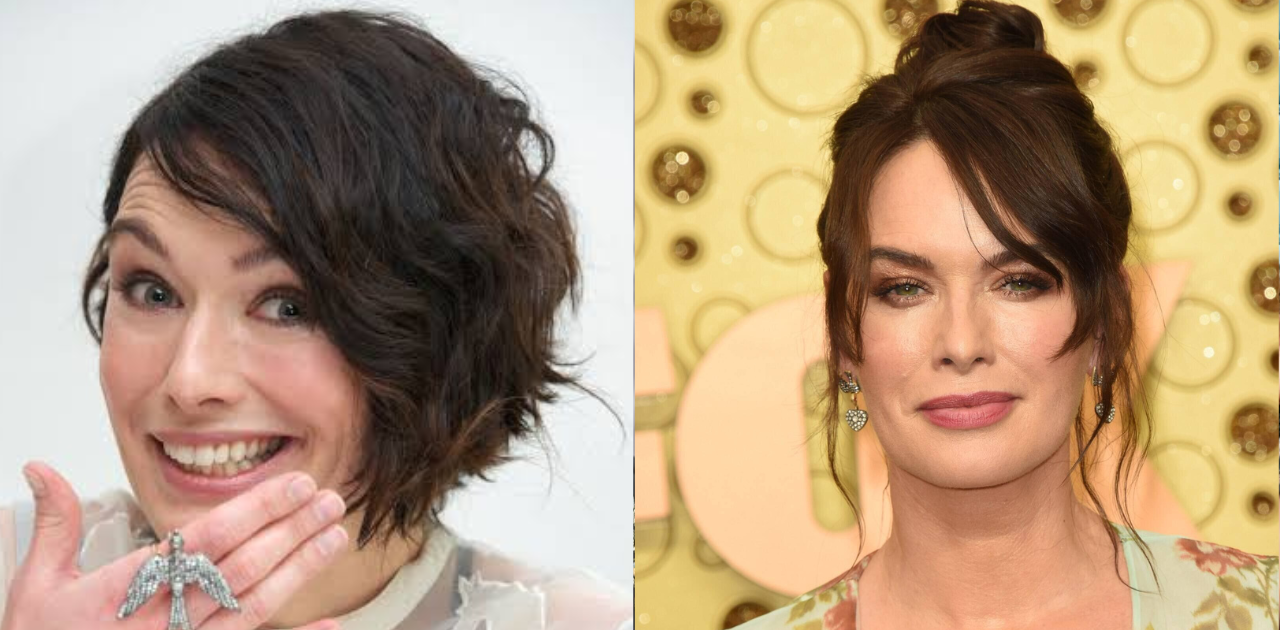

Lena Headeyhttps://en.wikipedia.org/wiki/Lena_Headey is a British actress best known around the world for portraying Cersei Lannister in HBO’s fantasy drama Game of Thrones. Her powerful performance as the ambitious queen transformed her into one of television’s most recognisable dramatic performers, earning her multiple Primetime Emmy Award nominations and a Golden Globe nomination. However, her career extends well beyond the political rivalries of Westeros. From independent British films and historical dramas to science-fiction television and action movies, she has built a varied body of work across several decades.
Born in Hamilton, Bermuda, on 3 October 1973, Headey grew up in England after her family returned from the island during her childhood. She entered the film industry as a teenager and gradually developed a reputation for portraying complicated characters with emotional intensity. Her performances often combine vulnerability with determination, making her equally effective as a frightened parent, a courageous historical figure, or a calculating antagonist.
For audiences discovering her work through Game of Thrones, there is much more to explore. Her filmography includes The Remains of the Day, The Brothers Grimm, 300, Dredd, The Purge, and Fighting with My Family. She has also worked in voice acting and production, demonstrating an interest in creative projects beyond traditional on-screen acting. Understanding her career means looking at the choices, performances, and experiences that helped establish her as a distinctive presence in British and international entertainment.

Who Is Lena Headey?
Lena Headey is an actress whose career spans British cinema, Hollywood productions, television drama, and animation. Although her portrayal of Cersei Lannister brought her the greatest international recognition, she had been working professionally for nearly two decades before Game of Thrones premiered in 2011. This earlier experience gave her a strong foundation in character-driven storytelling and allowed her to develop a style that works across different genres.
One of her most distinctive qualities is her ability to communicate a character’s inner conflict without relying entirely on dialogue. A change in expression, a carefully controlled pause, or a seemingly calm response can suggest anger, fear, calculation, or grief. These details are especially important when playing characters who cannot openly reveal what they are thinking. Her work in Game of Thrones made this quality particularly visible, but it can also be found in her performances in films such as 300 and Dredd.
Headey is also an example of an actor whose career cannot be reduced to a single genre. She has appeared in romantic dramas, historical films, psychological thrillers, science-fiction stories, and dark comedies. That range matters because successful performers must often adapt their techniques to different storytelling styles. A restrained performance in an intimate drama requires a different rhythm from a physically demanding role in an action film, and her filmography shows experience with both.

Early Life and Family Background
Lena Headey was born in Hamilton, Bermuda, while her British father, John Headey, was working there. Her family later returned to England, where she spent much of her childhood in Yorkshire. Growing up in England helped shape the cultural background associated with her later career, although her birthplace remains an interesting part of her biography because it differs from what some viewers might expect from a British actress.
Her early life was not built around a conventional route into the entertainment industry. She did not first establish herself through a major drama-school career before entering films. Instead, an opportunity emerged while she was still young, after she attracted attention during a school production connected with the Royal National Theatre in London. That experience helped lead to her first film role, demonstrating how an unexpected opportunity can change the direction of a young performer’s life.
The transition from school to professional acting can be challenging. Young actors must learn how to work with directors, follow production schedules, interpret scripts, and perform in front of cameras while continuing to develop their personal identities. Headey’s early start gave her practical experience in these areas, allowing her to learn through the demands of actual productions rather than relying only on formal training.
Her background also helps explain why her career developed gradually. She worked through supporting roles and smaller productions before becoming a globally recognised television star. Instead of moving immediately from one blockbuster to another, she accumulated experience across different projects. This steady progression became an important part of her professional development.
How Lena Headey Started Her Acting Career
Headey made her feature-film debut in Waterland, a 1992 drama directed by Stephen Gyllenhaal. She played young Mary, beginning a professional screen career while still in her teens. The film gave her an opportunity to work within a serious dramatic production and marked the start of a filmography that would eventually include major international releases.
Following her debut, she appeared in a range of British films and television productions. One early credit was The Remains of the Day, the acclaimed 1993 adaptation of Kazuo Ishiguro’s novel. She also appeared in The Jungle Book in 1994, a film that introduced her to a broader type of production. These early roles helped her gain experience in period storytelling, ensemble casts, and projects with different creative demands.
The first stages of an acting career rarely follow a predictable path. Performers may spend years accepting supporting parts, auditioning for roles that never materialise, and working on productions that reach relatively small audiences. Such experience can nevertheless be valuable because it teaches actors to understand character motivation, collaborate with other performers, and adjust to the pace of a professional set.
For Headey, these years were an important foundation rather than an overnight success story. By the time she began receiving prominent roles in larger films, she had already developed an understanding of how to approach different characters. Her later success therefore reflected not just one casting decision but years of professional experience.
Breakthrough Roles Before Game of Thrones
Before becoming widely associated with Cersei Lannister, Headey gained recognition through a collection of film performances that demonstrated her versatility. One notable example was Aberdeen, a 2000 drama in which she played a successful London lawyer navigating a troubled personal life. The performance received recognition at the Brussels European Film Festival, where she won the Silver Iris Award for Best Actress.
She continued to build her reputation through projects such as Possession and The Brothers Grimm. The latter, released in 2005, placed her in a fantasy adventure featuring Matt Damon and Heath Ledger. It introduced her to a more elaborate cinematic environment involving stylised storytelling, supernatural elements, and large-scale production design. These experiences would later prove relevant to her work in other fantasy and action projects.
Another important film was Imagine Me & You, a 2005 romantic comedy in which Headey played Luce, a woman whose connection with a newly married woman changes the direction of both their lives. The role showed a softer, more openly romantic side of her screen presence, contrasting with the intimidating characters for which she would later become famous.
Her portrayal of Queen Gorgo in 300 was another major step forward. Released in 2007, the historical fantasy film brought her into a visually distinctive action epic and introduced her to audiences who might not have followed her earlier British work. As Gorgo, she played a queen whose political influence and personal determination were central to the story. This combination of strength, emotional restraint, and authority anticipated qualities that would later become central to Cersei Lannister.
Lena Headey as Cersei Lannister in Game of Thrones
The role that most strongly defined Headey’s public image was Cersei Lannister in HBO’s Game of Thrones, which ran from 2011 to 2019. Based on George R. R. Martin’s A Song of Ice and Fire novels, the series followed competing families, political alliances, military conflicts, and struggles for control of the Iron Throne. Cersei became one of its central figures, and Headey’s performance helped make the character one of the show’s most memorable personalities.
Cersei is a complicated character rather than a conventional villain. She can be cruel, manipulative, and ruthless, yet her actions are frequently connected to her desire to protect her children and preserve her family’s influence. Her worldview has been shaped by a society that gives men greater political power, even when women possess considerable intelligence and ambition. Headey’s performance captures the contradiction between Cersei’s vulnerability and her willingness to inflict suffering on others.
One of the most effective aspects of the portrayal is its restraint. Cersei rarely needs to announce every emotion she experiences. A brief glance, a measured sentence, or a cold smile can communicate that she is evaluating another character’s weakness. This creates tension because viewers are often left to interpret what she intends to do next. The technique is particularly effective in a story where information, secrets, and political calculation can be as powerful as armies.
The role also required Headey to maintain a consistent character across a long narrative. Cersei changes as her political position shifts, her family experiences losses, and her enemies challenge her authority. A successful performance must show those changes without making the character feel like a different person from one season to the next. Headey’s work helped connect Cersei’s early insecurities with her later determination to hold power at almost any cost.
The impact of the role extended beyond fan popularity. Headey received five Primetime Emmy Award nominations for Outstanding Supporting Actress in a Drama Series for Game of Thrones, including nominations in 2014, 2015, 2016, 2018, and 2019. She also received a Golden Globe nomination connected with the series. These honours established her performance as one of the most recognised acting achievements in the show.

Major Movies and Television Shows
Although Game of Thrones remains the defining credit in many discussions of her career, Headey has appeared in numerous films and television projects that reveal different aspects of her abilities. Her work ranges from large-scale fantasy productions to smaller psychological dramas, making her filmography useful for viewers who want to understand how she approaches contrasting roles.
The following table highlights several important projects and explains why each one matters to her career.
| Film or television show | Year | Character or contribution | Why it matters |
|---|---|---|---|
| Waterland | 1992 | Young Mary | Her feature-film debut |
| The Remains of the Day | 1993 | Supporting role | An early appearance in an acclaimed period drama |
| The Jungle Book | 1994 | Katherine “Kitty” Brydon | An early adventure-film credit |
| Aberdeen | 2000 | Kaisa | An award-winning dramatic performance |
| The Brothers Grimm | 2005 | Angelika | A major fantasy-adventure production |
| Imagine Me & You | 2005 | Luce | A romantic role showing her softer screen presence |
| 300 | 2007 | Queen Gorgo | A major breakthrough in historical action cinema |
| Terminator: The Sarah Connor Chronicles | 2008–2009 | Sarah Connor | A leading role in science-fiction television |
| Game of Thrones | 2011–2019 | Cersei Lannister | Her internationally recognised signature role |
| Dredd | 2012 | Ma-Ma | A memorable antagonist in a science-fiction action film |
| The Purge | 2013 | Mary Sandin | A dramatic performance in a dystopian horror thriller |
| 300: Rise of an Empire | 2014 | Queen Gorgo | A return to a prominent historical-action character |
| Pride and Prejudice and Zombies | 2016 | Lady Catherine de Bourgh | A stylised combination of period drama and horror |
| Fighting with My Family | 2019 | Julia Knight | A supporting role in a sports comedy-drama |
| White House Plumbers | 2023 | Dorothy Hunt | A role in a political historical miniseries |
| Beacon 23 | 2023–2024 | Aster Calyx | A leading role in science-fiction television |
The table illustrates how varied her career has been. Some projects depend on heightened visual effects and dramatic spectacle, while others focus on relationships, social pressure, or personal conflict. Rather than becoming confined to one type of performance, she has continued to work across formats and genres. The dates and roles above are drawn from published filmography and entertainment-industry records.
For viewers choosing what to watch, the best starting point depends on their interests. Those who enjoy complex political drama will probably begin with Game of Thrones. Fans of science fiction may prefer Terminator: The Sarah Connor Chronicles or Dredd, while viewers interested in romantic storytelling can explore Imagine Me & You. Watching these different performances side by side makes it easier to appreciate how an actor adapts to a particular script, director, and genre.
Lena Headey as Queen Gorgo in 300
Before Cersei Lannister became a familiar name to television audiences, Headey earned attention for playing Queen Gorgo in 300, Zack Snyder’s 2007 action film based on Frank Miller and https://celebrityfocus.co.uk/’s comic-book series. The film dramatises the Battle of Thermopylae through a highly stylised visual approach, using exaggerated imagery, dramatic lighting, and carefully choreographed combat to create a distinctive cinematic world.
Gorgo is important because she represents political influence beyond the battlefield. While the Spartan king Leonidas leads soldiers into war, Gorgo attempts to persuade political figures to support the Spartan cause. Her storyline demonstrates that leadership is not always expressed through physical strength. Negotiation, persuasion, courage, and the ability to recognise political risks can be equally important.
Headey gives the queen a controlled presence that suits the film’s heightened style. Gorgo is not portrayed simply as a supportive figure standing behind a male hero. She has her own responsibilities, ambitions, and difficult choices. This approach helps the character function as part of the political narrative rather than as a decorative element in an action film.
The role also established a useful contrast with Cersei. Both characters exist in patriarchal political systems and seek influence in environments where men dominate formal power. However, their circumstances and methods differ significantly. Gorgo is associated with civic responsibility and resistance to external threats, while Cersei increasingly treats power as a personal and family struggle. Comparing the two roles shows how Headey can explore similar themes through characters with very different moral outlooks.
Sarah Connor in Terminator: The Sarah Connor Chronicles
In Terminator: The Sarah Connor Chronicles, Headey took on another demanding role: Sarah Connor, a central figure in the Terminator science-fiction universe. The television series aired from 2008 to 2009 and followed Sarah and her son John as they attempted to survive threats connected with the future rise of artificial intelligence and the machines that would threaten humanity.
Sarah Connor is a different kind of character from Cersei Lannister. Rather than pursuing political dominance, she is focused on survival and protecting her son from a future she believes must be prevented. Her determination is shaped by fear, responsibility, and the knowledge that ordinary life may never be safe for her family. These pressures make her more than a conventional action heroine.
The role required a combination of physical toughness and emotional intensity. Sarah must be prepared to fight, make difficult tactical decisions, and distrust people who might otherwise seem harmless. At the same time, she remains a parent whose protective instincts can complicate her relationship with her son. This tension between maternal devotion and the demands of survival gives the character much of her emotional weight.
For Headey, the series was a significant opportunity to lead a major television production before Game of Thrones brought her worldwide recognition. It also showed her ability to carry a science-fiction narrative in which action sequences must be balanced with family drama and questions about fate, responsibility, and technological danger.
The series ended after two seasons, but Sarah Connor remains an important credit in Headey’s career. It demonstrates that her experience with intense, commanding characters began well before her most famous fantasy role.
Dredd and The Purge: Exploring Darker Characters
Headey appeared in the 2012 science-fiction action film Dredd, playing Ma-Ma, a ruthless criminal leader who controls a dangerous criminal operation within a high-rise residential complex. The film follows Judge Dredd, played by Karl Urban, as he attempts to bring order to a building dominated by violence and criminal power.
Ma-Ma differs from Cersei in her social environment and methods of control. Her authority is established through fear, violence, and the ability to punish people who challenge her. Headey presents her as a formidable antagonist whose apparent composure conceals a willingness to use extreme force. The role demonstrates how she can create an intimidating character without relying on the grand political language associated with Westeros.
The film is also a useful example of how a supporting antagonist can become essential to an action narrative. The hero’s mission becomes more compelling when the opposition feels organised, intelligent, and dangerous. Ma-Ma provides that resistance, giving the story a clear source of conflict rather than functioning as a minor obstacle.
In The Purge, released in 2013, Headey played Mary Sandin, a mother attempting to protect her family during a night in a dystopian America when most crimes are temporarily permitted under the film’s fictional premise. The story uses horror and suspense to explore what happens when social rules collapse and people are forced to make decisions under extreme pressure.
Mary is particularly different from Headey’s more openly ruthless characters. Her priorities centre on protecting her family, but fear and uncertainty make it difficult to know whom she can trust. The character’s situation allows the film to examine how ordinary people respond when personal safety conflicts with moral responsibility.
Together, Dredd and The Purge show Headey’s range within darker genre cinema. One role places her on the side of criminal authority, while the other centres on a parent caught in a terrifying crisis. Both depend on the actor making extreme circumstances feel emotionally convincing.
Awards, Recognition, and Critical Reputation
Headey’s awards record reflects the impact of her work, particularly in television. Her five Primetime Emmy nominations for Game of Thrones are among the clearest indicators of how widely her portrayal of Cersei was recognised. The nominations covered several different stages of the series, suggesting that her performance remained a major part of the show’s dramatic appeal over time.
Her recognition was not limited to the Emmys. She received a Golden Globe nomination for her performance in Game of Thrones, and her earlier work in Aberdeen earned her the Silver Iris Award for Best Actress at the Brussels European Film Festival. These distinctions represent different kinds of professional recognition: one acknowledges her work in a major international television production, while the other highlights a dramatic performance from an earlier period of her career.
Awards can help audiences discover an actor, but they do not tell the whole story of a career. A nomination identifies work that voting bodies consider outstanding within a particular category and year. It does not mean every viewer must agree with the selection, nor does the absence of a win indicate that a performance lacks artistic value. In Headey’s case, the combination of award recognition and continued employment across different genres provides a broader picture of her professional standing.
Her reputation also rests on the distinctive quality of her performances. She is particularly effective at portraying characters who are emotionally guarded or accustomed to hiding their intentions. This ability is useful in political drama, thrillers, and science fiction, where characters frequently operate under pressure and cannot reveal everything they know.
A further strength is her willingness to inhabit characters who are not always sympathetic. Some actors become strongly associated with heroic or reassuring personalities, but Headey has repeatedly explored people whose actions can be cruel, morally compromised, or difficult to defend. The result is a body of work that invites audiences to examine motivation rather than simply decide whether a character is good or bad.
Personal Life, Relationships, and Family
Although Headey has spent much of her career portraying prominent characters, she generally keeps the focus of her public profile on her work rather than making every aspect of her personal life part of her professional identity. Publicly available biographies report that she has two children. Her experiences as a parent have sometimes been discussed in interviews, but it is important to distinguish information she has shared publicly from speculation about her private relationships.
Headey was previously married to musician Peter Loughran. Their relationship ended in divorce, and they have a son together. She later had a daughter with actor Dan Cadan, whom she had known for years. These relationships have attracted occasional media attention, particularly because of her international profile following Game of Thrones. However, responsible biographical writing should avoid treating rumours or unverified claims about a celebrity’s private circumstances as established facts.
Her approach to privacy is understandable in an industry where public recognition can extend into family life. An actor may be widely known for a fictional character while wanting ordinary boundaries around parenting, relationships, and time away from work. For someone associated with a globally popular series, maintaining that distinction can be difficult because fans often become interested in the person behind the performance.
It is also worth remembering that an actor’s private experiences do not automatically explain every artistic decision they make. Although audiences may connect emotionally with characters who experience family conflict, loss, or ambition, a performance is the result of many influences, including the script, direction, preparation, and collaboration with other actors. Headey’s work is best understood through both her performances and the professional choices that have shaped her career.
Lena Headey’s Work Beyond Acting
Headey’s career has included work beyond traditional live-action acting. She has contributed voice performances to animated productions and video games, allowing her to explore storytelling through a different medium. Voice acting requires performers to communicate personality, emotion, and intention without relying on facial expressions or physical movement being visible to an audience.
Her voice work includes projects such as Trollhunters, Masters of the Universe: Revelation, and Masters of the Universe: Revolution. She has also contributed to animated series such as Infinity Train. These productions demonstrate how an established screen actor can bring recognisable dramatic skills to animation, where dialogue, vocal rhythm, and emotional clarity must do much of the storytelling work.
Headey has also been credited in production-related work, reflecting a wider interest in how entertainment projects are developed and delivered. Moving into producing can give performers opportunities to participate in decisions about stories, collaborators, and the overall direction of a project. It can also help actors explore material that might not be available through conventional casting alone.
This wider involvement is important because modern acting careers increasingly cross different areas of entertainment. Performers may work in film, television, animation, video games, production, and directing throughout their careers. Headey’s experience in several of these areas shows that her professional identity extends beyond the character who made her most famous.
For audiences, exploring these additional credits can reveal unexpected sides of a familiar performer. Someone who knows Headey primarily as Cersei might be surprised by her work in animation or by the contrast between her live-action roles. That variety is one reason a filmography can be more informative than a biography focused exclusively on celebrity recognition.
Her Acting Style and What Makes Her Performances Memorable
One of Headey’s most recognisable strengths is her use of controlled expression. Instead of communicating every emotion openly, she often gives characters a guarded exterior that encourages the audience to look for clues beneath the surface. This approach is particularly effective when the character must hide fear, manage a political situation, or maintain authority in front of people who might exploit a moment of weakness.
Consider the difference between a character who openly announces an intention and one who allows other people to guess what is happening. The second approach can create greater suspense because the audience must interpret small details. A pause before answering, a sudden change in tone, or an expression that disappears almost immediately can suggest an internal struggle without spelling it out. Headey’s work in Game of Thrones provides a clear example of how these techniques can strengthen a dramatic scene.
Her physical presence also changes according to the character. Queen Gorgo in 300 is presented with dignity and resolve, while Ma-Ma in Dredd uses menace and intimidation. Sarah Connor relies on alertness and physical readiness, whereas Cersei frequently attempts to control a room through status, language, and carefully managed emotion. These differences help the roles feel distinct even when they share qualities such as determination or distrust.
Another important element is her ability to portray moral ambiguity. Characters who are entirely virtuous or entirely malicious can sometimes be straightforward to understand, but complicated characters require a more careful balance. The audience may recognise a character’s fear or desire for security while still condemning the harm that character causes. Headey’s performances often operate within that difficult space, making the people she portrays more compelling than simple heroes or villains.
Her career offers a practical lesson in character development: memorable performances depend on more than a dramatic costume, a powerful line, or a recognisable face. They emerge from consistent choices about motivation, behaviour, emotional expression, and relationships with other characters. These details help explain why her roles remain subjects of discussion long after a particular film or episode has ended.
Recent Projects and Career Beyond Game of Thrones
The end of Game of Thrones in 2019 did not mark the end of Headey’s career. She continued to appear in a variety of projects, including film, television, and voice work. This transition is significant because actors who become closely identified with one internationally successful character can face the challenge of convincing audiences to see them differently.
One notable project was White House Plumbers, the 2023 HBO political miniseries about the Watergate scandal. Headey played Dorothy Hunt in a story centred on the people involved in the political crisis surrounding the administration of US President Richard Nixon. The historical setting required a different kind of performance from her work in fantasy and science fiction, drawing on a real political episode rather than an invented kingdom or futuristic conflict.
She also appeared in Beacon 23, a science-fiction series based on Hugh Howey’s work. The story takes place around an isolated lighthouse-like structure in space, where characters confront questions of trust, survival, and isolation. Its setting provides a contrast with the crowded political world of Game of Thrones, yet it still gives an experienced performer opportunities to explore power, uncertainty, and complicated relationships.
Her later work illustrates why it is more useful to view a career as an evolving collection of projects than as a single success followed by an assumed decline. Some performances receive more attention than others, and not every project attracts the same audience. Nevertheless, working across genres can allow an actor to develop new skills and find different kinds of stories.
When checking current projects or upcoming releases, readers should rely on recent announcements from production companies, broadcasters, and reputable entertainment publications. Film schedules can change, and projects described as being in development may not ultimately reach release. Treating confirmed credits differently from reported future plans helps keep a biography accurate and trustworthy.
Why Lena Headey Remains Relevant to Television and Film Audiences
Headey’s continuing relevance comes partly from the lasting popularity of Game of Thrones. The series attracted a global audience through its political conflicts, complex characters, large-scale battles, and unpredictable storytelling. Cersei Lannister became central to that experience because she represented one of the show’s most persistent questions: what happens when the desire to protect a family becomes inseparable from the desire to control everyone around it?
However, her wider filmography gives audiences reasons to explore her work beyond Westeros. A viewer who enjoys her performance as Cersei might discover her interpretation of Sarah Connor, then encounter a very different character in Imagine Me & You. That journey reveals an actor who can move between emotionally intimate stories and large genre productions without depending on a single screen persona.
Her career also demonstrates the value of persistence. She began working in films as a teenager, spent years developing her craft, and reached her greatest level of global recognition as an established performer rather than as a newcomer. That progression illustrates how professional success often depends on accumulated experience, the ability to adapt, and the willingness to take on roles that differ from previous work.
For people researching her biography, the most useful approach is to consider several elements together: her early life, film debut, major performances, award recognition, and continuing work in different media. No single detail explains her entire career. Taken together, however, these elements show why she has remained a recognisable and respected figure in contemporary screen acting.
Frequently Asked Questions About Lena Headey
Who is Lena Headey?
Lena Headey is a British actress born in Hamilton, Bermuda, on 3 October 1973. She is best known for playing Cersei Lannister in HBO’s Game of Thrones, but her other credits include 300, Dredd, The Purge, Terminator: The Sarah Connor Chronicles, and Fighting with My Family. Her career includes film, television, voice acting, and production work.
How old is Lena Headey?
Headey was born on 3 October 1973, making her 53 years old as of 27 October 2026. She began her professional film career as a teenager and has worked across British and American productions for more than three decades. Her early debut and subsequent roles in different genres helped establish the experience that later supported her internationally recognised television performances.
What character did Lena Headey play in Game of Thrones?
She played Cersei Lannister, a member of House Lannister who becomes one of the series’ central political figures. Cersei is ambitious, fiercely protective of her children, and willing to use manipulation and violence to maintain power. Headey’s portrayal earned five Primetime Emmy nominations for Outstanding Supporting Actress in a Drama Series and helped make Cersei one of the show’s most discussed characters.
Was Lena Headey in 300?
Yes. Headey played Queen Gorgo in 300, the 2007 historical fantasy action film directed by Zack Snyder. Gorgo is the wife of King Leonidas and an influential figure in Sparta. Her role combines personal loyalty with political determination, providing a different kind of strength from the physical combat emphasised elsewhere in the film. Headey returned as Gorgo in the 2014 sequel, 300: Rise of an Empire.
Has Lena Headey won an Emmy Award?
Headey received five Primetime Emmy Award nominations for her performance as Cersei Lannister in Game of Thrones. These nominations recognised her work in the Outstanding Supporting Actress in a Drama Series category. An Emmy nomination is not the same as an Emmy win, so it is important to describe her record accurately. Her performance also earned recognition from other award organisations, including the Golden Globes.
What other television shows has Lena Headey appeared in?
In addition to Game of Thrones, Headey has appeared in Terminator: The Sarah Connor Chronicles, White House Plumbers, and Beacon 23. She has also performed voice roles in animated productions, including Trollhunters and Infinity Train. These projects demonstrate her ability to work across science fiction, political drama, fantasy animation, and other formats.
Does Lena Headey have children?
Yes. Publicly available biographies report that Headey has two children: a son from her marriage to musician Peter Loughran and a daughter from her later relationship with actor Dan Cadan. She generally keeps her family life relatively private, so information about her children should be limited to reliable, publicly confirmed details rather than speculation.
What was Lena Headey’s first film?
Her feature-film debut was Waterland, released in 1992, in which she played young Mary. The film marked the beginning of her professional screen career. She subsequently appeared in projects such as The Remains of the Day and The Jungle Book, gaining experience before moving into more prominent roles in larger productions.
Conclusion: Lena Headey’s Lasting Legacy as an Actress
Lena Headey has built a career defined by versatility, emotional control, and a willingness to portray complicated characters. Although her performance as Cersei Lannister in Game of Thrones remains her most widely recognised achievement, it represents only one part of a much broader professional journey. From her early film debut in Waterland to her roles in 300, Terminator: The Sarah Connor Chronicles, Dredd, and Beacon 23, she has continued to explore different kinds of storytelling.
Her success is not simply a matter of playing memorable villains. Headey has portrayed romantic leads, determined parents, historical figures, science-fiction heroes, and characters whose motivations are difficult to categorise. That range gives her filmography depth and offers audiences multiple ways to appreciate her work. Her award nominations further demonstrate the recognition she has received for performances that combine intensity with careful character development.
For anyone researching Lena Headey, the most important takeaway is that her legacy extends beyond one famous television role. Her career shows how an actor can build lasting recognition through years of varied performances, thoughtful character choices, and an ability to make complex personalities feel believable. Cersei Lannister may be the character that introduced her to millions of viewers, but the wider body of work is what makes her career worth exploring.
Remove thehttps:FAQ sectionUpdate the age calculationReduce repeated career analysis


