
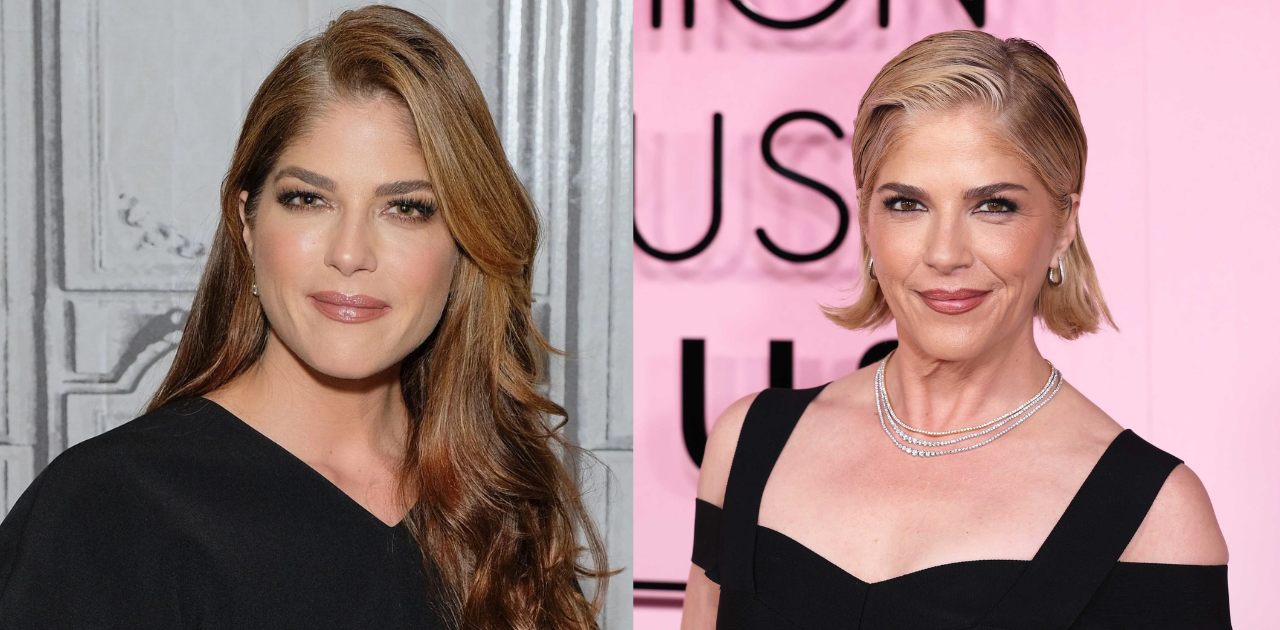

Selma Blair is an American actress known for her memorable performances in Cruel Intentions, Legally Blonde, and Hellboy. With a career spanning independent films, Hollywood comedies, television dramas, and documentary storytelling, she has established herself as a versatile performer capable of bringing depth, vulnerability, and humour to a wide range of characters. Beyond her acting achievements, she has become an influential voice in conversations about disability awareness, chronic illness, and the importance of sharing personal experiences honestly.
Born in Southfield, Michigan, Blair developed her interests in education, literature, and the arts before pursuing acting professionally. Her breakthrough came in the late 1990s, when she appeared in projects that helped define a generation of American teen films. She subsequently moved between romantic comedies, superhero movies, independent cinema, and television, building a career that cannot be reduced to a single genre or performance.
In 2018, she publicly revealed that she had been diagnosed with multiple sclerosis (MS), a chronic neurological condition that had affected her health for years. The announcement brought renewed attention to her personal experiences and introduced many people to the challenges of living with an often unpredictable illness. Rather than allowing the diagnosis to define her entire identity, she continued to explore creative projects and advocate for greater understanding of disability.
The story of Selma Blairhttps://www.google.com/search?q=selma+blair&oq=selma+blair&gs_lcrp therefore extends beyond celebrity biography. It combines professional ambition, personal difficulties, motherhood, creative reinvention, and a willingness to speak openly about subjects that are often misunderstood. Understanding her life requires looking at both the films that made her famous and the experiences that shaped her perspective outside the entertainment industry.

Early Life, Family Background, and Education
Selma Blair Beitner was born on June 23, 1972, in Southfield, Michigan, near Detroit. She grew up as the youngest of four daughters in a family that valued education and encouraged intellectual development. Her parents, Elliot and Molly Ann Beitner, eventually divorced, and Blair later dropped her father’s surname professionally and legally. Her upbringing in Michigan provided the foundation for a life that would eventually take her from the American Midwest to the centre of the entertainment industry.
Education played an important role in her early development. Blair attended school in Michigan, including Cranbrook Kingswood, before studying at Kalamazoo College and New York University. She ultimately graduated from the University of Michigan in 1995 with degrees in English and psychology. These subjects offered more than academic qualifications: literature encouraged an understanding of narrative and character, while psychology provided opportunities to explore human behaviour and emotional complexity.
Her educational background is particularly relevant when considering the types of roles she would later portray. Acting often requires performers to understand what motivates people, how emotions influence decisions, and why individuals behave differently under pressure. Although a degree in psychology does not automatically make someone a better actor, studying human behaviour can offer useful perspectives when approaching complicated fictional characters.
After graduating, Blair moved to New York City and began pursuing opportunities in acting. Like many aspiring performers, she faced uncertainty while trying to establish herself in a competitive industry. She took acting classes and gradually worked towards professional opportunities rather than immediately becoming a household name. Her early experience demonstrates that a successful screen career can develop through education, training, persistence, and a willingness to begin with relatively small roles.

How Selma Blair Became Famous in Hollywood
The late 1990s marked a turning point in Blair’s professional life. Before becoming widely recognised, she appeared in smaller film and television projects that allowed her to gain experience and demonstrate her range. Early credits included The Adventures of Pete & Pete and several independent productions. These opportunities helped her learn the demands of working on camera and establish connections within the entertainment business.
Her major breakthrough arrived in 1999 with the romantic drama Cruel Intentions. Directed by Roger Kumble, the film featured an ensemble cast that included Sarah Michelle Gellar, Ryan Phillippe, and Reese Witherspoon. Blair played Cecile Caldwell, a comparatively innocent young woman whose trusting personality becomes entangled in the manipulative behaviour of the film’s central characters.
Cecile was an important early showcase for Blair because the role demanded more than straightforward comedy or conventional romantic drama. The character’s innocence creates humour, but it also exposes the emotional consequences of deception. Blair’s performance helped make Cecile memorable within a film built around manipulation, social status, and complicated relationships.
The film subsequently developed a lasting cultural following, particularly among audiences who grew up watching late-1990s and early-2000s teen cinema. Its enduring popularity introduced new viewers to Blair long after its original theatrical release. The movie also demonstrated how a supporting performance can become a defining part of an actor’s public identity.
That visibility created opportunities for further work, but it did not restrict her to one type of character. Instead, she moved into television and other film genres, gradually developing a career that included comedy, fantasy, independent drama, and more emotionally demanding projects.

Selma Blair in Legally Blonde and Her Most Famous Movies
One of Blair’s most recognisable performances came in Legally Blonde, the 2001 comedy starring Reese Witherspoon as Elle Woods. Blair played Vivian Kensington, a Harvard law student who initially views Elle as an unsuitable presence in a highly competitive academic environment. Vivian’s relationship with Elle changes as the story develops, giving the character a more complicated trajectory than her early behaviour suggests.
The film remains popular because it combines accessible comedy with themes of ambition, gender expectations, professional competence, and self-confidence. Vivian initially represents the social and academic standards against which Elle is judged. However, the story gradually challenges the assumption that appearance, background, or first impressions reliably indicate a person’s abilities.
Blair’s performance works because Vivian is not simply a one-dimensional antagonist. She is proud of her position, accustomed to particular social rules, and initially suspicious of someone who does not conform to her expectations. As she begins to reconsider those assumptions, the character contributes to one of the film’s central messages: people can change their opinions when they encounter evidence that challenges their beliefs.
Another major project was The Sweetest Thing (2002), a romantic comedy featuring Cameron Diaz and Christina Applegate. Blair played Jane Burns, a character whose friendship with Christina helps drive the story’s humorous exploration of dating and relationships. The film adopted a more outrageous comedic style than Legally Blonde, demonstrating Blair’s willingness to work in different forms of comedy.
Her filmography also includes Storytelling (2001), directed by Todd Solondz, which explored uncomfortable aspects of relationships and social behaviour. Such projects contrasted with mainstream romantic comedies and showed her interest in material that challenged conventional storytelling.
In 2004, Blair appeared in Guillermo del Toro’s Hellboy, playing Liz Sherman, a woman with powerful pyrokinetic abilities. Liz’s extraordinary powers are accompanied by emotional struggles, including difficulties managing the destructive potential of her abilities. The role allowed Blair to combine the psychological dimensions of character acting with the physical and visual demands of a fantasy action film.
She returned as Liz in Hellboy II: The Golden Army (2008). The sequel expanded the fantasy world while continuing to explore Liz’s relationship with Hellboy and the personal challenges associated with her powers.
Other notable screen credits include A Guy Thing, In Good Company, The Fog, and Mom and Dad. Together, these films illustrate the breadth of her professional work, from mainstream entertainment to darker, more unconventional stories.
| Film or project | Year | Role or contribution | Why it matters |
|---|---|---|---|
| Cruel Intentions | 1999 | Cecile Caldwell | Breakthrough film role |
| Legally Blonde | 2001 | Vivian Kensington | One of her most recognisable performances |
| The Sweetest Thing | 2002 | Jane Burns | Showcased her comedic ability |
| Hellboy | 2004 | Liz Sherman | Established her presence in fantasy action cinema |
| Hellboy II: The Golden Army | 2008 | Liz Sherman | Continued her role in the fantasy franchise |
| The People v. O. J. Simpson: American Crime Story | 2016 | Kris Jenner | Demonstrated her ability in biographical television drama |
| Introducing, Selma Blair | 2021 | Herself | Brought her personal health journey to a wider audience |
These projects reveal an important feature of Blair’s career: she has worked across genres rather than relying exclusively on romantic comedy or one commercially successful franchise. Her most memorable performances often combine an outwardly distinctive personality with emotional complications beneath the surface.
Selma Blair’s Television Career and Memorable Roles
Although her film performances brought her widespread recognition, television has also played an important role in Blair’s career. Working on television allowed her to explore characters over longer storylines and collaborate with performers whose styles differed from those she encountered in feature films. Her television appearances demonstrate how an actor can maintain a varied professional identity while moving between different production formats.
In 1999, she starred as Zoe Bean in the teen sitcom Zoe, Duncan, Jack and Jane, which was later renamed Zoe…. The series followed the social experiences and relationships of teenagers, giving Blair an opportunity to work in a lighter comedic format. Her performance earned a Teen Choice Award nomination, providing early recognition for her work beyond the cinema.
She later appeared in Kath & Kim, an American adaptation of the Australian sitcom, alongside Molly Shannon. Although the programme was short-lived, it demonstrated Blair’s continued interest in character-based comedy. Television projects can be unpredictable, and even programmes that do not achieve long runs can offer valuable experience for actors developing their craft.
One of her most notable television performances came in 2016, when she portrayed Kris Jenner in The People v. O. J. Simpson: American Crime Story. The series revisited the widely publicised criminal trial involving O. J. Simpson and examined the media attention surrounding the case. Playing a real person required a different approach from portraying a fictional character because the performance had to reflect a recognisable public personality.
Blair’s interpretation contributed to a production that combined historical events, legal drama, celebrity culture, and family relationships. The role also illustrated her ability to move beyond the familiar image established by her early romantic comedies. For viewers exploring her filmography, the series is an important example of her work in biographical television drama.
Selma Blair and Her Multiple Sclerosis Diagnosis
One of the most significant developments in Blair’s life occurred in 2018, when she publicly disclosed that she had multiple sclerosis. MS is a chronic disease affecting the central nervous system, which includes the brain and spinal cord. It can interfere with communication between the brain and other parts of the body, producing symptoms that vary considerably from one person to another.
https://celebrityfocus.co.uk/ experienced unexplained health problems for years before receiving her diagnosis. She has discussed fatigue, pain, sensory disturbances, mobility difficulties, and changes in speech. Because some symptoms appeared intermittently, identifying the underlying condition was not straightforward. Her experience reflects a broader challenge faced by people whose symptoms do not always fit an obvious or immediately recognisable pattern.
Receiving a diagnosis can bring complicated emotions. For some people, the discovery of a chronic illness creates fear about the future, while also providing an explanation for symptoms that previously seemed disconnected. Blair has described her diagnosis as a form of relief because it helped her understand experiences that had affected her since childhood.
Her public announcement also challenged common assumptions about disability. Many chronic illnesses are not immediately visible, and someone may appear healthy while experiencing substantial physical or cognitive difficulties. A person with MS might be able to perform one activity on a particular day but struggle with the same task later because symptoms and energy levels can fluctuate.
Blair’s openness has helped make these experiences more visible. However, her personal story should not be treated as a universal description of MS. The disease affects individuals differently, and one person’s treatment, symptoms, or recovery cannot predict another person’s medical journey.
Understanding the Impact of MS on Everyday Life
Multiple sclerosis can affect movement, balance, vision, sensation, concentration, and energy levels. Some people experience relatively mild symptoms for extended periods, while others encounter more substantial limitations. The course of the condition differs between individuals, which makes personalised medical care especially important.
For an actor, the effects can extend into professional responsibilities. Film production may require long working days, repeated physical movements, travel, extensive dialogue, and demanding schedules. Fatigue or difficulties with mobility can make these expectations harder to manage, particularly when symptoms are unpredictable.
Blair has spoken publicly about how her condition affected her work and daily activities. In a 2022 interview with the BBC, she described the professional consequences of revealing her diagnosis, explaining that she initially feared the disclosure would reduce her opportunities. Her experience highlighted the tension between being honest about a disability and navigating an industry that often places heavy demands on physical appearance and performance.
A practical response to these challenges involves flexibility, accessibility, appropriate medical support, and realistic expectations. In a workplace, adjustments might include accessible facilities, flexible scheduling, rest breaks, or modified duties. Such measures do not eliminate a medical condition, but they can help people continue participating in professional and social life.
Blair’s story also demonstrates why people should avoid making assumptions about another person’s abilities. Someone may require a mobility aid on one occasion but not another. Similarly, a person might be able to work successfully while needing additional time to manage everyday tasks.
Stem Cell Treatment and Selma Blair’s Health Journey
Blair’s treatment journey became a central part of the 2021 documentary Introducing, Selma Blair. The film followed her experiences as she adapted to life with MS, explored treatment options, and faced the emotional consequences of living with a chronic neurological condition.
One important part of her medical journey was haematopoietic stem cell transplantation, commonly abbreviated as HSCT. This treatment can involve collecting a patient’s blood-forming stem cells, administering intensive therapy to suppress aspects of the immune system, and returning the collected cells. In selected cases, the procedure aims to reset immune activity that contributes to autoimmune disease.
HSCT is not an appropriate treatment for every person with MS. It involves substantial medical risks, and its potential benefits depend on factors such as the type of MS, disease activity, previous treatments, and the patient’s overall health. Specialist assessment is essential before considering it.
Blair’s experience attracted attention because the documentary showed aspects of treatment and recovery that are rarely discussed in conventional celebrity coverage. Rather than presenting recovery as a simple transformation, the film explored uncertainty, physical discomfort, adaptation, and the emotional work involved in confronting a changed relationship with one’s body.
The important distinction is that a public figure’s experience is not a substitute for medical advice. People researching MS should consult qualified neurologists and reputable medical organisations rather than assuming that a particular intervention will produce the same results for everyone.
Blair has also discussed improvements in her condition in later interviews. In 2025, she spoke about continuing to learn how to manage the disease, emphasising that living with MS remains a process rather than a problem that can be permanently resolved through one decision. Such comments provide a more realistic picture of chronic illness than narratives that portray treatment as an instant cure.
Introducing, Selma Blair: The Documentary That Revealed Her Personal Story
Released in 2021, Introducing, Selma Blair was directed by Rachel Fleit and offered an intimate portrait of Blair’s life following her MS diagnosis. The documentary examined her efforts to understand her condition, navigate treatment, and adjust to the physical and emotional changes associated with the illness.
The film’s significance lies partly in its willingness to show vulnerability without reducing its subject to a medical case study. Audiences see an established actress dealing with uncertainty, seeking support, and reconsidering what independence means in everyday life. The emphasis is not simply on the diagnosis but on the broader experience of adapting to circumstances that cannot always be controlled.
The documentary also challenges the conventional presentation of celebrity. Public figures are often introduced through carefully selected photographs, successful performances, fashion appearances, and promotional interviews. By contrast, a documentary following a person’s health journey can reveal the ordinary routines and difficult decisions that remain largely invisible behind public recognition.
Blair’s participation helped encourage discussions about disability representation in film and television. When audiences see people with chronic illnesses represented as complex individuals, it becomes easier to understand that disability does not erase personality, ambition, humour, relationships, or professional skills.
The documentary is particularly relevant for viewers interested in her life beyond her most famous roles. It connects her personal experiences with broader questions about accessibility, healthcare, public identity, and the emotional consequences of receiving a life-changing diagnosis.
Mean Baby: Selma Blair’s Memoir and Personal Reflections
In 2022, Blair published Mean Baby: A Memoir of Growing Up, a book examining her childhood, family relationships, acting career, struggles with alcohol, motherhood, and experiences with multiple sclerosis. Published by Alfred A. Knopf, the memoir became a New York Times bestseller.
The book’s title comes from a story Blair recalls hearing about herself as a child. Rather than presenting her life as a straightforward progression from hardship to success, she explores the labels that shaped her self-image and the complicated experiences that influenced her development. The result is a personal account that moves between humour, painful memories, family dynamics, and reflections on identity.
Memoirs can offer a different perspective from traditional celebrity biographies. A conventional biography typically assembles information from public records, interviews, and other sources, whereas a memoir presents the author’s own recollections and interpretations. Those recollections can provide meaningful insight into personal experience, although they remain a subjective account rather than an objective record of every event.
In Mean Baby, Blair discusses her experiences with alcohol and the challenges she faced before understanding the full significance of her physical symptoms. She also reflects on her relationship with her mother and the experience of becoming a parent. These subjects are interconnected because personal identity develops through family, relationships, health, and the ways people respond to difficult circumstances.
The book also gives readers an opportunity to understand Blair as a writer rather than exclusively as an actress. Her willingness to examine uncomfortable experiences contributes to a narrative that is personal without being limited to the usual details of celebrity life.
For readers who have followed her career since Cruel Intentions, the memoir adds context to the public image established by her screen performances. It shows that the person behind a memorable character has a much more complicated story than a film role can communicate.
Selma Blair’s Family Life and Motherhood
Motherhood has been an important part of Blair’s personal life. She welcomed her son, Arthur, in July 2011 with fashion designer Jason Bleick. Although their romantic relationship ended in 2012, they have shared the responsibility of raising their child.
Blair has spoken about the importance of her relationship with her son and the ways parenthood changed her priorities. Raising a child requires time, patience, and practical adjustments even under ordinary circumstances. Managing a chronic illness can add further considerations, including the need to conserve energy, organise medical appointments, and balance personal responsibilities.
Her experience illustrates why family support can matter when someone faces a long-term health challenge. Support may involve helping with everyday activities, offering emotional reassurance, or understanding that a person’s capacity can change from day to day. Effective support also respects independence rather than assuming that a person with a disability cannot make decisions for themselves.
Blair’s family experiences should be distinguished from speculation about her private life. Publicly available information can establish some basic biographical details, but not every aspect of a celebrity’s relationships or parenting arrangements belongs in public discussion. Responsible biography focuses on information that is relevant and supported by credible sources.
For audiences, her account of motherhood adds another dimension to her story. It demonstrates that family relationships continue to develop alongside professional achievements, personal difficulties, and changes in health. Her identity as a parent is part of her life, not merely a detail attached to her celebrity profile.
Selma Blair’s Fashion Career and Public Image
Blair has also developed a presence in fashion. Her distinctive appearance and willingness to experiment with styling have made her a recognisable figure at public events, fashion campaigns, and industry gatherings. Her professional relationship with Chanel brought her into contact with the world of luxury fashion, including the work of designer Karl Lagerfeld.
Fashion can play a significant role in celebrity identity because clothing, photography, and public appearances influence how audiences perceive performers. For Blair, these appearances have provided another way to express individuality beyond the characters she plays on screen.
Her style has included elegant red-carpet outfits, sharply tailored clothing, and distinctive hairstyles. Rather than relying on one fixed public image, she has demonstrated an ability to adapt her appearance to different occasions while retaining a recognisable personal aesthetic.
Her use of a cane at public events after disclosing her MS diagnosis also became part of a wider discussion about disability visibility. Mobility aids are practical tools that can help people navigate their surroundings, and their presence should not automatically be interpreted as a sign that someone has abandoned their ambitions or independence.
In the fashion industry, where physical appearance is often scrutinised, visible disability can challenge narrow expectations about beauty and presentation. Blair’s appearances have helped broaden the conversation about who is represented in fashion and how style can accommodate different physical needs.
Her fashion profile is therefore more than a collection of outfits. It forms part of a public identity that brings together acting, personal expression, and a willingness to be seen without hiding every challenge associated with her health.
Selma Blair and Disability Advocacy
Blair’s public discussion of MS has made her an important figure in conversations about disability awareness. By describing her experiences in interviews, documentaries, and her memoir, she has helped explain aspects of chronic illness that may otherwise remain unfamiliar to people who have never encountered them directly.
In 2017, before publicly revealing her MS diagnosis, she was included among the individuals recognised by Time magazine as its Person of the Year for the Silence Breakers associated with the #MeToo movement. The recognition reflected her decision to speak publicly about alleged sexual misconduct by filmmaker James Toback, as part of a wider movement in which people shared experiences of harassment and abuse.
This episode is distinct from her later disability advocacy, but both demonstrate the importance of speaking about experiences that people may feel pressured to keep private. In each case, public disclosure can contribute to wider conversations, although it can also bring emotional strain and unwanted scrutiny.
Disability advocacy involves more than encouraging individuals to share personal stories. It also includes supporting accessible environments, fair employment practices, respectful media representation, and informed discussions about medical conditions. Personal testimony can help people understand these issues, but meaningful progress also requires changes in institutions and everyday behaviour.
Blair’s experiences have particular relevance in the entertainment industry, where performers may worry that disclosing a disability could affect casting decisions or professional opportunities. Her openness has helped bring attention to those concerns without suggesting that every performer will face the same response.
Her contribution is best understood as part of a wider movement involving disabled people, medical professionals, advocates, and organisations working to improve accessibility and understanding.
Awards, Recognition, and Professional Achievements
Blair’s career has earned recognition in several areas of entertainment. Her performance in Cruel Intentions contributed to the film’s popularity, and she won an MTV Movie Award for Best Kiss alongside Sarah Michelle Gellar for their on-screen kiss. The moment became one of the film’s most discussed scenes and helped cement its place in late-1990s popular culture.
She also received a Teen Choice Award nomination for her work in Zoe, Duncan, Jack and Jane. These early honours reflected her growing visibility among younger audiences during a period when teen films and television comedies played an important role in American entertainment.
Her work outside acting has also attracted recognition. Blair received a Grammy nomination for Best Spoken Word Album for Children for her narration of Anne Frank: The Diary of a Young Girl: The Definitive Edition. This achievement demonstrated her ability to use her voice in a format that requires clarity, sensitivity, and sustained narrative engagement.
Her documentary work earned further critical attention. Introducing, Selma Blair received recognition at the South by Southwest Film Festival, including a special jury award for exceptional intimacy in storytelling. The film was also recognised within the documentary awards landscape, highlighting the impact of its personal approach.
These achievements represent different aspects of her career. Acting awards recognise screen performances, spoken-word nominations recognise narration, and documentary honours acknowledge storytelling and filmmaking. Taken together, they show why her professional identity extends beyond the roles that first made her famous.
Selma Blair’s Career, Personal Resilience, and Lasting Cultural Influence
Blair’s career provides a useful example of how an actor’s public identity can change over time. Early audiences may know her primarily as Cecile in Cruel Intentions or Vivian in Legally Blonde. Viewers interested in fantasy films may associate her with Liz Sherman in Hellboy, while television audiences may remember her portrayal of Kris Jenner in American Crime Story.
Each of these roles contributes something different to her professional legacy. Cecile is remembered for her innocence within a story of manipulation, Vivian represents the changing assumptions at the centre of a popular comedy, and Liz Sherman brings emotional vulnerability to a fantasy action setting. These characters illustrate her capacity to work across genres without relying on a single performance style.
Her later public work added another dimension. The documentary, memoir, and interviews about MS allowed audiences to encounter her through personal storytelling rather than fictional characters. This transition does not erase her earlier acting achievements; instead, it expands the ways people understand her career.
It is also important to recognise that resilience does not mean remaining positive at every moment or overcoming every difficulty. Living with a chronic condition can involve uncertainty, frustration, and the need to change plans. A realistic account of resilience acknowledges those experiences while recognising the value of support, adaptation, and meaningful activities.
Blair’s cultural influence comes partly from her willingness to discuss these complexities publicly. Her story connects entertainment, health, disability, family, and personal identity in ways that reach beyond the usual boundaries of celebrity news.
For people discovering her work today, her career offers several starting points: the enduring teen drama Cruel Intentions, the comedy of Legally Blonde, the fantasy world of Hellboy, and the personal perspective provided by Mean Baby and Introducing, Selma Blair. Together, these works reveal an artist whose professional and personal experiences have continued to evolve.
Frequently Asked Questions About Selma Blair
Who is Selma Blair?
Selma Blair is an American actress born on June 23, 1972, in Southfield, Michigan. She is best known for her performances in Cruel Intentions, Legally Blonde, The Sweetest Thing, and the Hellboy films. She is also an author and disability advocate who has spoken publicly about living with multiple sclerosis.
How old is Selma Blair?
Selma Blair was born on June 23, 1972. As of October 2026, she is 54 years old. Her career began with television and smaller film roles before she became widely recognised through major projects released in the late 1990s and early 2000s.
What are Selma Blair’s most famous movies?
Her best-known films include Cruel Intentions (1999), Legally Blonde (2001), The Sweetest Thing (2002), Hellboy (2004), and Hellboy II: The Golden Army (2008). She has also appeared in independent films and other productions that demonstrate her versatility across comedy, drama, and fantasy.
Does Selma Blair have multiple sclerosis?
Yes. Selma Blair publicly revealed in October 2018 that she had been diagnosed with multiple sclerosis. She has since discussed her symptoms, treatment experiences, and the practical challenges of living with the condition. MS affects individuals differently, and her personal experience should not be interpreted as a prediction of how the disease will affect someone else.
What is Introducing, Selma Blair about?
Introducing, Selma Blair is a 2021 documentary directed by Rachel Fleit. It follows Blair as she adapts to life with multiple sclerosis and explores her experiences with treatment, disability, and personal change. The film offers an intimate view of her life beyond Hollywood performances and highlights the uncertainty involved in managing a chronic neurological condition.
Did Selma Blair write a memoir?
Yes. She published Mean Baby: A Memoir of Growing Up in 2022. The book explores her childhood, family relationships, acting career, experiences with alcohol, motherhood, and MS diagnosis. It offers a personal account of the experiences that shaped her life and provides context for understanding her journey beyond the screen.
Does Selma Blair have children?
Yes. She has one son, Arthur, who was born in July 2011. His father is fashion designer Jason Bleick. Blair has spoken about motherhood as an important part of her life, including how family responsibilities and her health experiences have influenced her priorities.
Was Selma Blair in Legally Blonde?
Yes. She played Vivian Kensington, a Harvard law student who initially views Elle Woods with suspicion. As the story progresses, Vivian’s perspective changes, contributing to the film’s themes of personal growth and challenging assumptions about other people.
What role did Selma Blair play in Hellboy?
She portrayed Liz Sherman, a character with pyrokinetic abilities, in Hellboy and its sequel, Hellboy II: The Golden Army. Liz’s extraordinary powers are accompanied by emotional and personal challenges, making her more than a conventional superhero supporting character.
What is Selma Blair known for outside acting?
Outside acting, Blair is known for her memoir, fashion appearances, documentary work, and advocacy related to multiple sclerosis and disability awareness. She has also spoken publicly about her experiences of harassment as part of the #MeToo movement. These activities have broadened her public profile beyond her film and television performances.
Conclusion: Why Selma Blair’s Story Continues to Matter
Selma Blair has built a distinctive career through memorable performances, creative versatility, and a willingness to explore difficult subjects. From her breakthrough in Cruel Intentions to her roles in Legally Blonde and Hellboy, she has demonstrated an ability to make very different characters engaging and recognisable.
Her public discussion of multiple sclerosis has added a significant dimension to her story. Through interviews, Introducing, Selma Blair, and her memoir Mean Baby, she has helped audiences understand the personal realities of chronic illness and the importance of taking invisible symptoms seriously. Her experiences also raise important questions about accessibility, employment, and the assumptions society makes about disability.
Ultimately, her legacy cannot be measured solely through film credits or awards. It also reflects her work as a writer, her experience as a mother, and her contribution to conversations about health and representation. The most valuable insight from her journey is that a person’s identity is never limited to a diagnosis, a public image, or a single successful role. Her life continues to illustrate how creativity, honesty, and the willingness to adapt can remain meaningful even when circumstances change.
Remove the FAQ sectionTighten repetitive explanatory passages